How we Cleared Out a Closed Brewery
By Igor Chudov, owner, Chicago Machinery Movers, Berkeley, Illinois. Moving and removing industrial machinery since 1998. Published November 2026.
Brewery jobs usually come from landlords whose tenant went bankrupt. The landlord wants the space empty, without damage, to pay as little as possible if anything, and no complains later about the removed equipment.
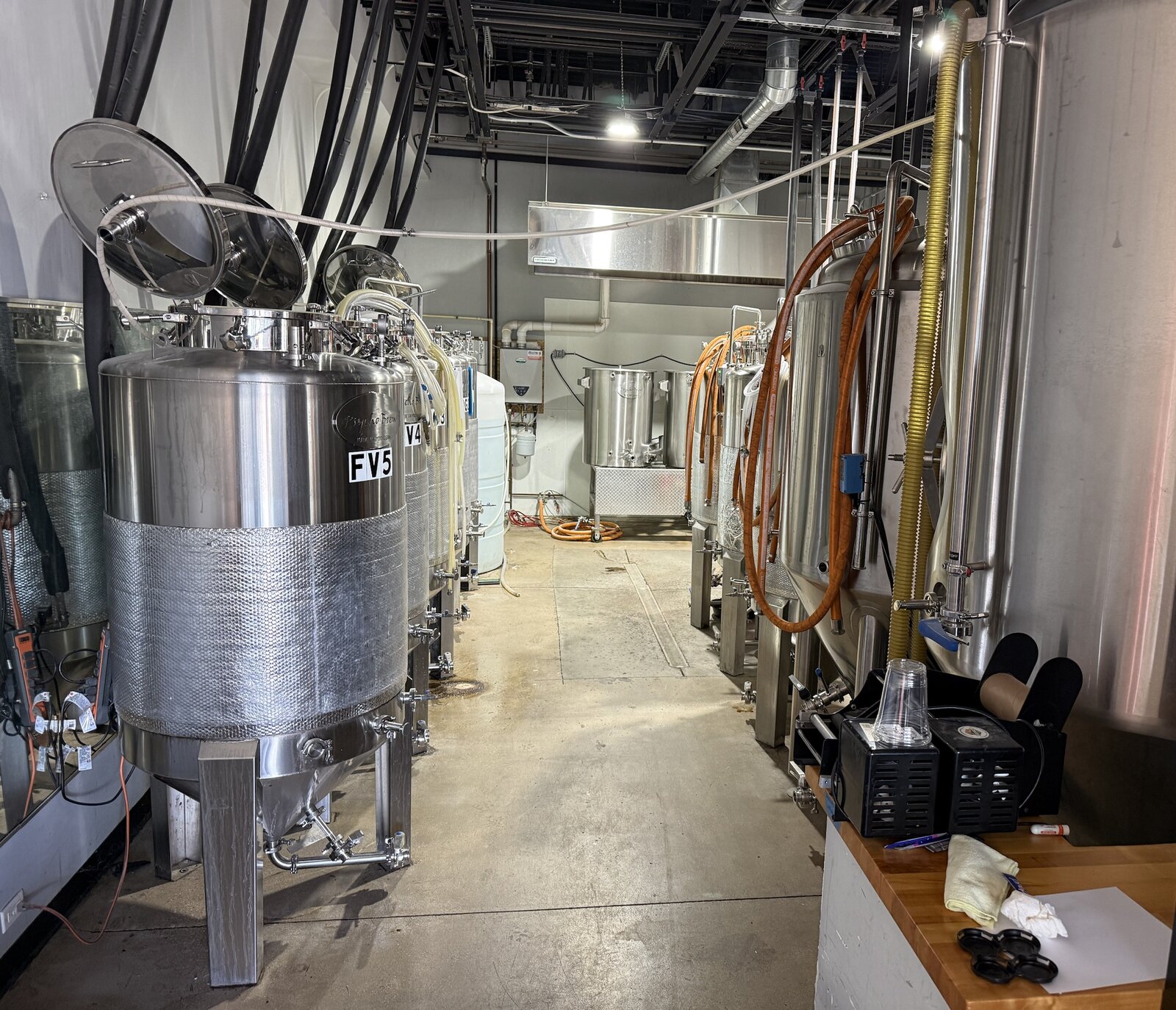
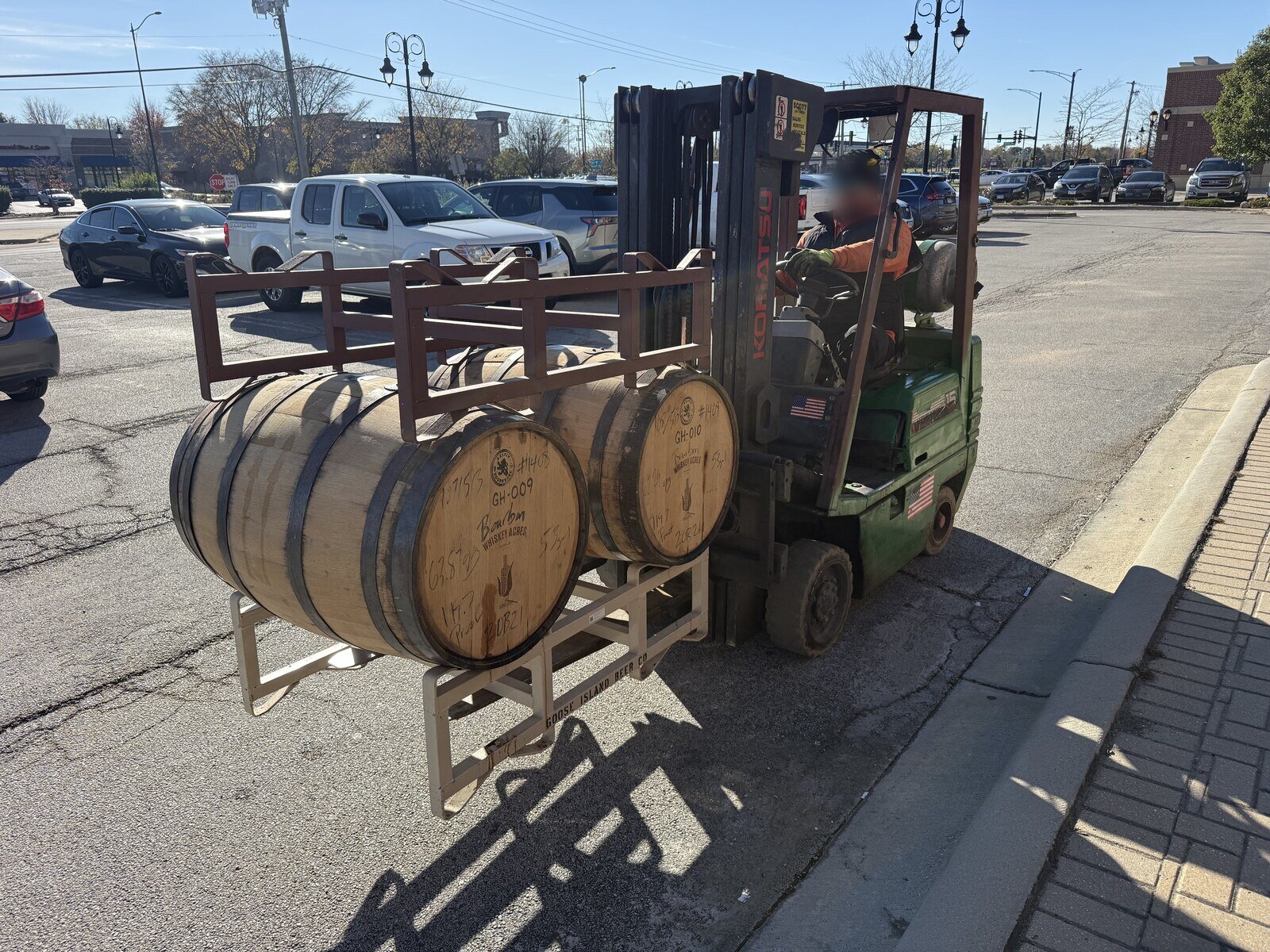
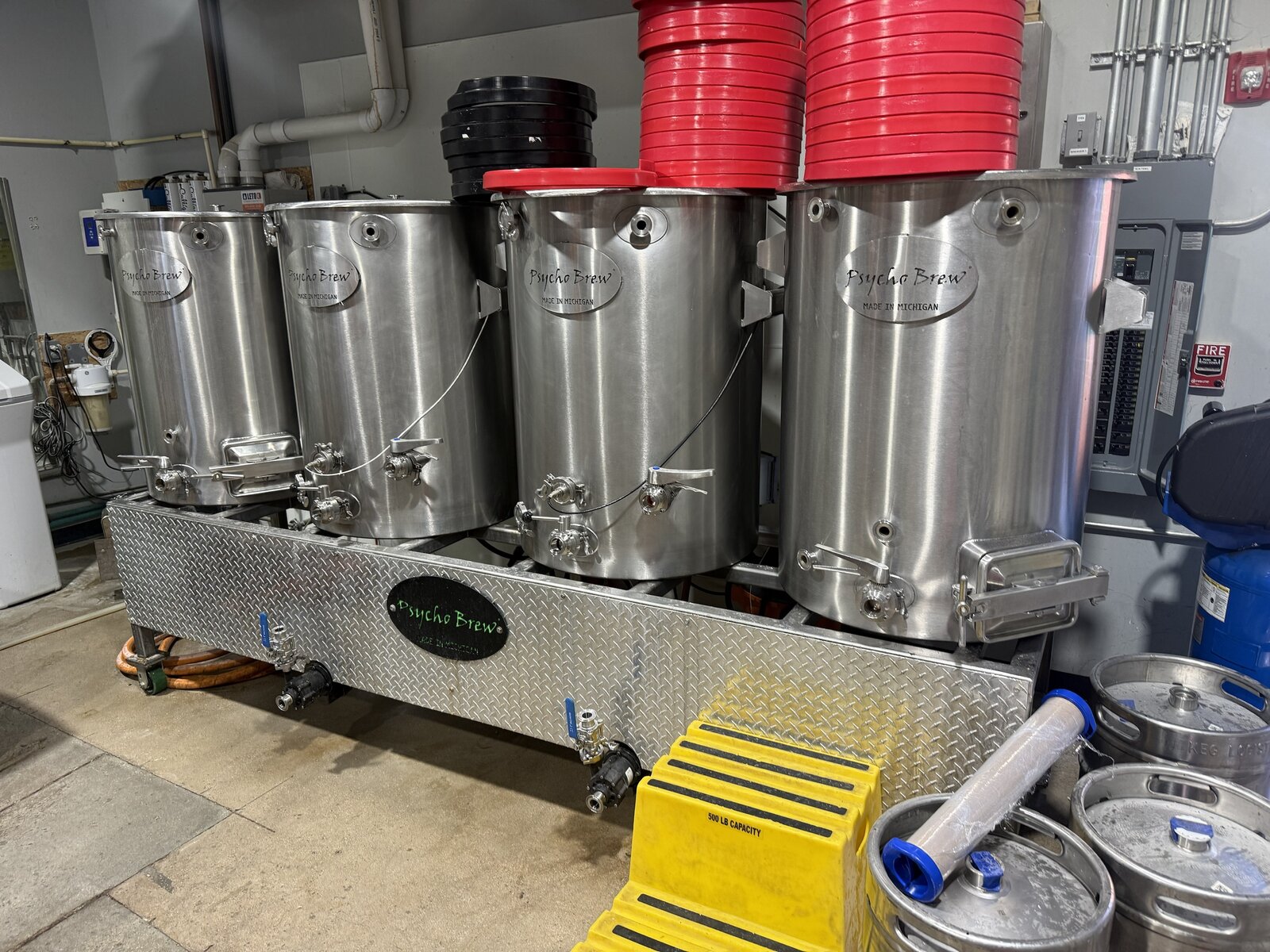
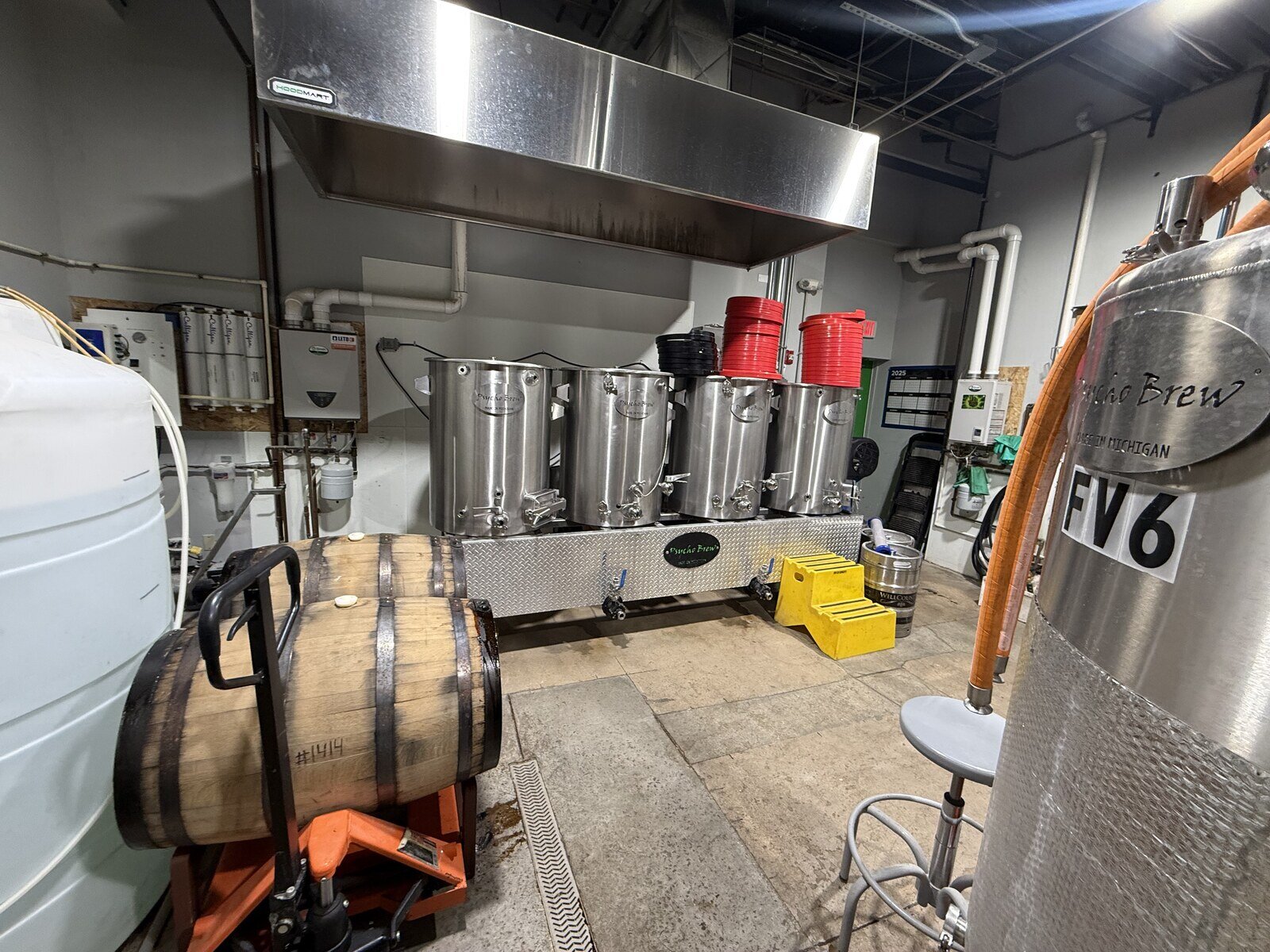
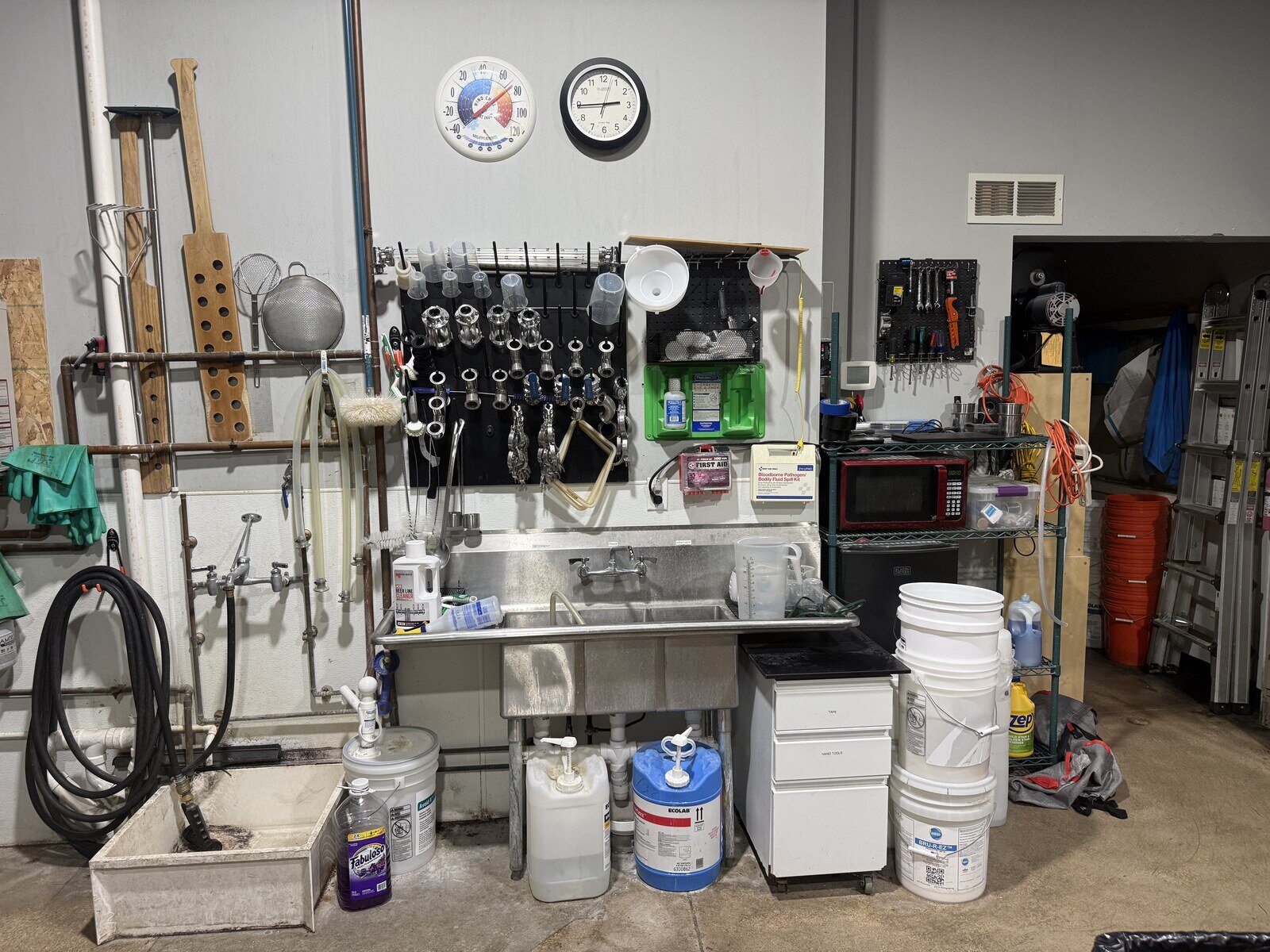
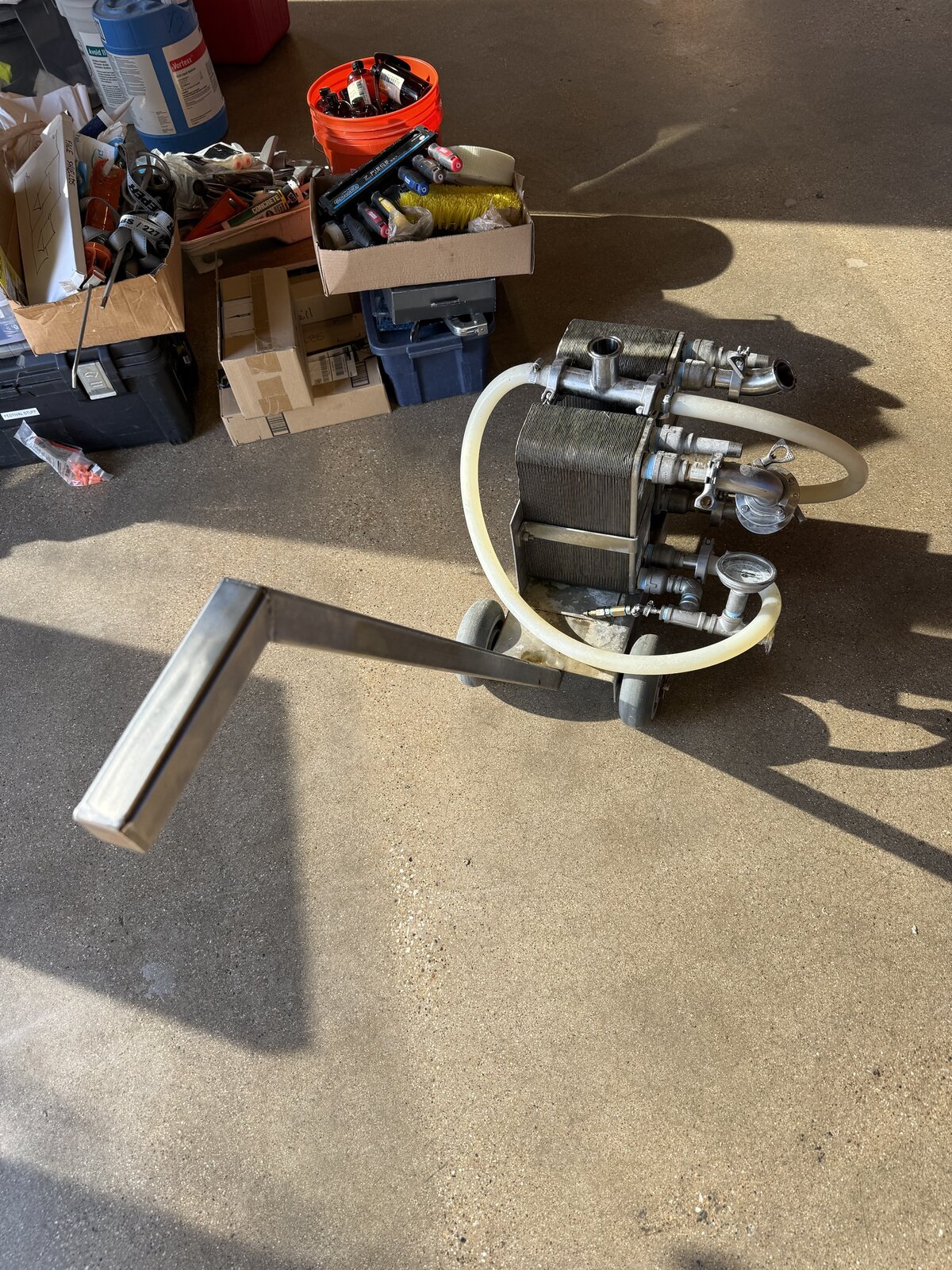
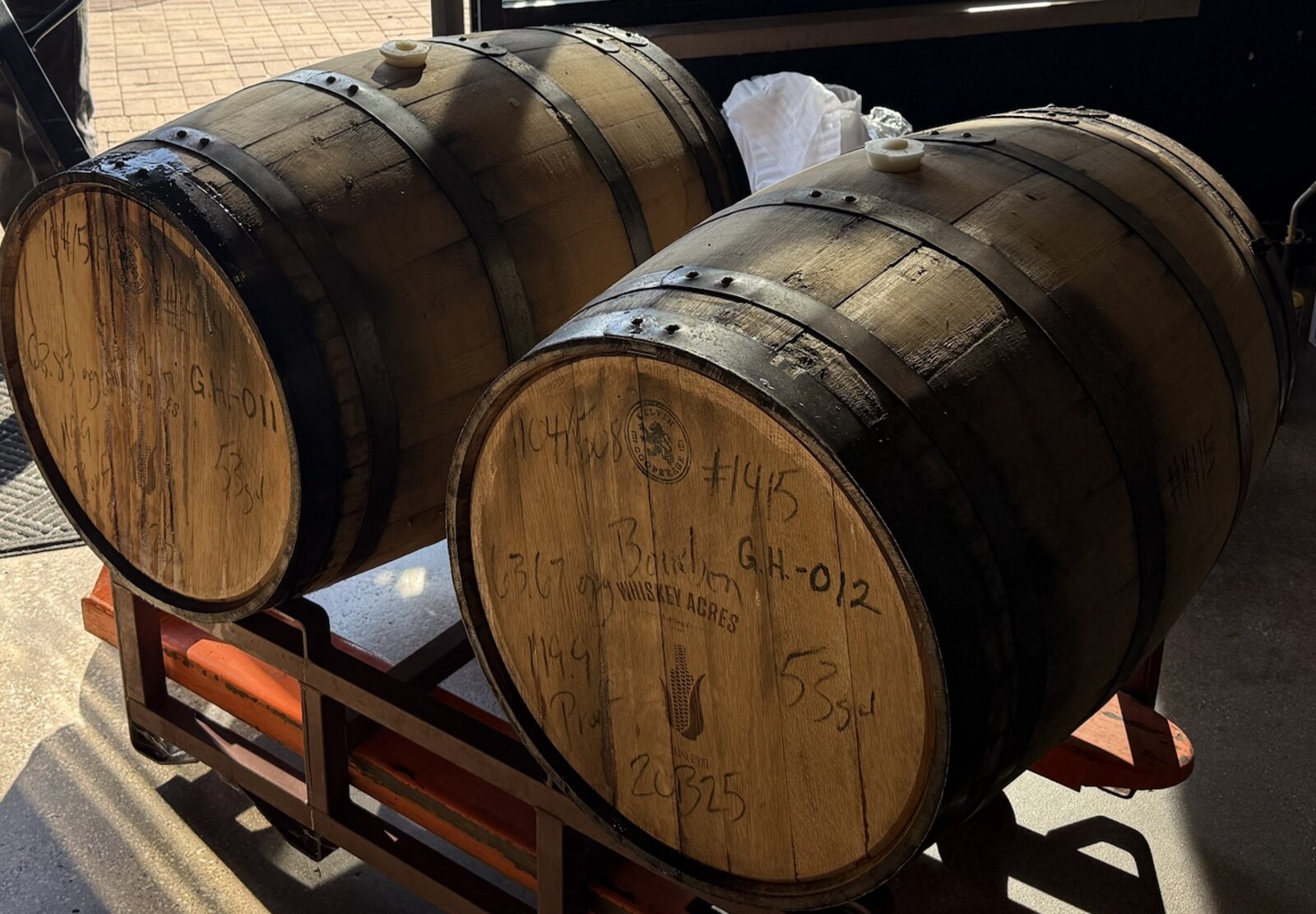
In November 2026 we cleared out a small brewery in the southwest suburbs that had closed. Inside: a Psycho Brew brewhouse, twelve stainless tanks, a wort chiller on a cart, kegs, CO2 cylinders, two bourbon barrels and the old beer still in some of the tanks. The taproom had chairs, tables, a glass-door cooler and a tap wall. The back rooms had shelves with bags of malt, buckets, hoses and a cleaning station.
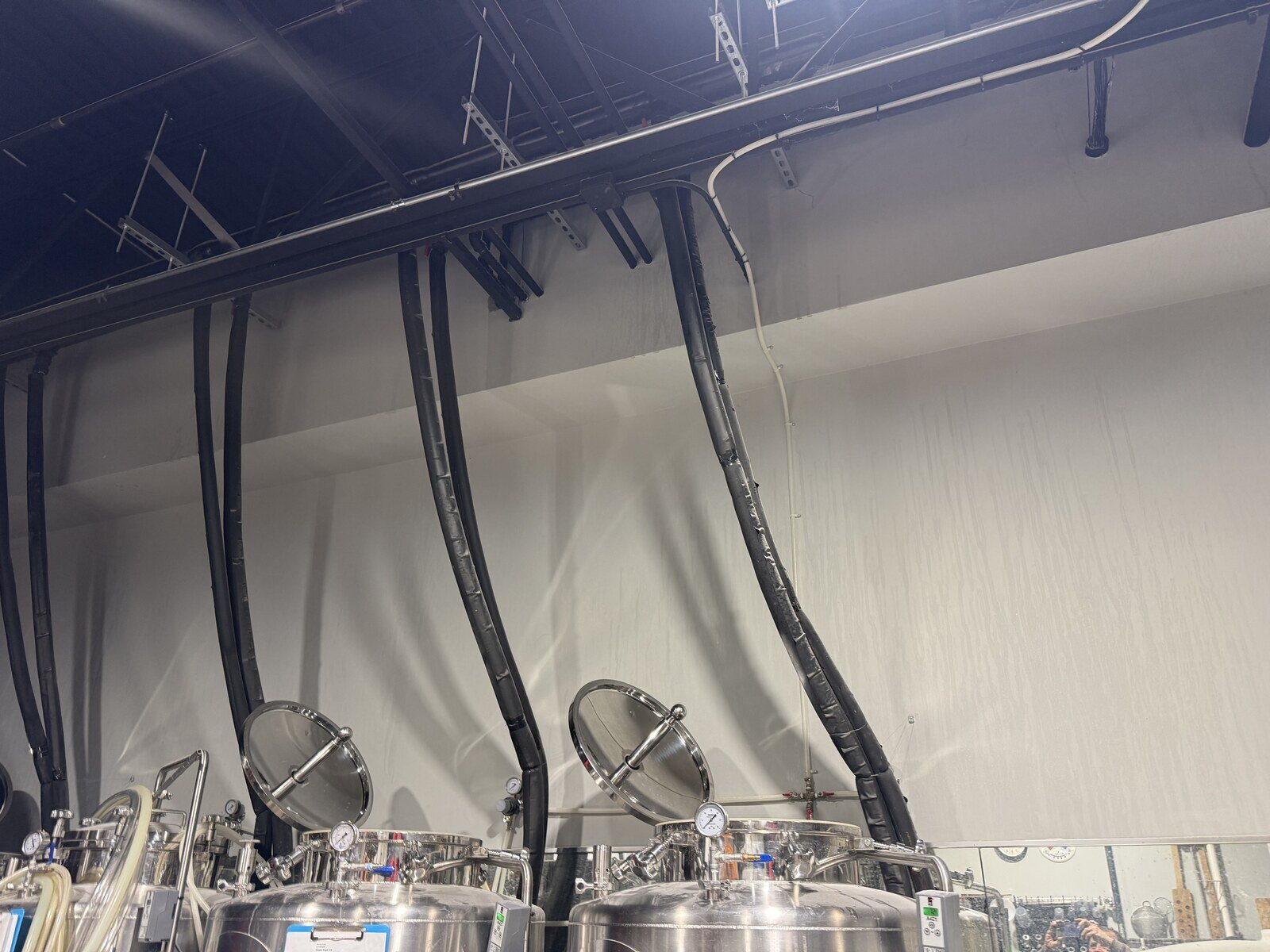
We started on November 8. Most of the tanks were out by the end of the second day. After that it was small items and trash, and the space was broom clean on November 16.
We do this for free when the stainless steel and the equipment we can resell pay for the work. When too little paying metal remains, for example a space that is mostly trash, we charge for it.
What goes and what remains
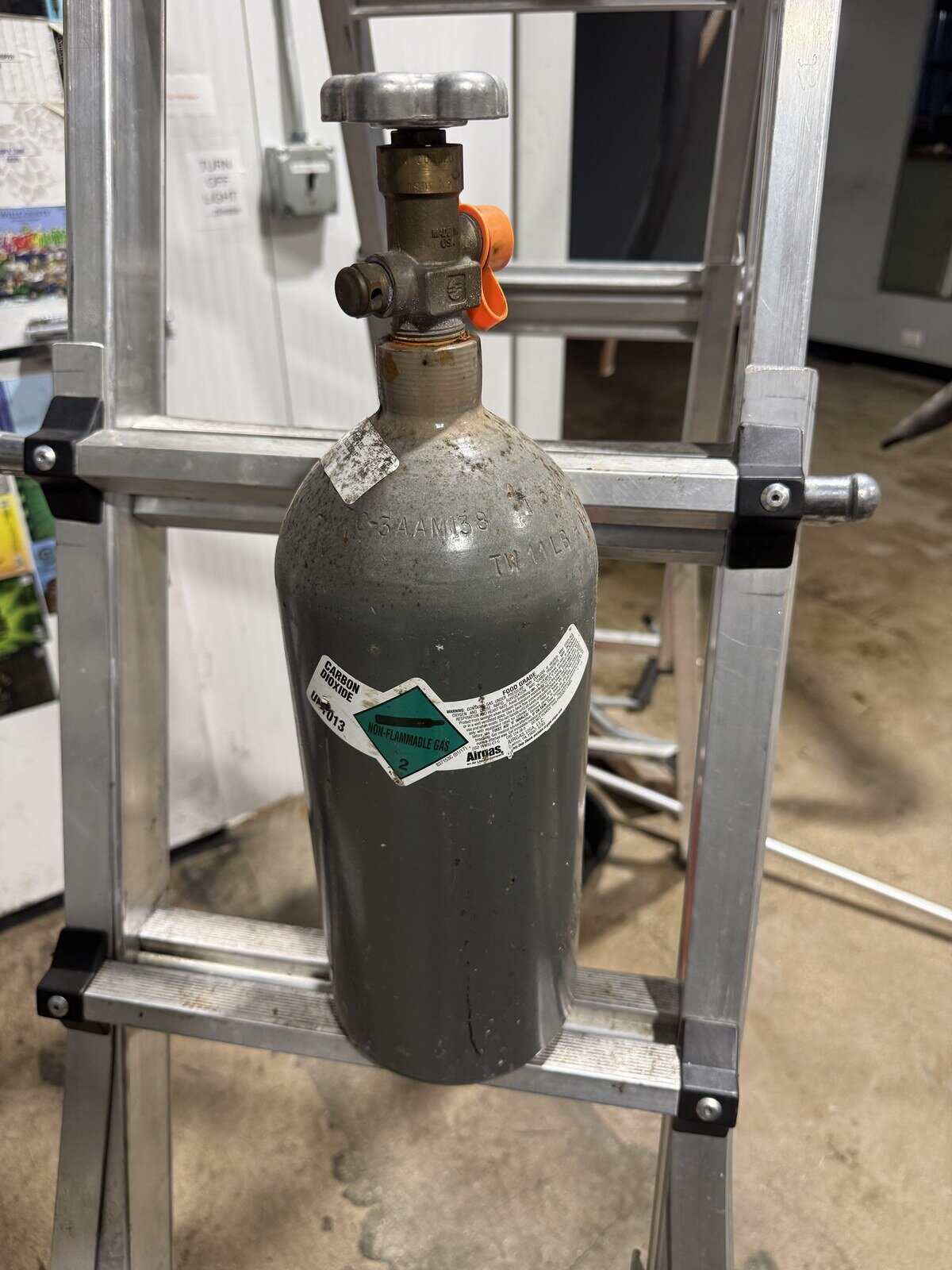
Part of what sits in a brewery belongs to other businesses: kegs usually belong to a keg leasing company and carry its name. CO2 cylinders belong to the gas supplier. The water filtration system is often a rental from the water service company. We set these aside and leave them for their owners to pick up.
The landlord tells us what should stay with the building. On this job the walk-in cooler stayed, and so did the sinks, the trench drain and the electrical panels, which are part of the building. We took everything else.
Before anything moves - the "dirty business"
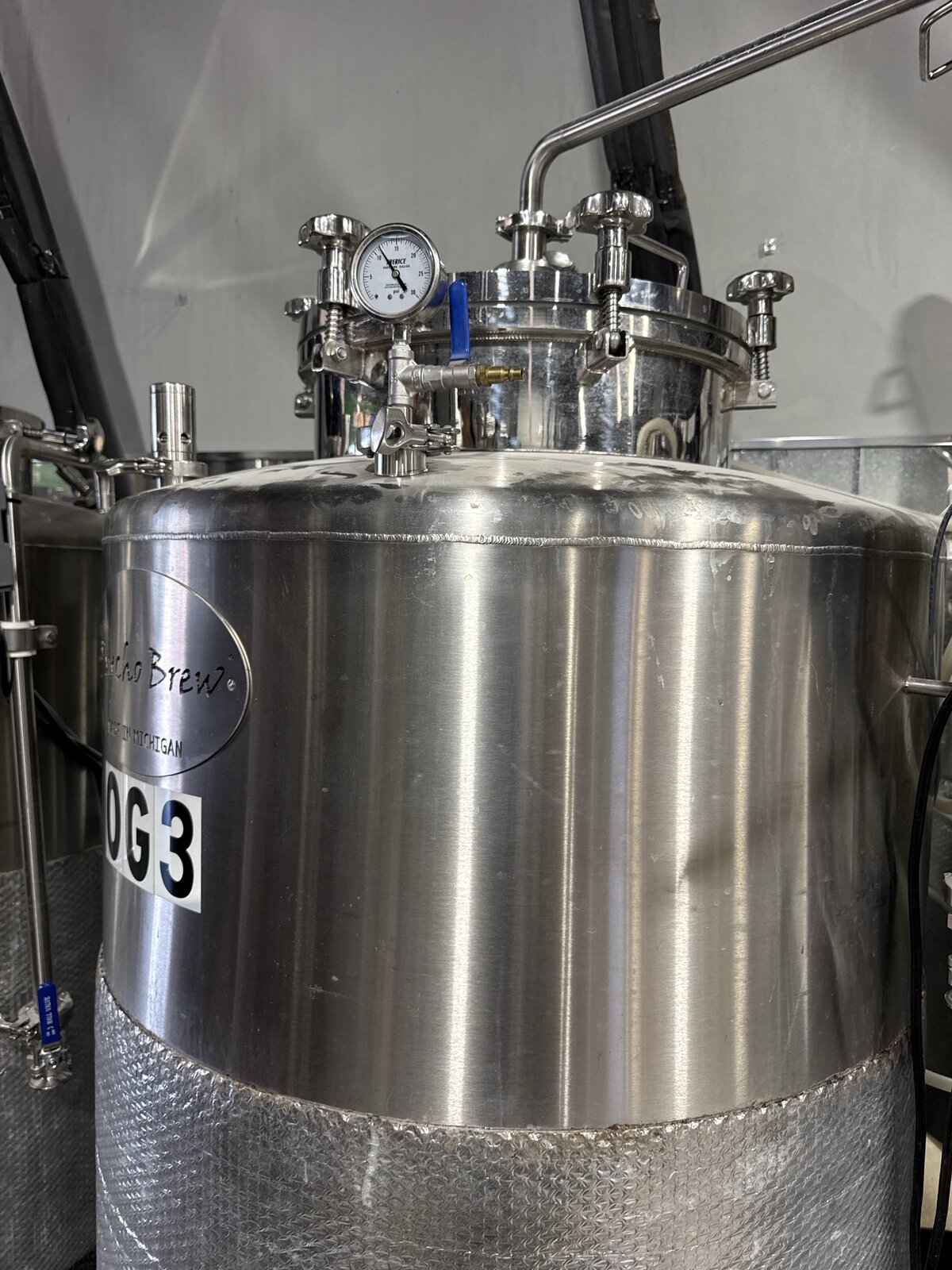
Some tanks are left closed with beer in them, and the beer keeps making gas. Several tanks on this job were still under pressure and smelled of fermentation. At 12 psi, a lid about a foot across has more than half a ton of force pushing on it. We let the gas out through a valve first, and open the lid clamps only when the gauge reads zero.
That gas is carbon dioxide, and it collects low in a closed room. We keep the overhead door open while tanks are vented and drained.
Old beer, glycol and refrigerant
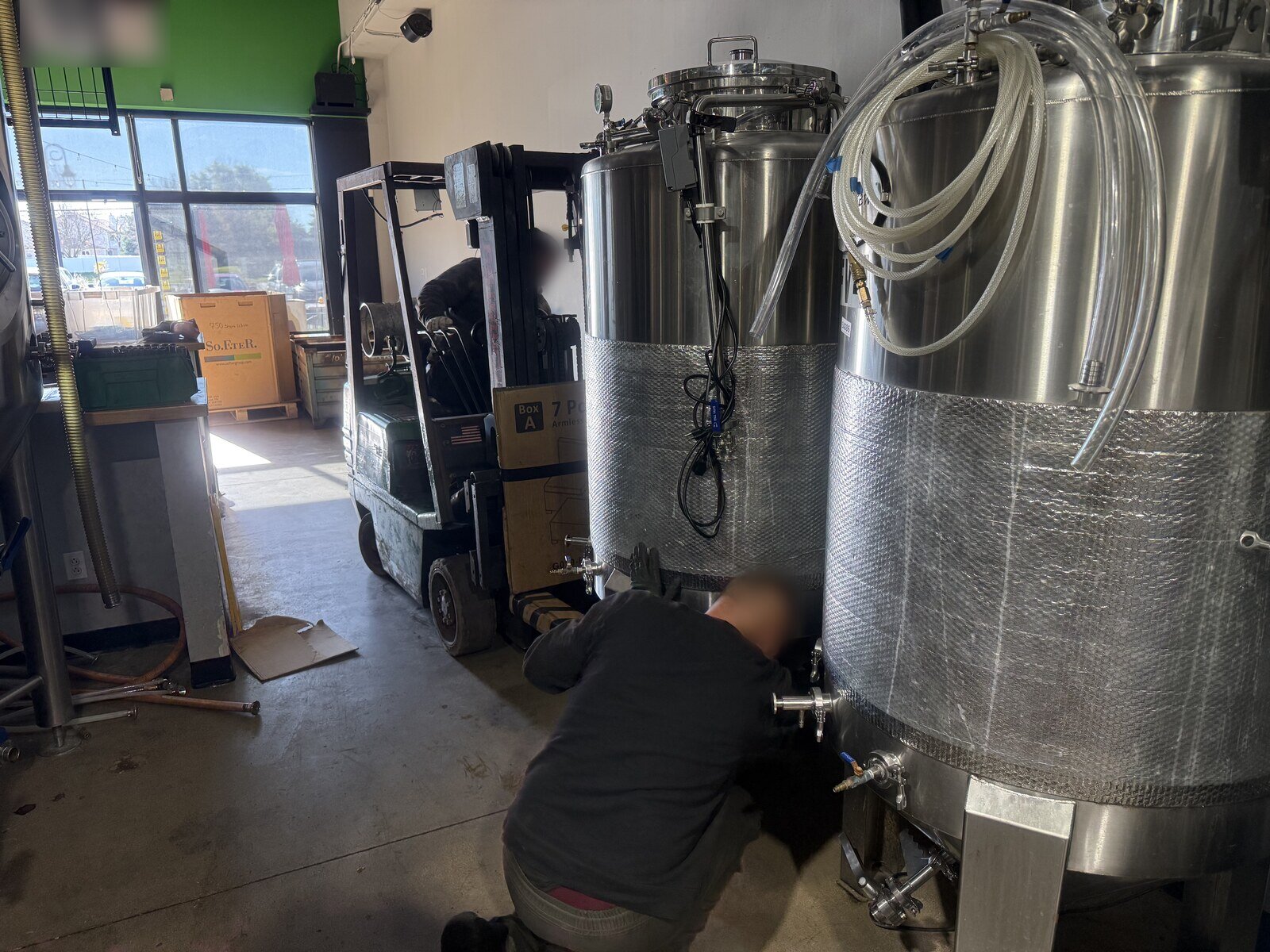
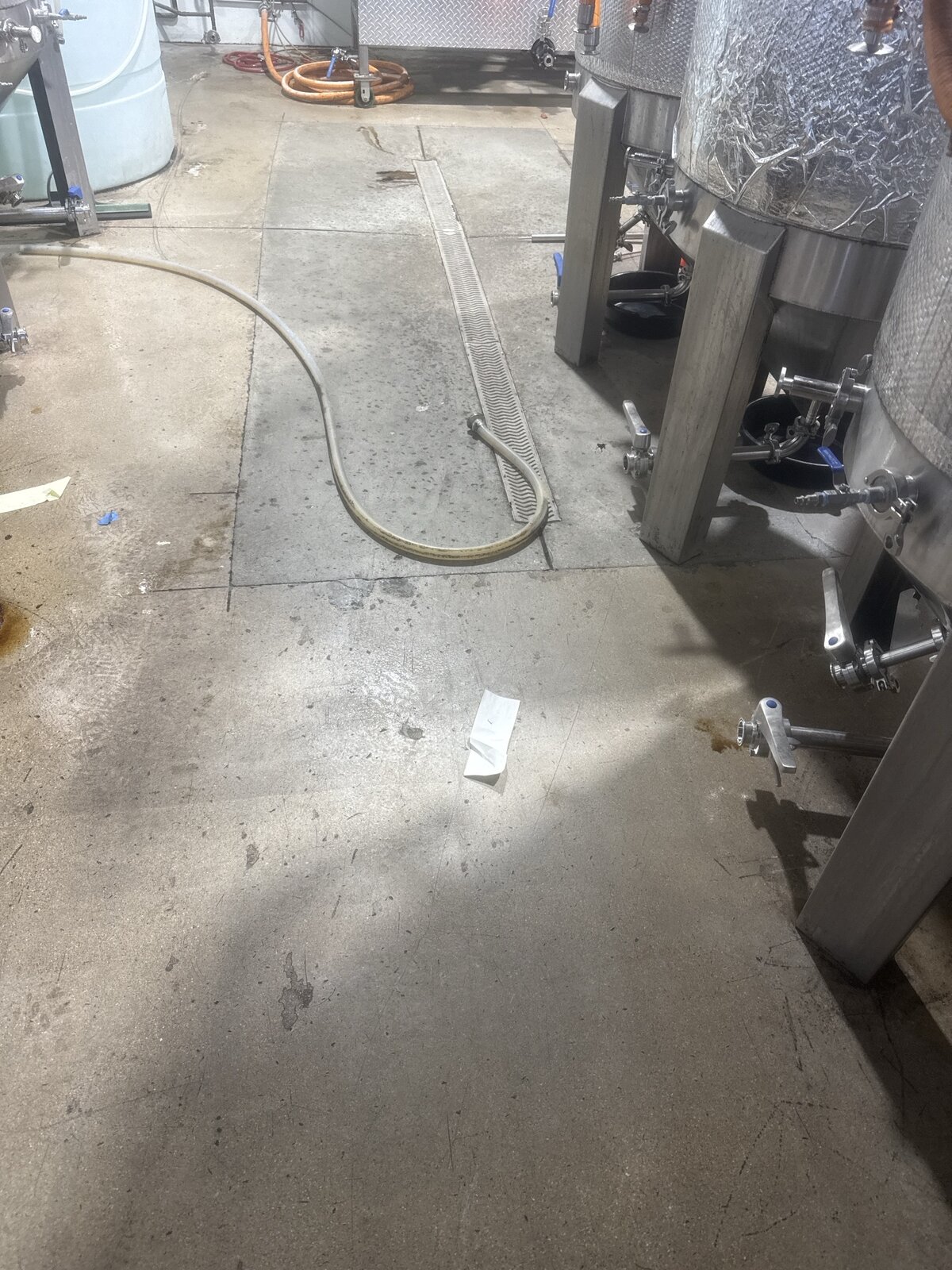
Old beer goes into the floor trench drain, which runs to the sanitary sewer, with water running beside it. It never goes into a parking lot storm drain. Tanks are drained before they are moved; a half-full tank is heavy and the liquid shifts.
The tanks are cooled by a glycol mix that runs through their jackets from a chiller. The chiller still has refrigerant in it, and we leave the refrigerant lines sealed. We do not remove refrigerant; a licensed HVAC contractor does that.
Getting tanks out without damaging the building
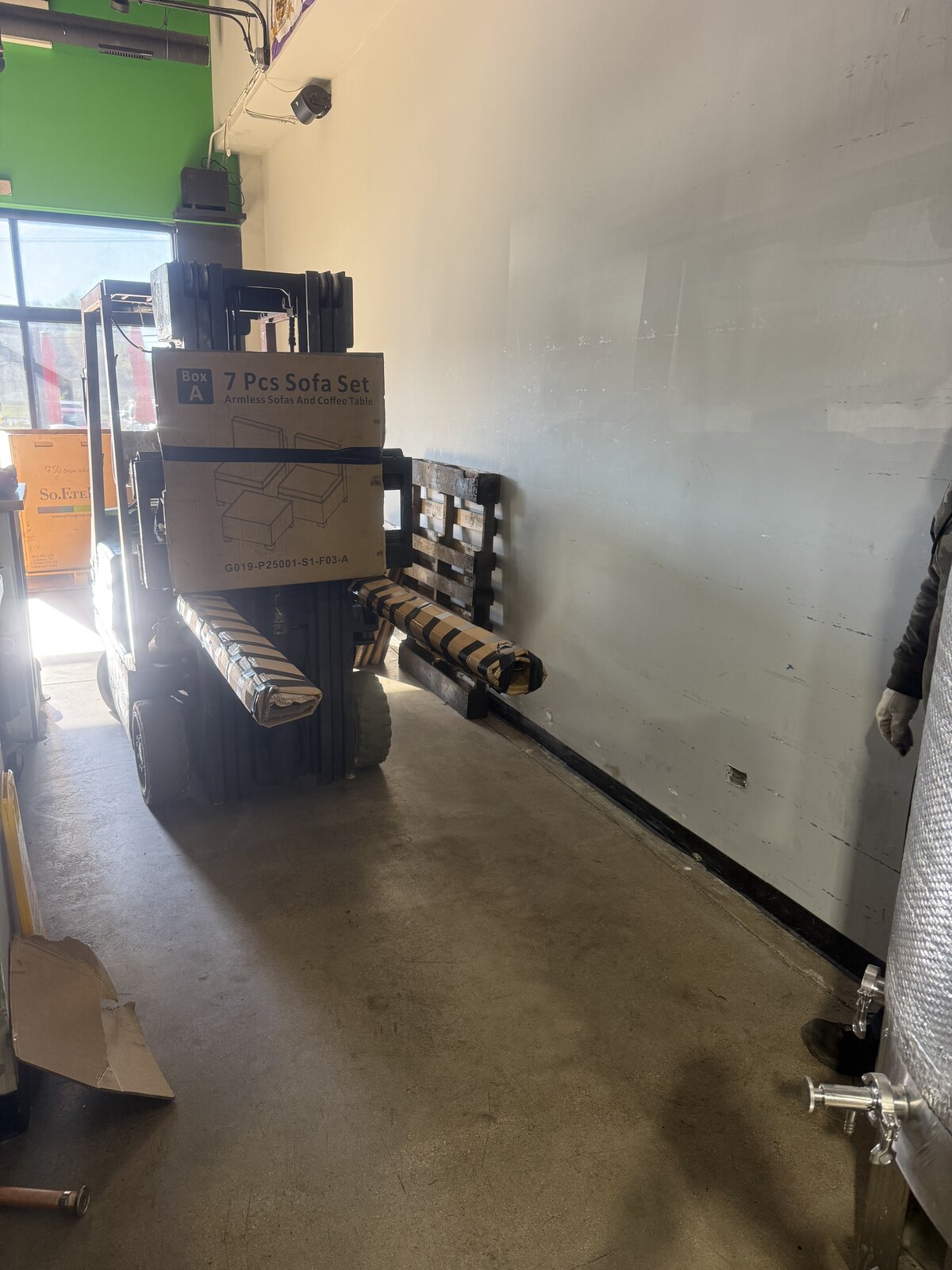
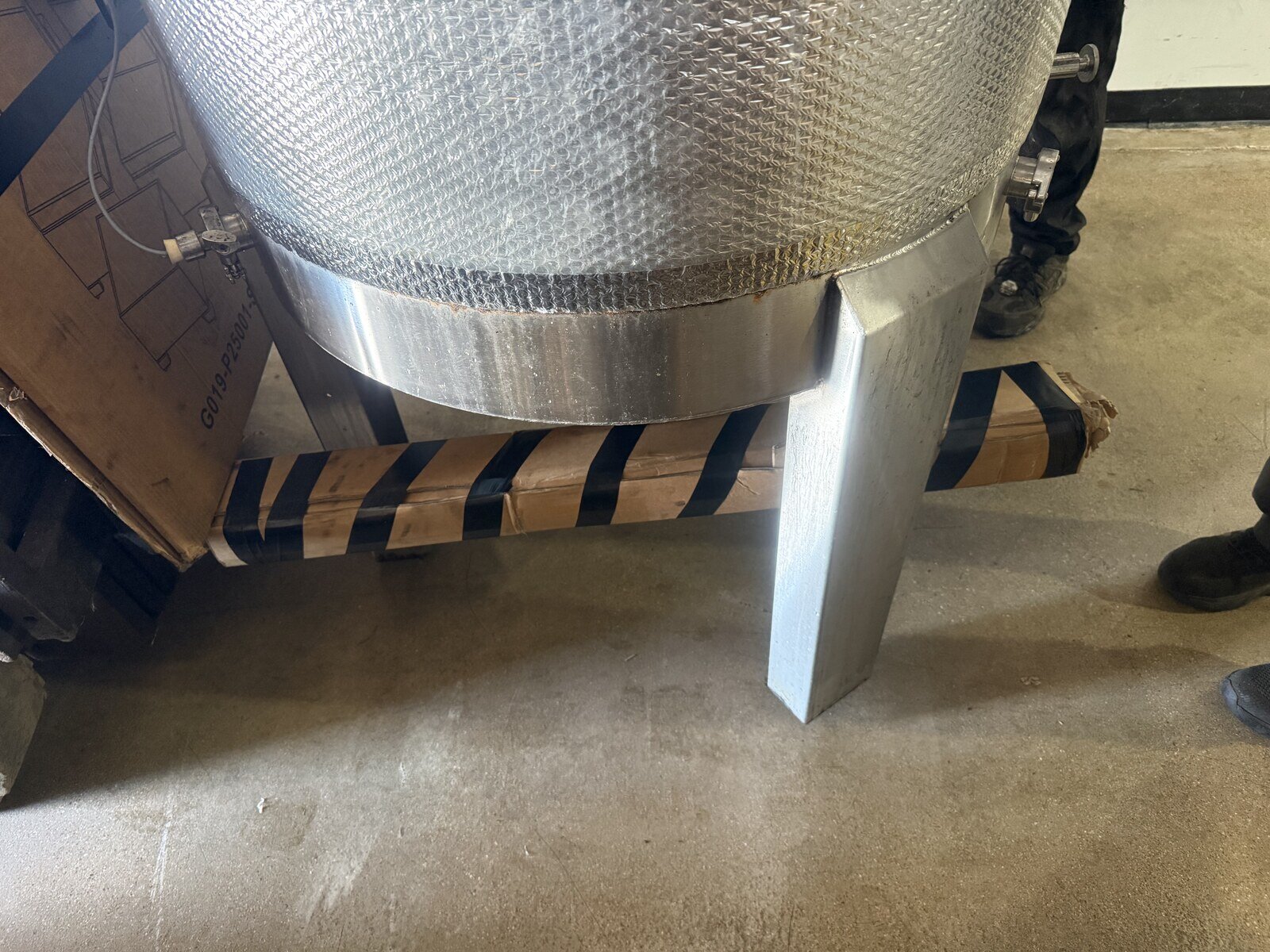
When removing tanks, we wrap the forks in cardboard. Bare steel forks scratch and dent delicate stainless tanks, and a tank leg on bare steel slides more easily than on cardboard.
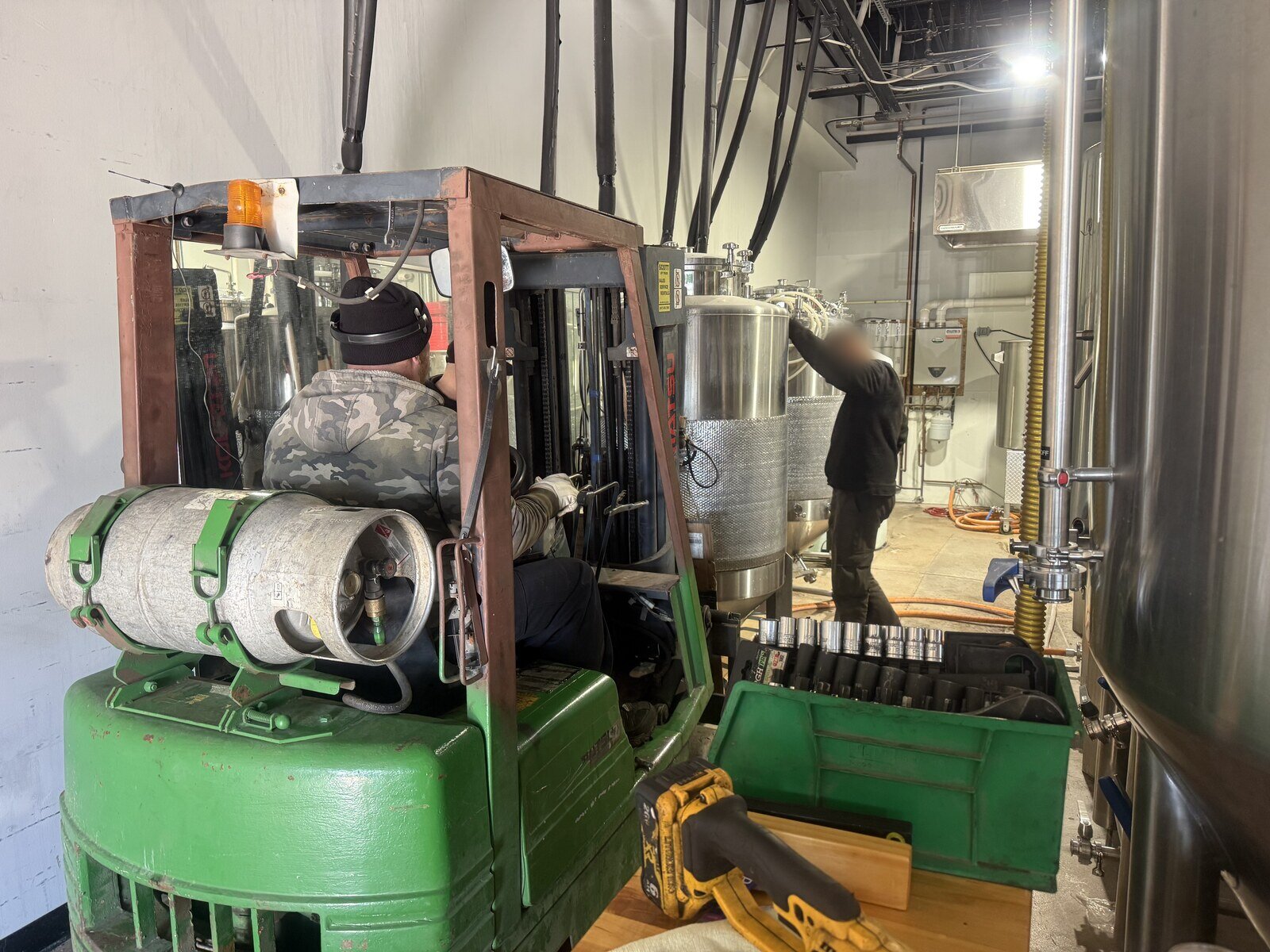
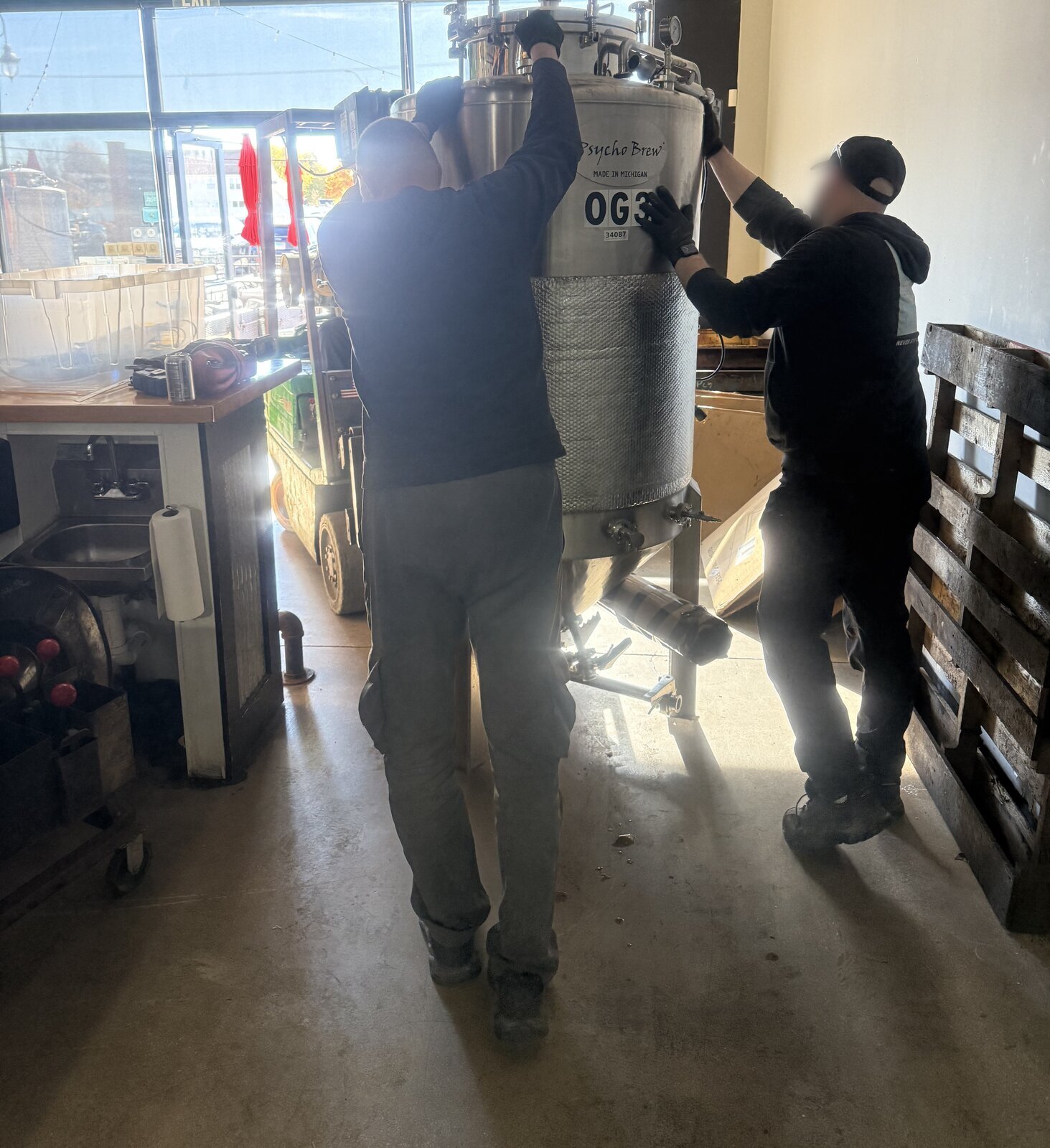
Small fermenters go out standing up on the forks. Two men walk beside each tank and hold it steady, and they keep it clear of the door frames, the bar, the tables and the front windows.
Laying tanks down and carrying them out the door
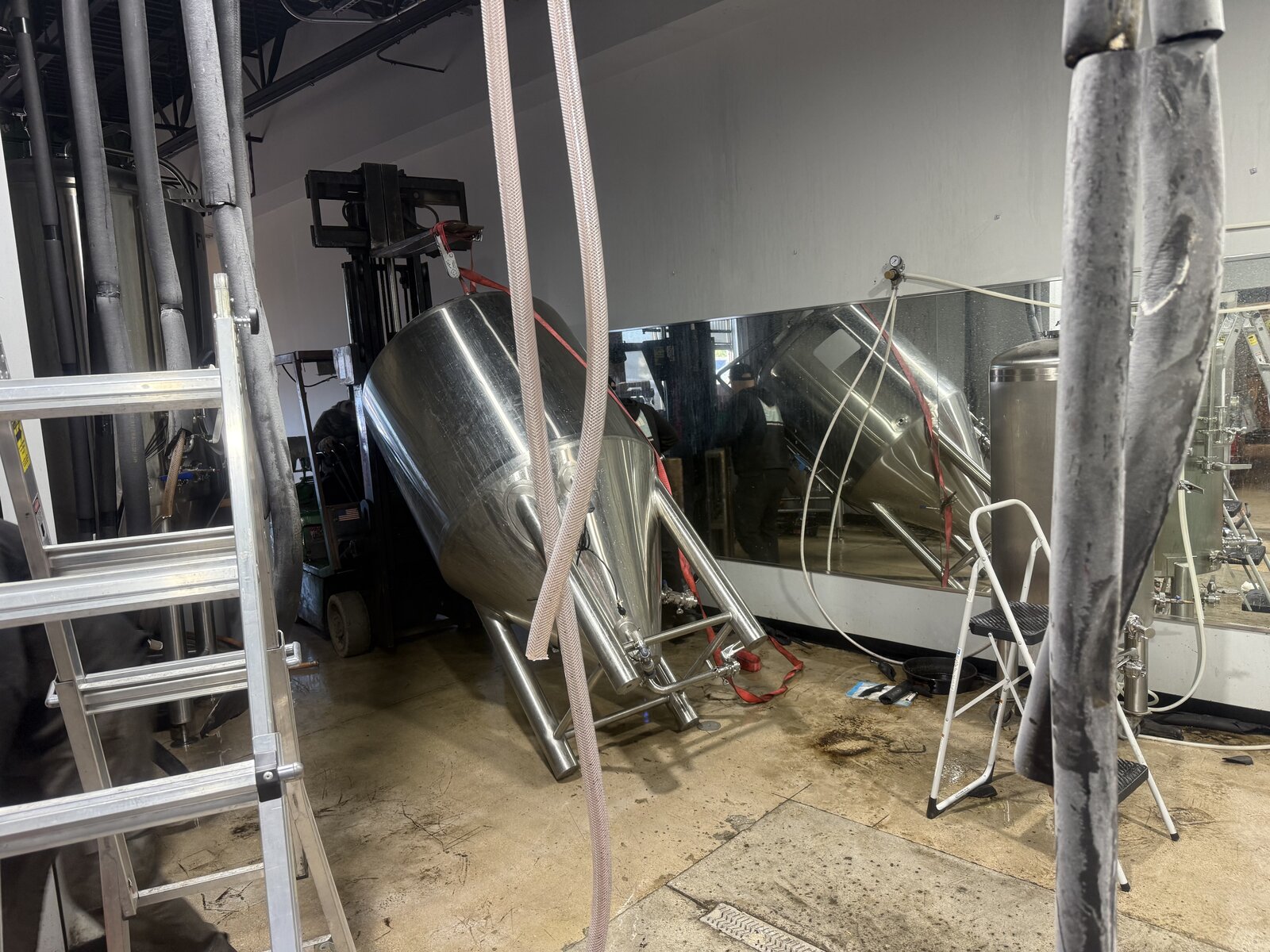
A tall tank is laid down before it goes out. A strap from the forklift mast holds the top of the tank. The forklift lowers it a little at a time until the tank lies on wooden pallets. Lying down, it fits through the overhead door.
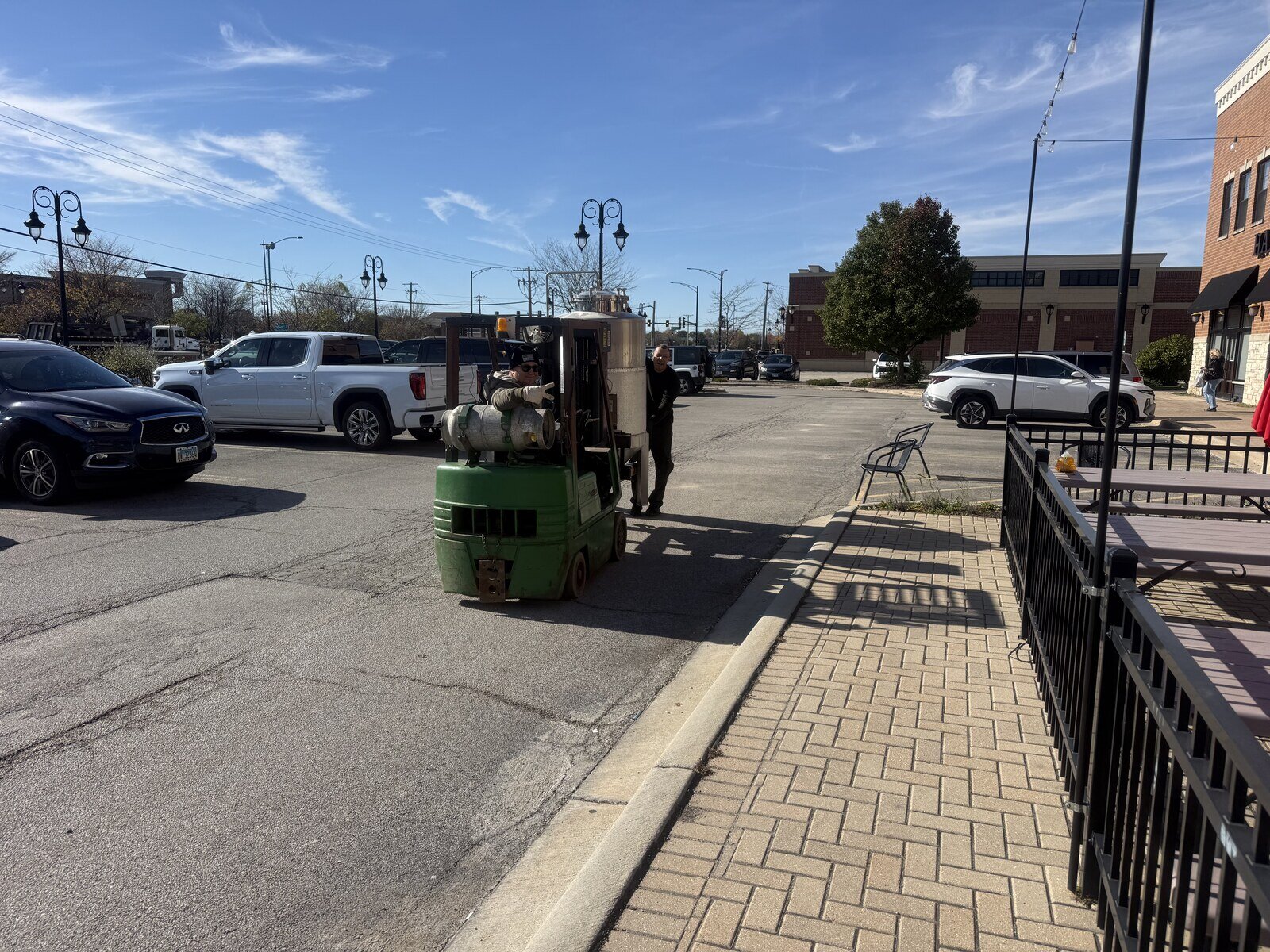
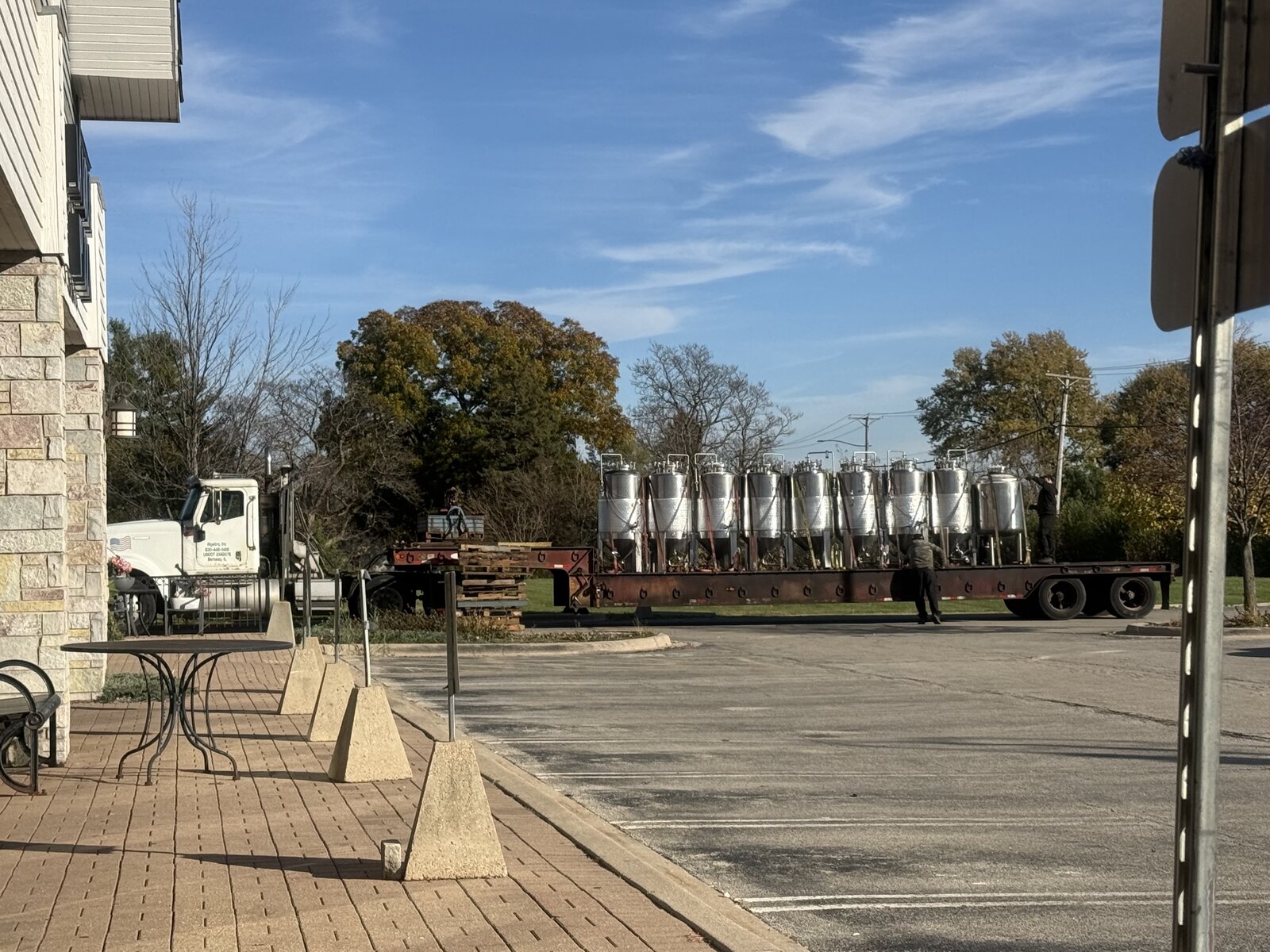
The small fermenters ride on a flatbed trailer standing up, each one held down with ratchet straps. Nine of them went on the trailer on the second day.
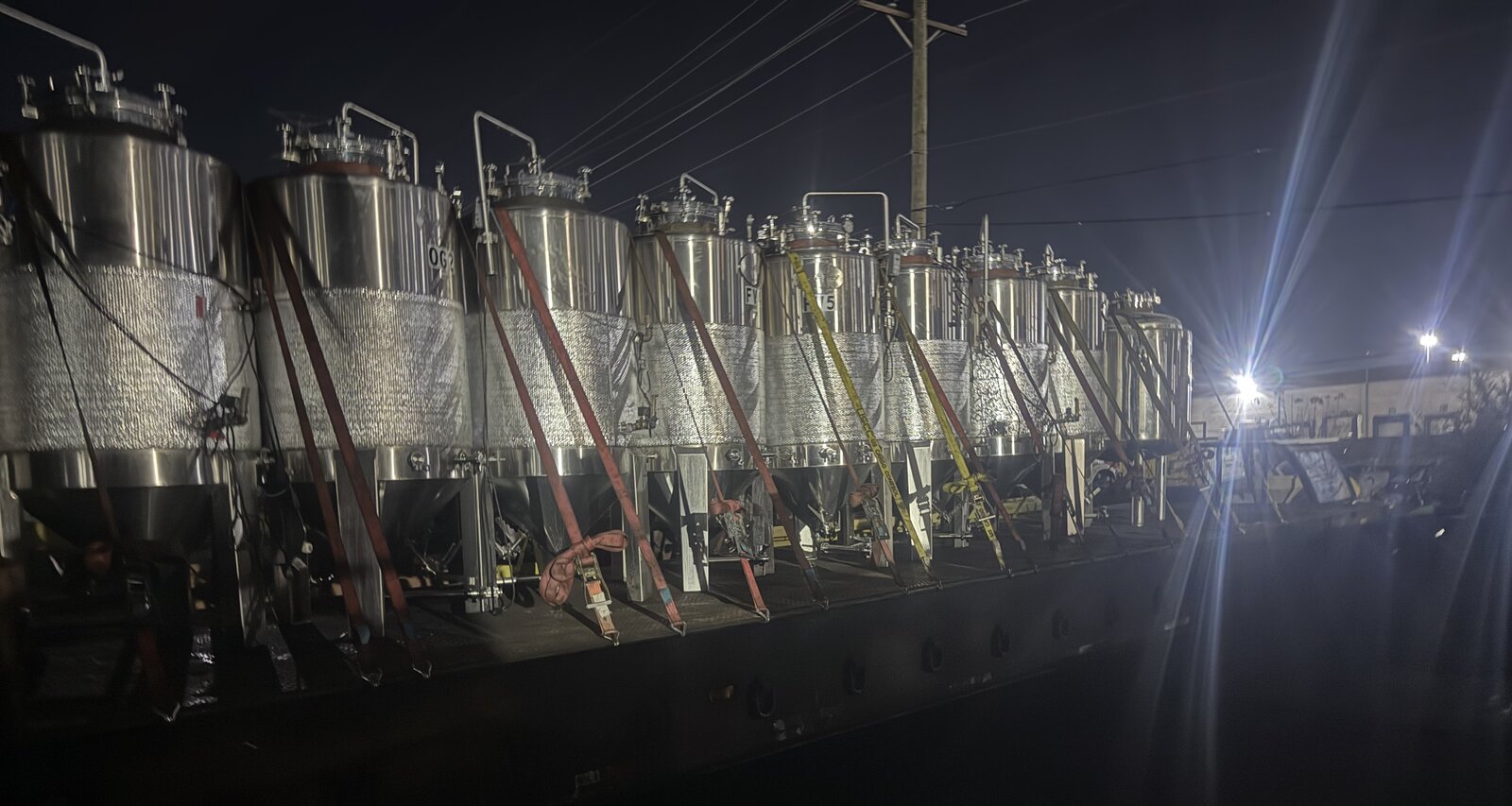
By that evening the trailer was at our yard in Berkeley.
Emptying out the plant, and what does "broom-clean" mean
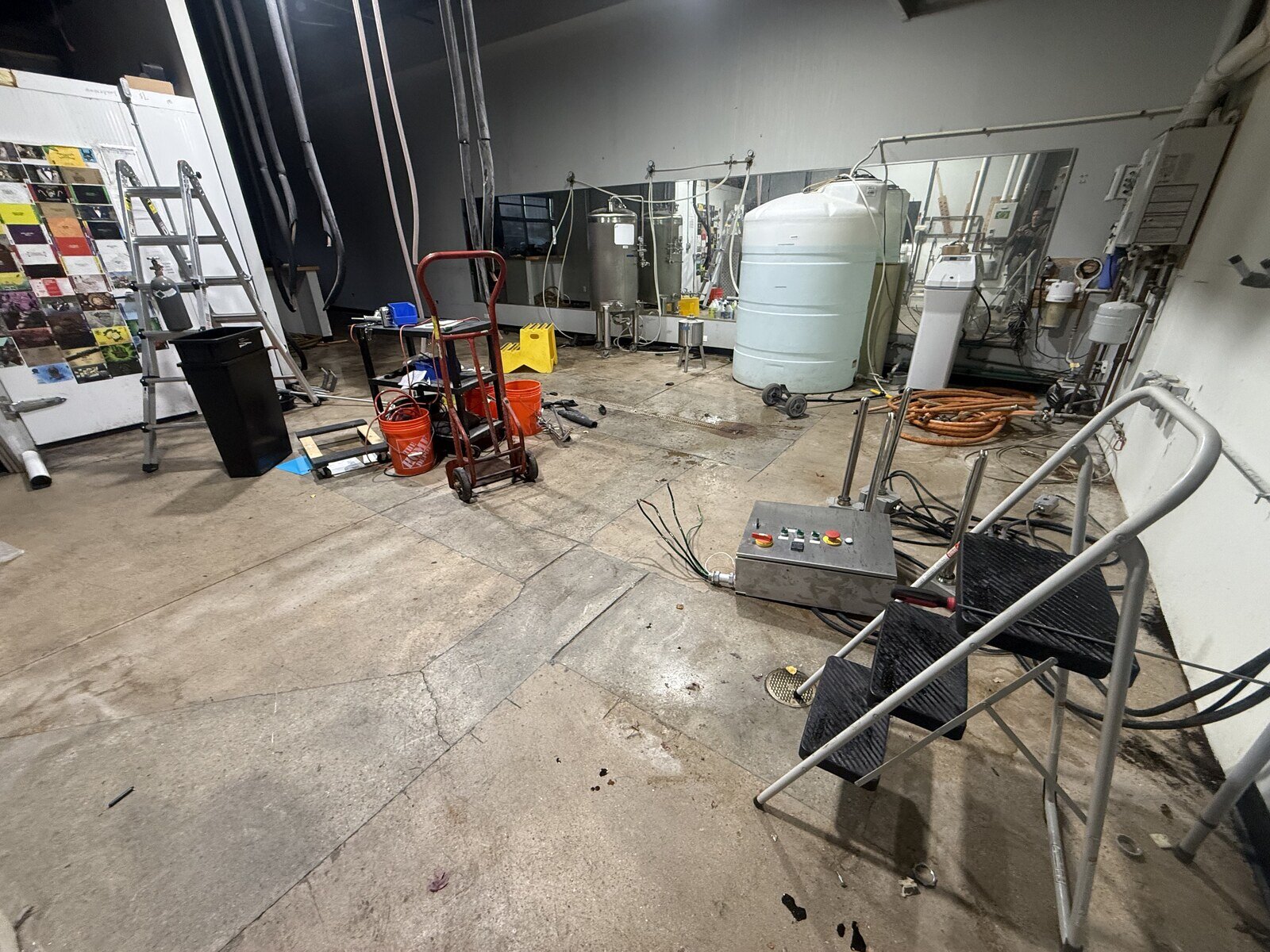
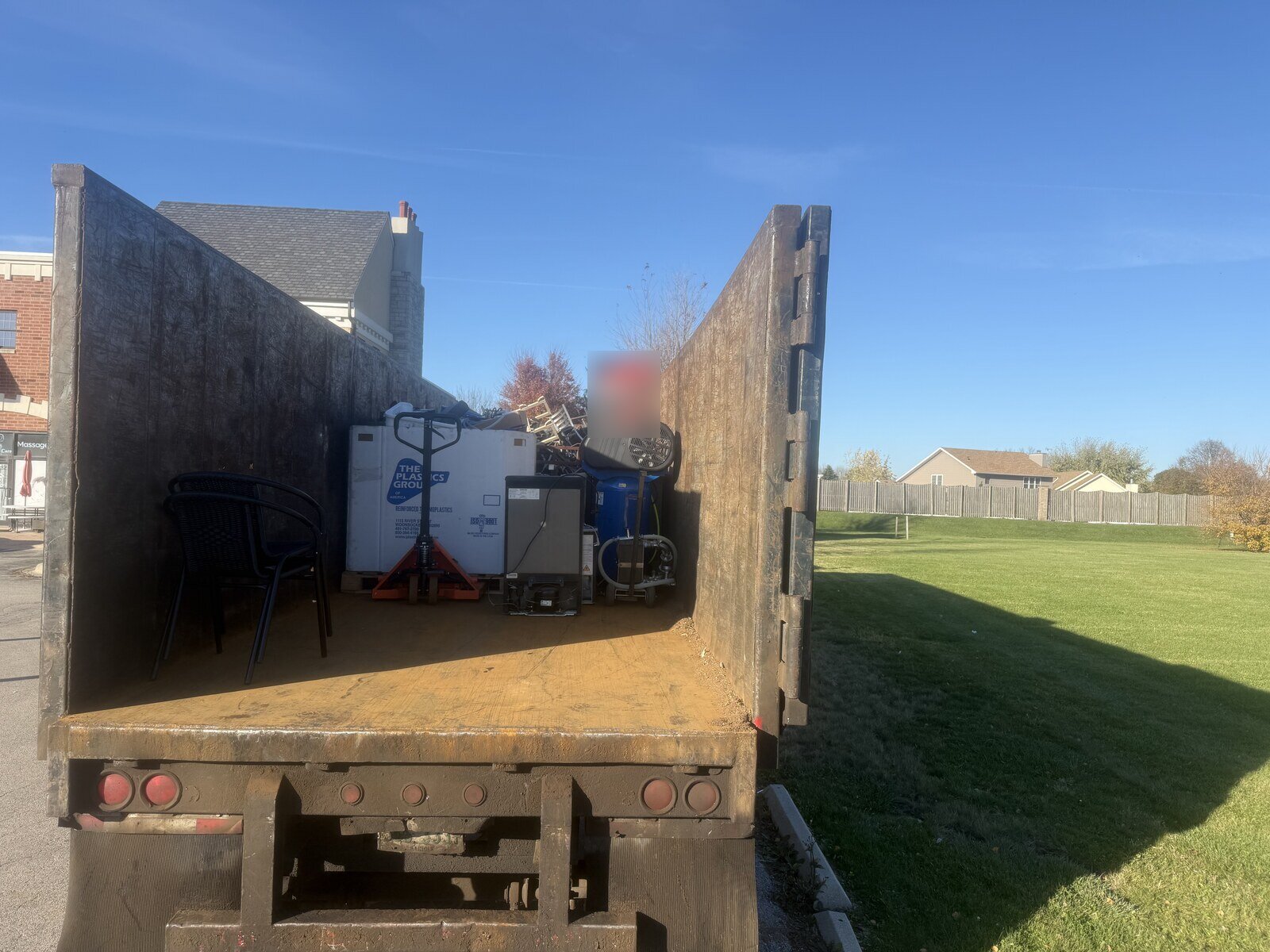
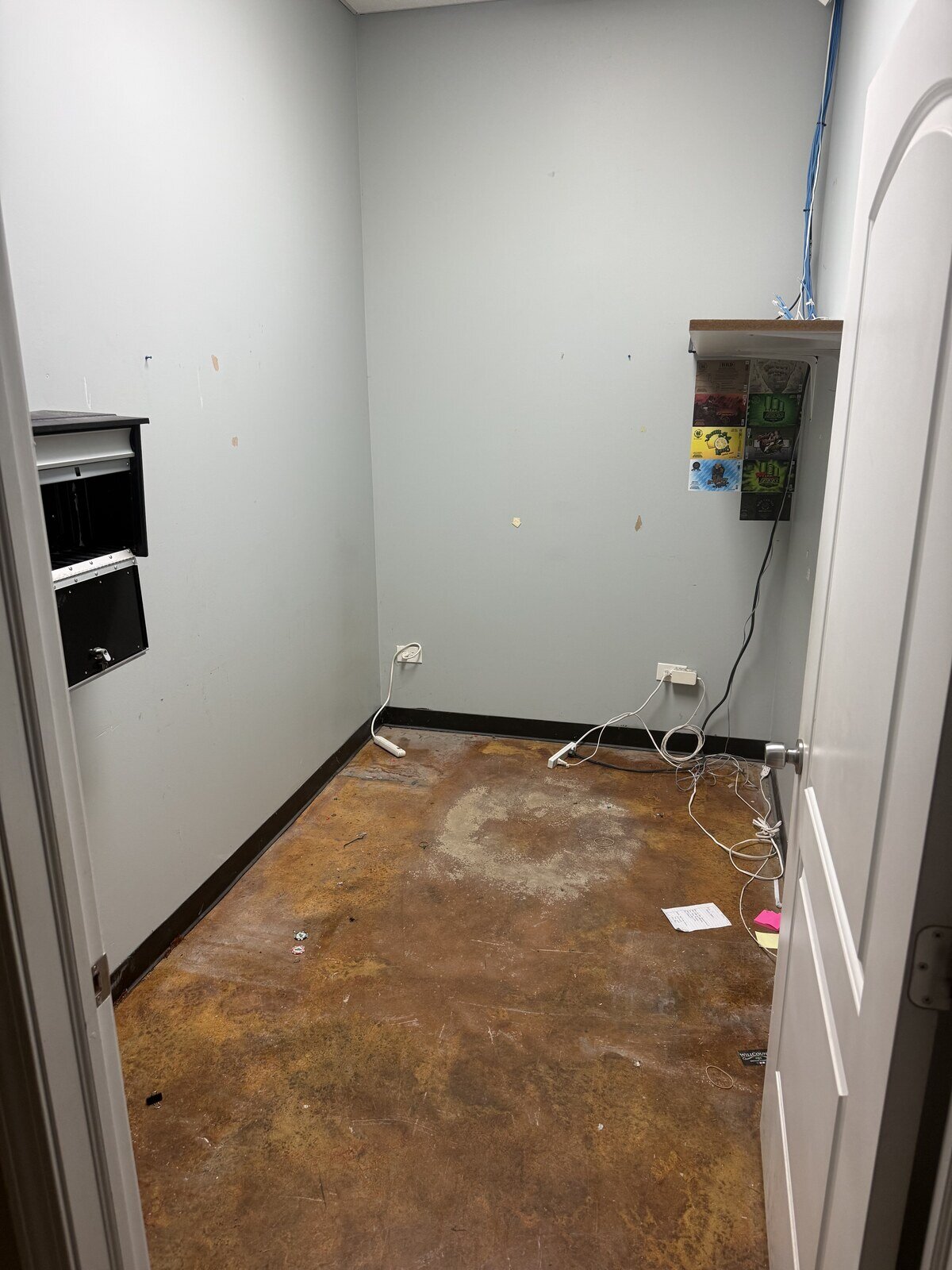
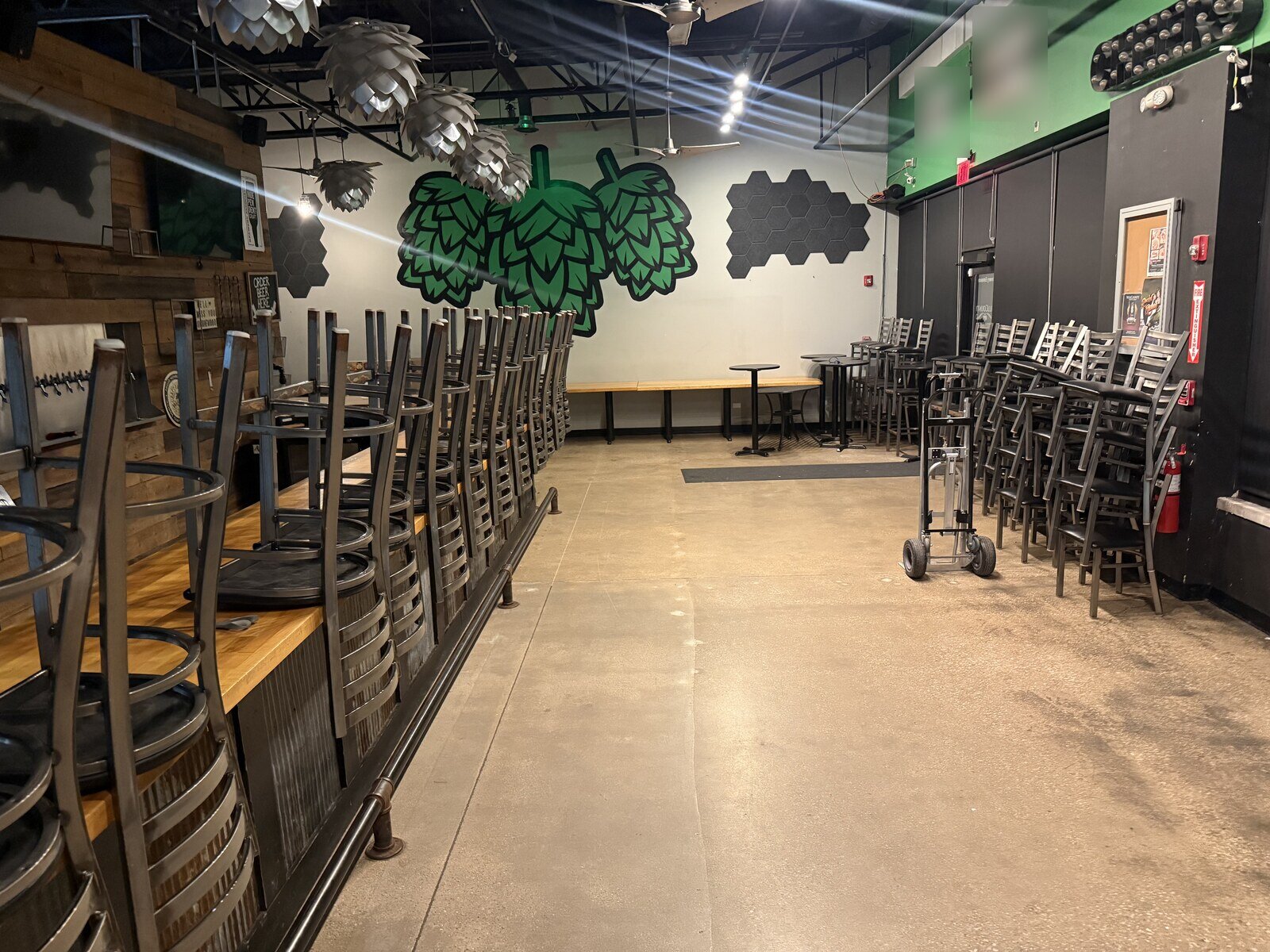
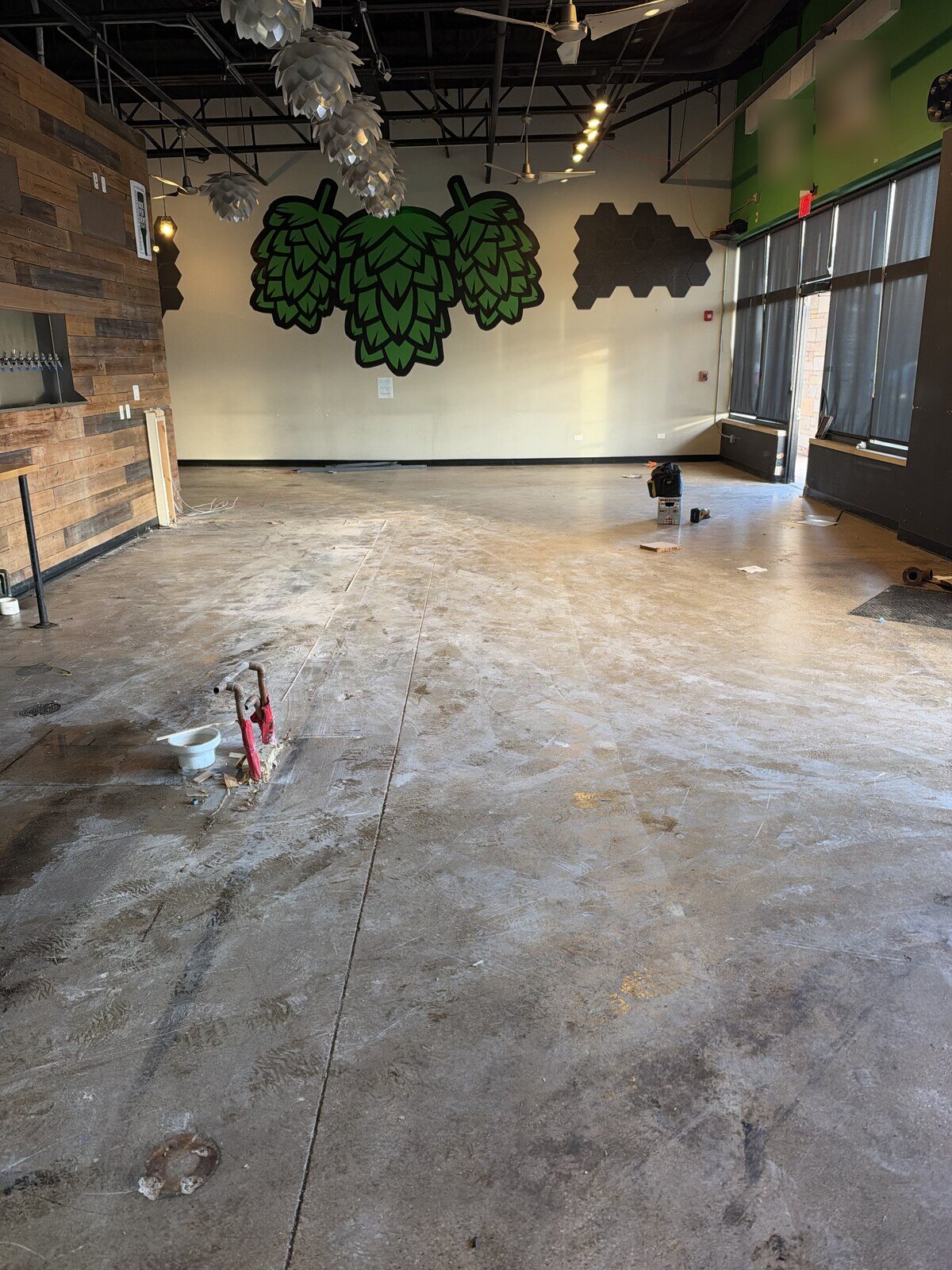
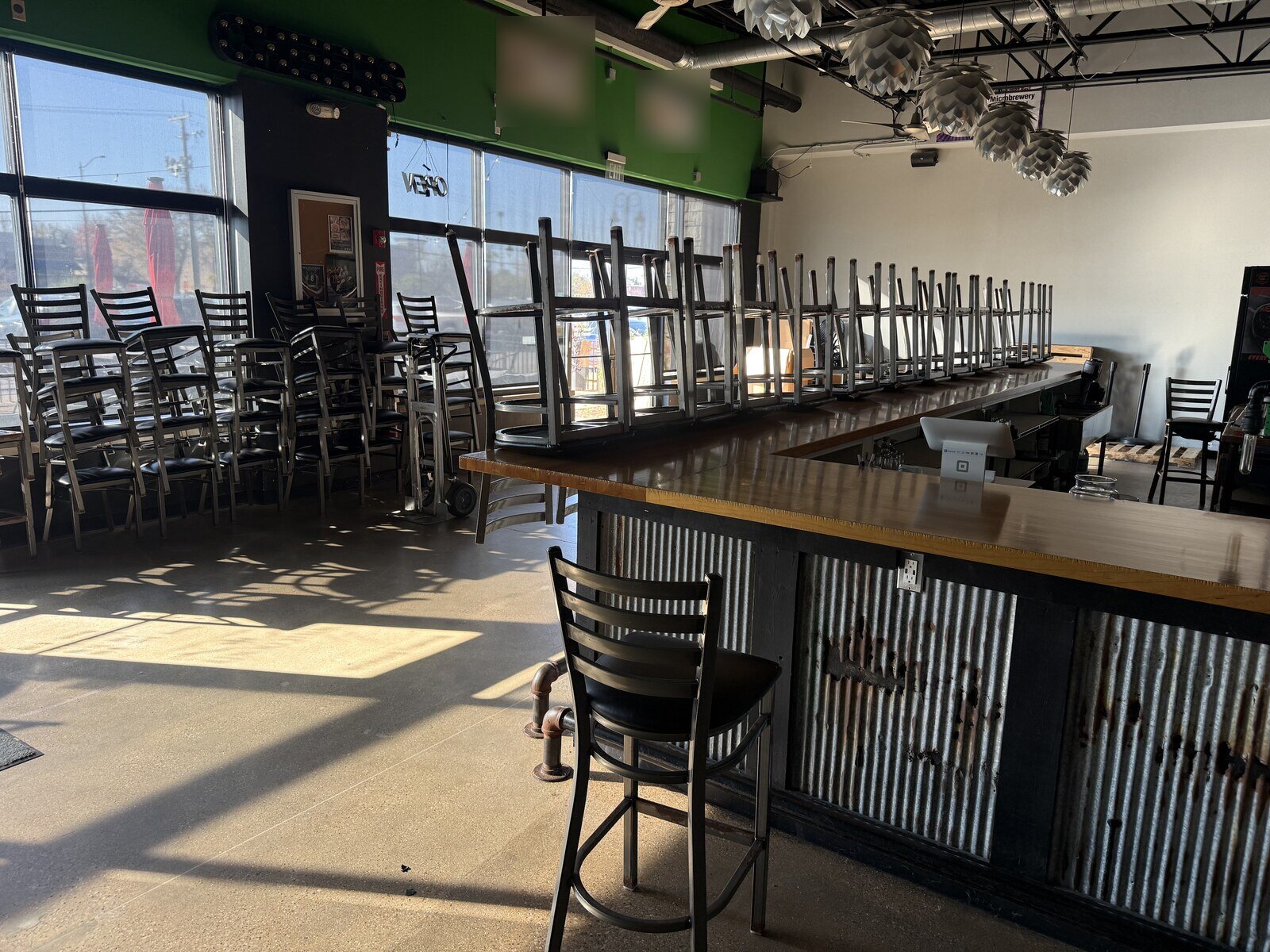
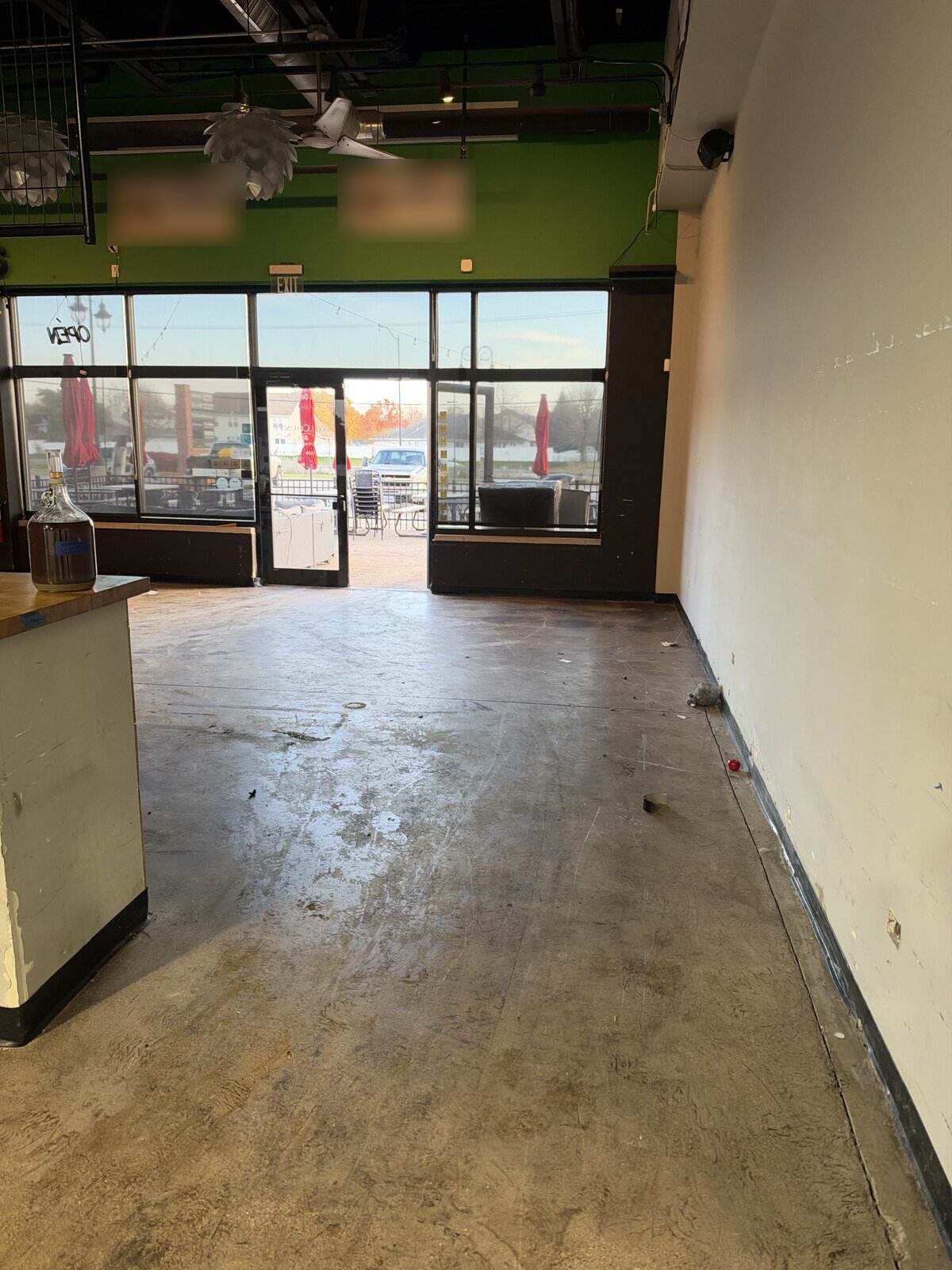
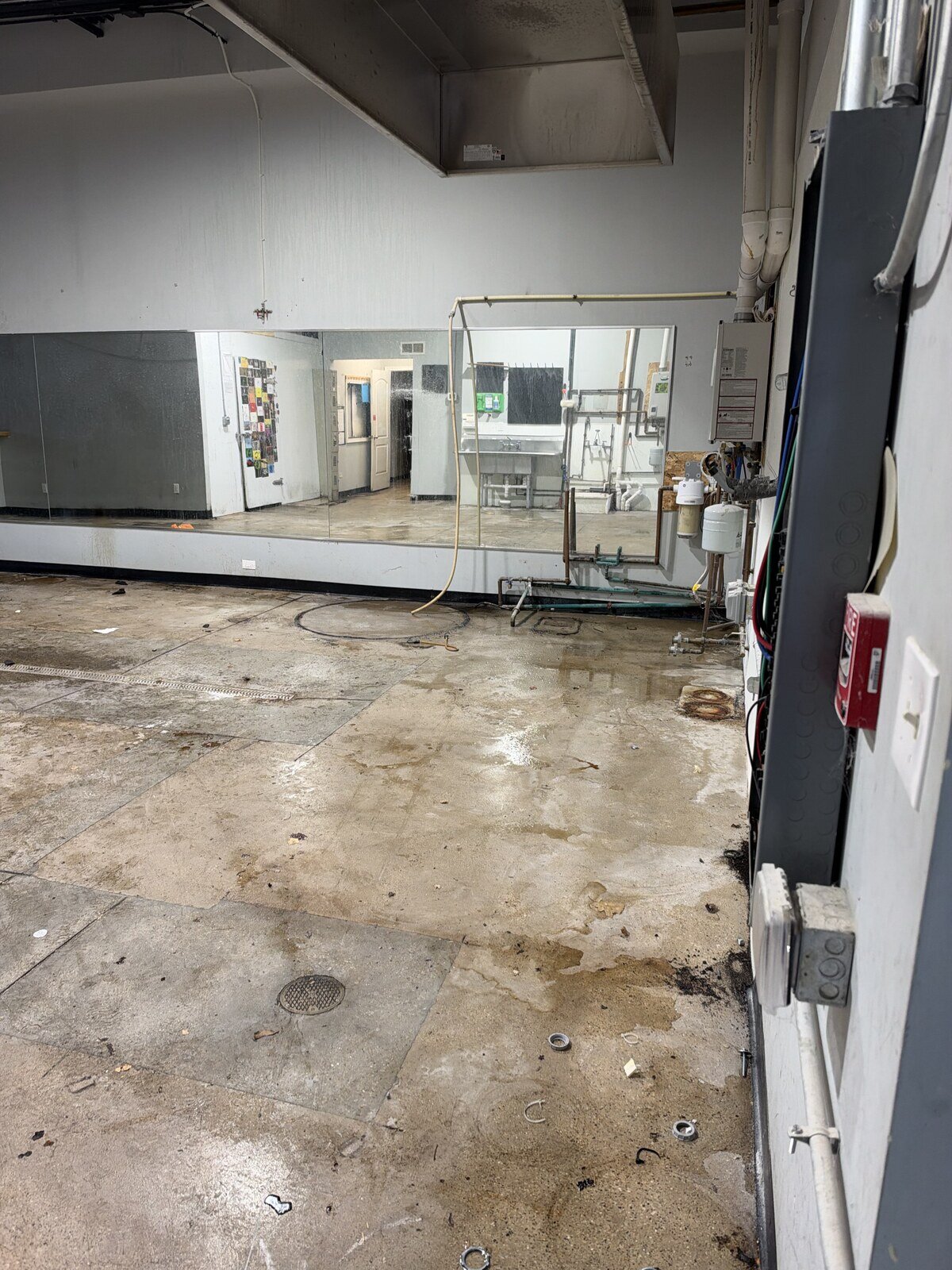
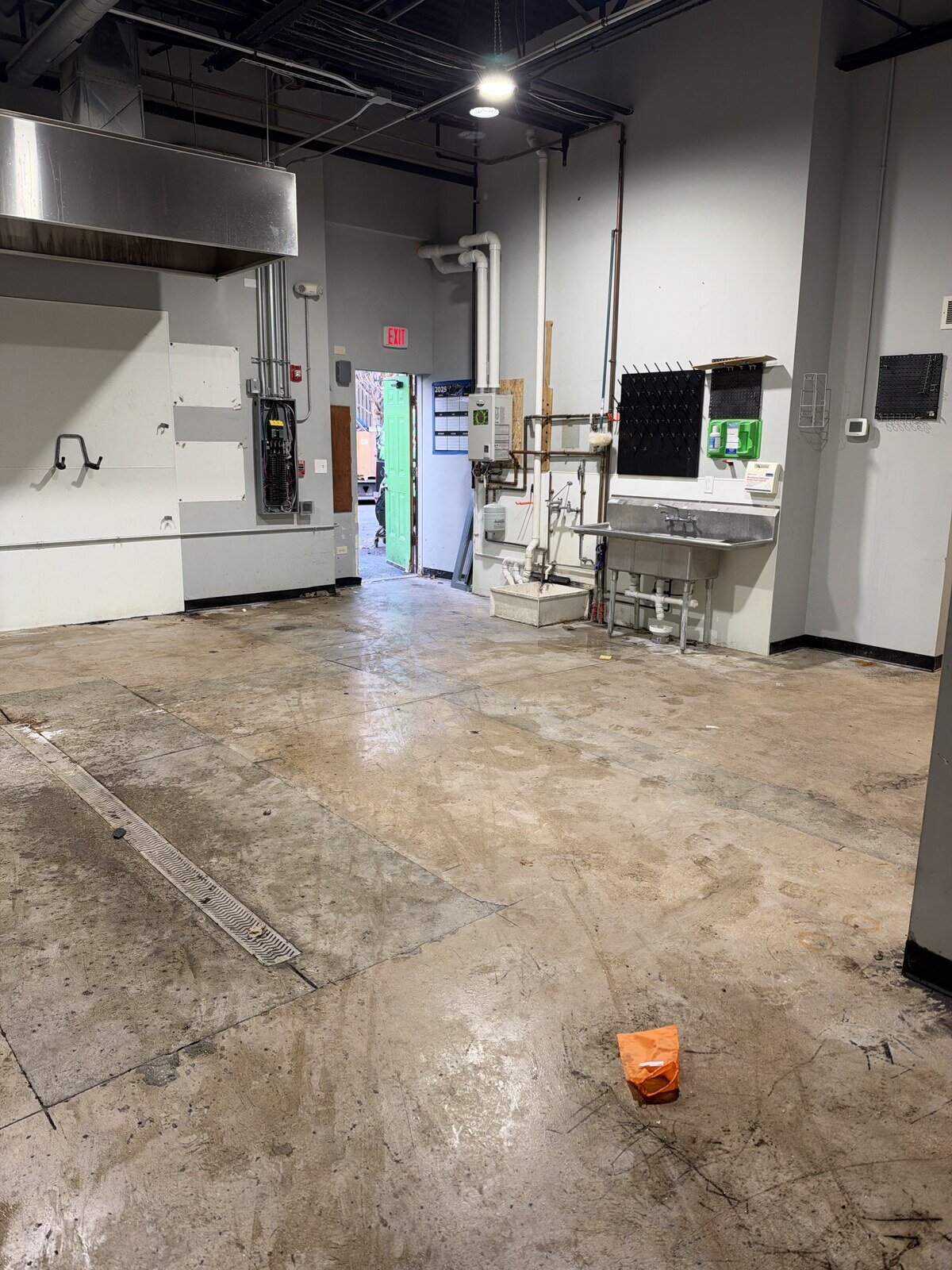
After the tanks, everything else goes: chairs, tables, coolers, shelves, bags of malt, buckets, hoses, paper and trash. Furniture and scrap go into our trailers. Then the floors are swept. The look is not perfect and the building is not ready to rent tomorrow: it simply is prepared for the next steps, such as plumbers capping copper pipes, painters painting the walls, etc.
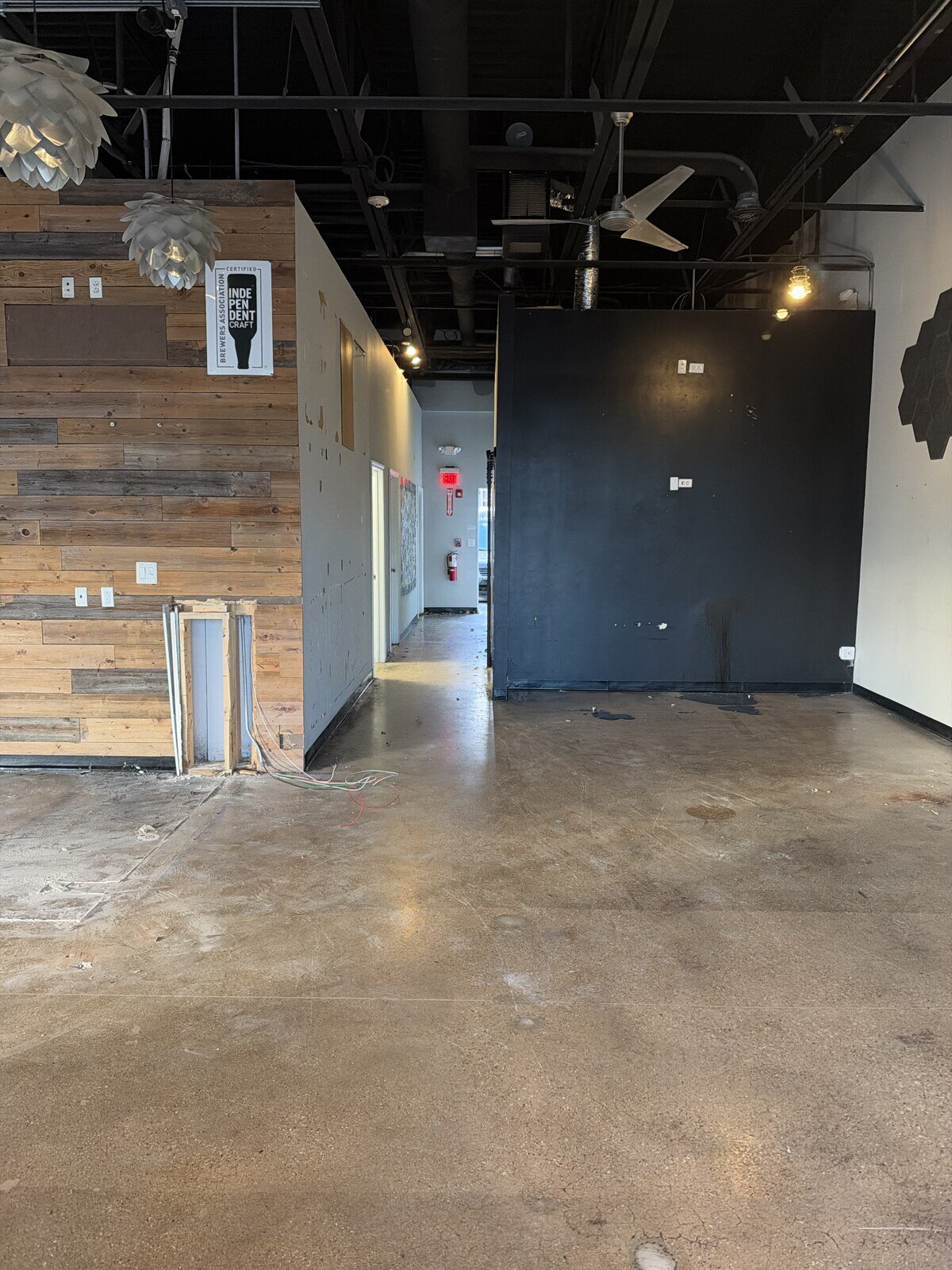
The black box on the right is the walk-in cooler. It stays with the building.
Before and after
Each pair below is taken from about the same spot. The "before" photos are from our first walk-through on October 29 and the morning we started, November 8. The "after" photos are from November 16.
Who comes in while we work
While we work, I control who comes in. Nobody walks in to look around or take something without the landlord and me knowing about it.
After we leave
Before we start, I ask for written authorization from whoever has the right to give it: the owner, the landlord's attorney, or in a bankruptcy the trustee or the lender. I want the paper, "as I do not want lawyers chasing my trucks."
Tanks and equipment that still work get sold. The rest goes for scrap. Once it leaves the building it is ours, so the landlord does not get calls about it later.
If your brewery tenant has closed and the space has to be emptied, call me, Igor, at 630-235-6603.