Unloading a New Studer Grinder and Lifting It Off Its Shipping Base
By Igor Chudov, owner, Chicago Machinery Movers, Berkeley, Illinois. Moving and removing industrial machinery since 1998.
A DuPage County gear manufacturing plant bought a new Studer favorit grinder, the 1600 size. It was made in Switzerland. Weight about 12 metric tons. Our job was to unload the crate from the truck, take it into the plant, help with uncrating, and set the machine in place.
What the maker's manual says about lifting
The customer sent us the transport section of Studer's manual before the job. For ths "model 1600" machine it says that In its crate, the machine can be lifted with a fork lift, and the gross weight and the center of gravity are printed on the crate. Out of the crate, on its wooden base, it can also be lifted with a fork lift. Without the wooden base it may not be lifted with a fork lift.
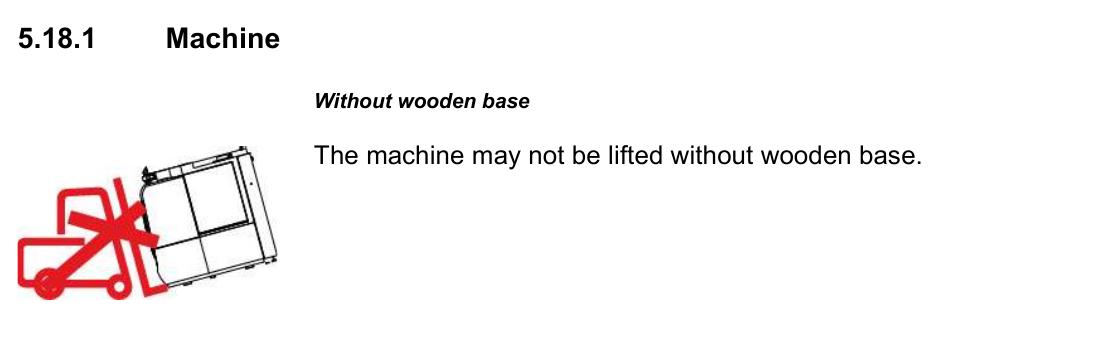
From Studer's transport manual for the favorit, section 5.18. © Fritz Studer AG.
For raising the machine itself the manual gives two ways: from the top, hanging from Studer's suspension device, or from below, with hydraulic lifting devices put under supports that Studer supplies. We lifted it from the top. The suspension device is a T-shaped cross-member with adjustable gear at the front and fixed gear at the back, and the manual gives its payload as 12,000 kg.
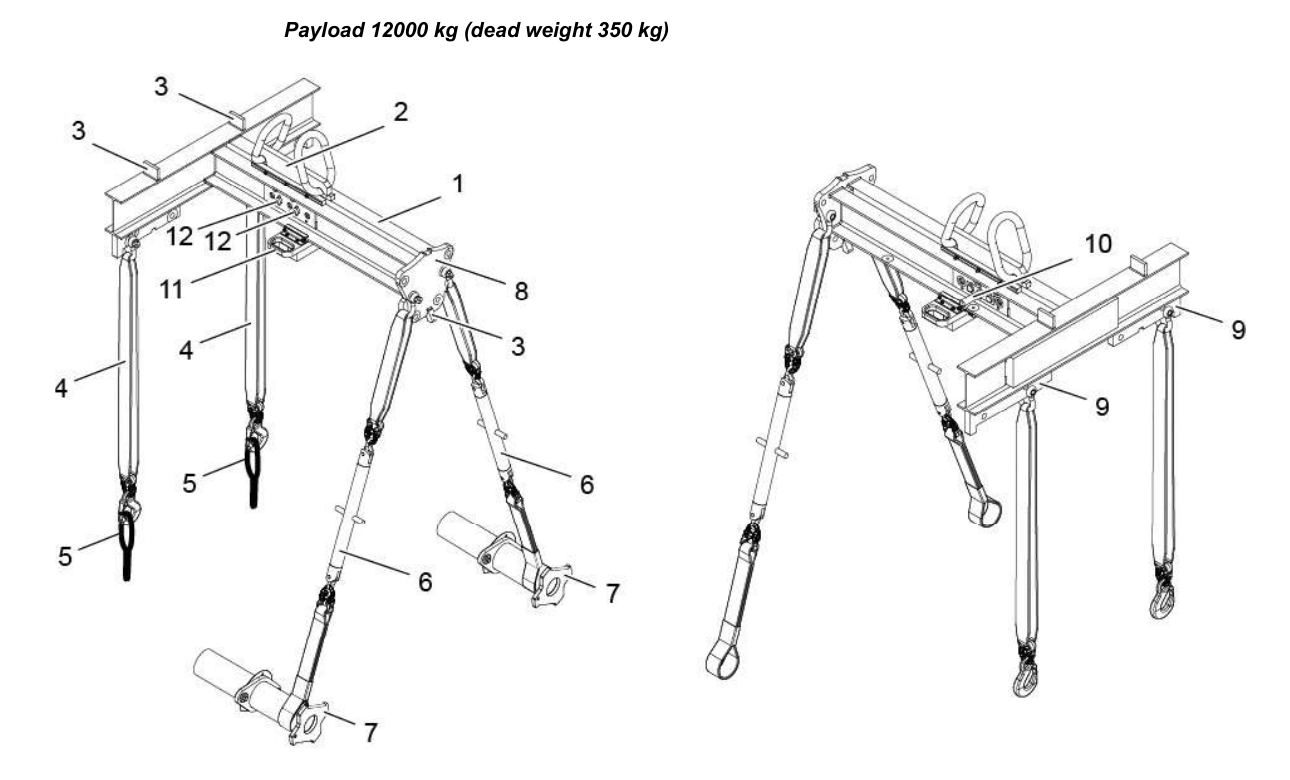
The suspension device, from Studer's transport manual for the favorit, section 5.11. © Fritz Studer AG.
So this was a forks and boom job. The crate went on the forks, and the machine by itself hung from the boom.
What left our yard in the morning
We sent our Versa-Lift 60/80 forklift with its boom, three counterweights and steel street plates. The boom and the plates needed an extra truck. We also took a helper forklift.
The Versa-Lift comes out of our gate and drives up the street to be loaded. Sped up.
The Versa-Lift went on a lowboy trailer. The counterweights, boom, street plates and a helper forklift went on our stepdeck trailer.
The flatbed leaves with the yellow forklift on it. Then the lowboy with the Versa-Lift turns around on our street and leaves. Sped up.
The crate comes off the truck
The crate was delivered on a flatbed Conestoga trailer. The cover was pushed to the front, and the Versa-Lift took the crate from the side of the trailer. The pictures are from my crew. We had to put street plates on the weaker parts of the ramp going into the building.
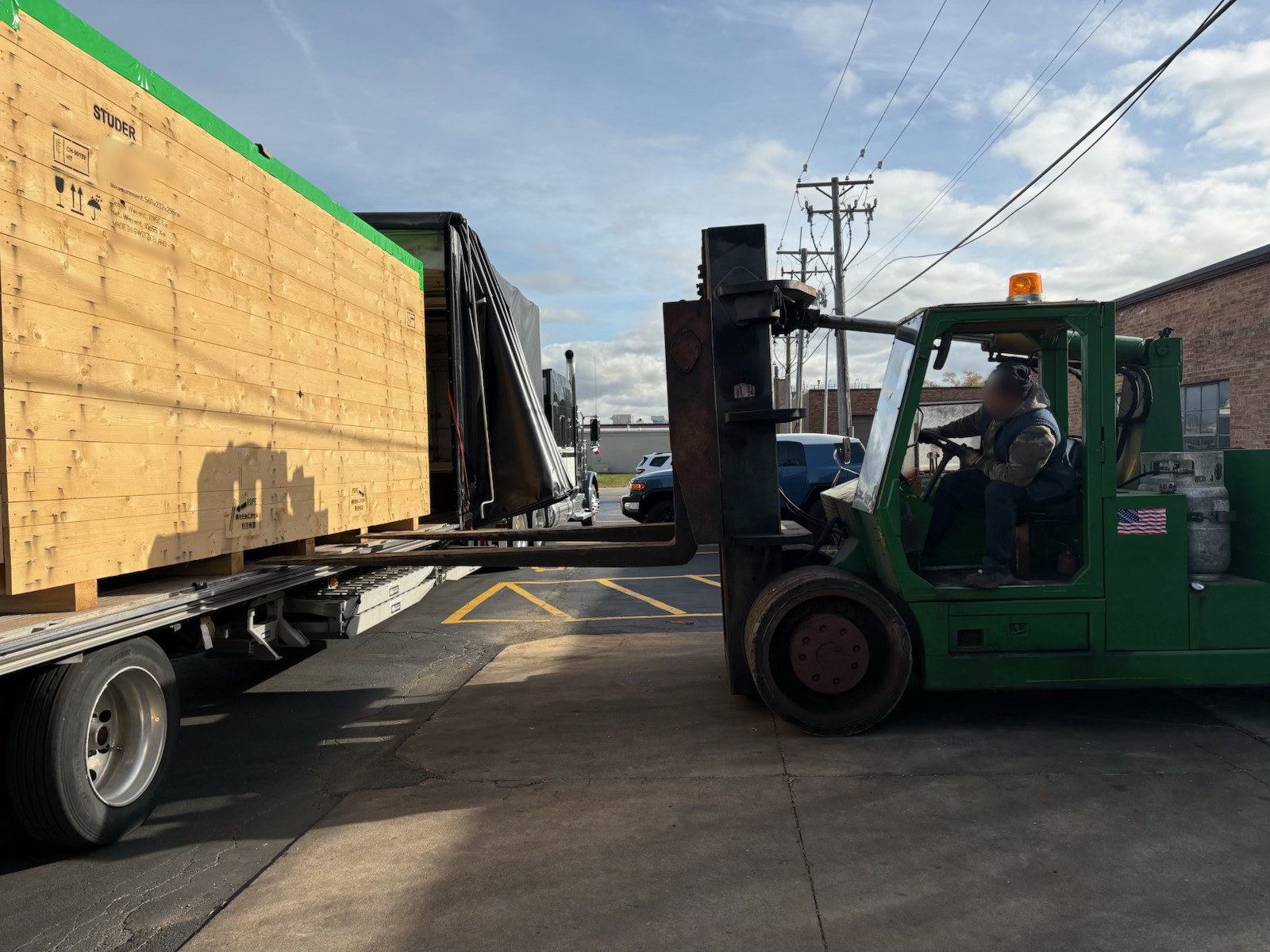
The forks going under the crate.
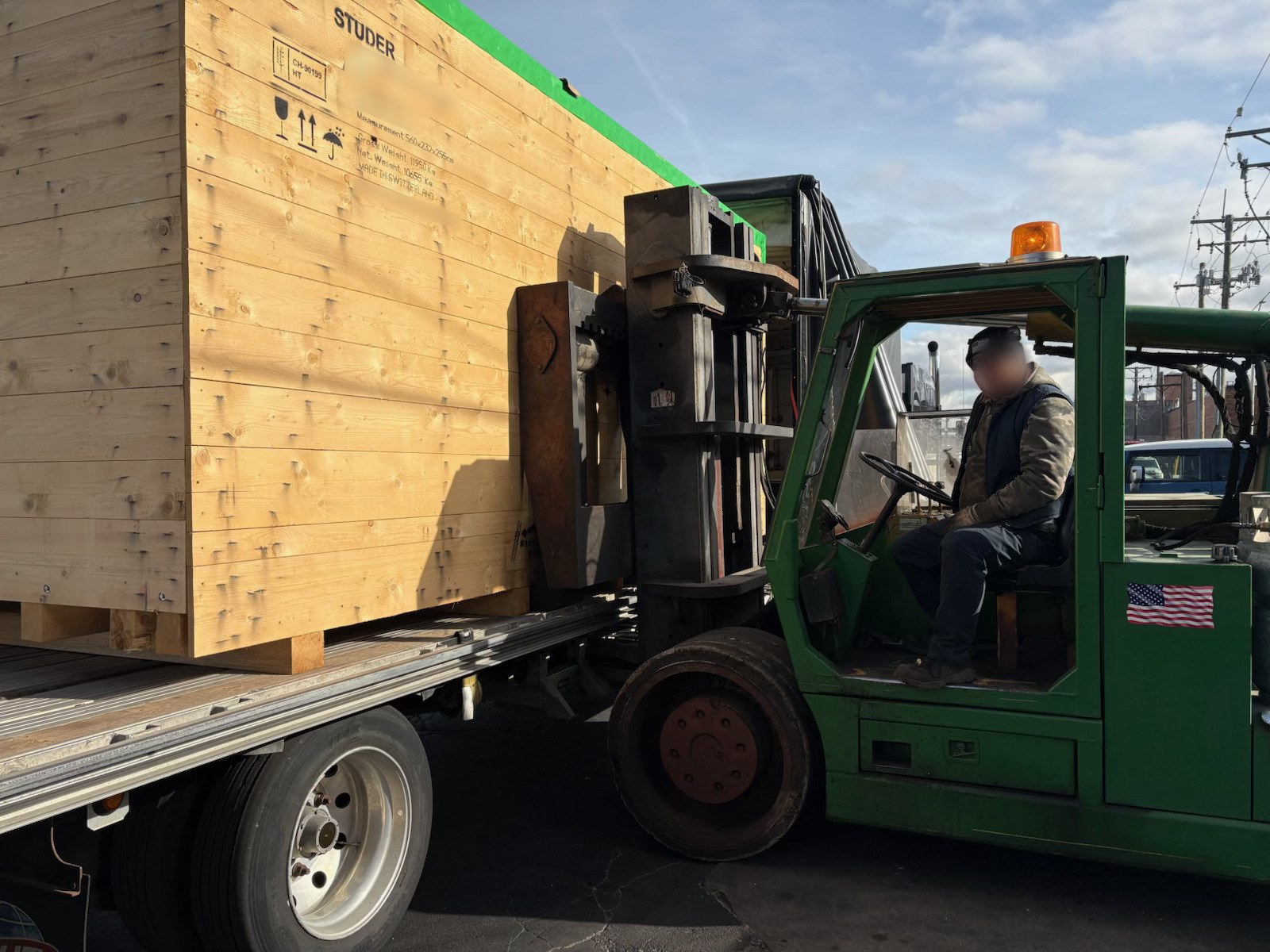
The stencil on the crate: measurements, gross weight and net weight.
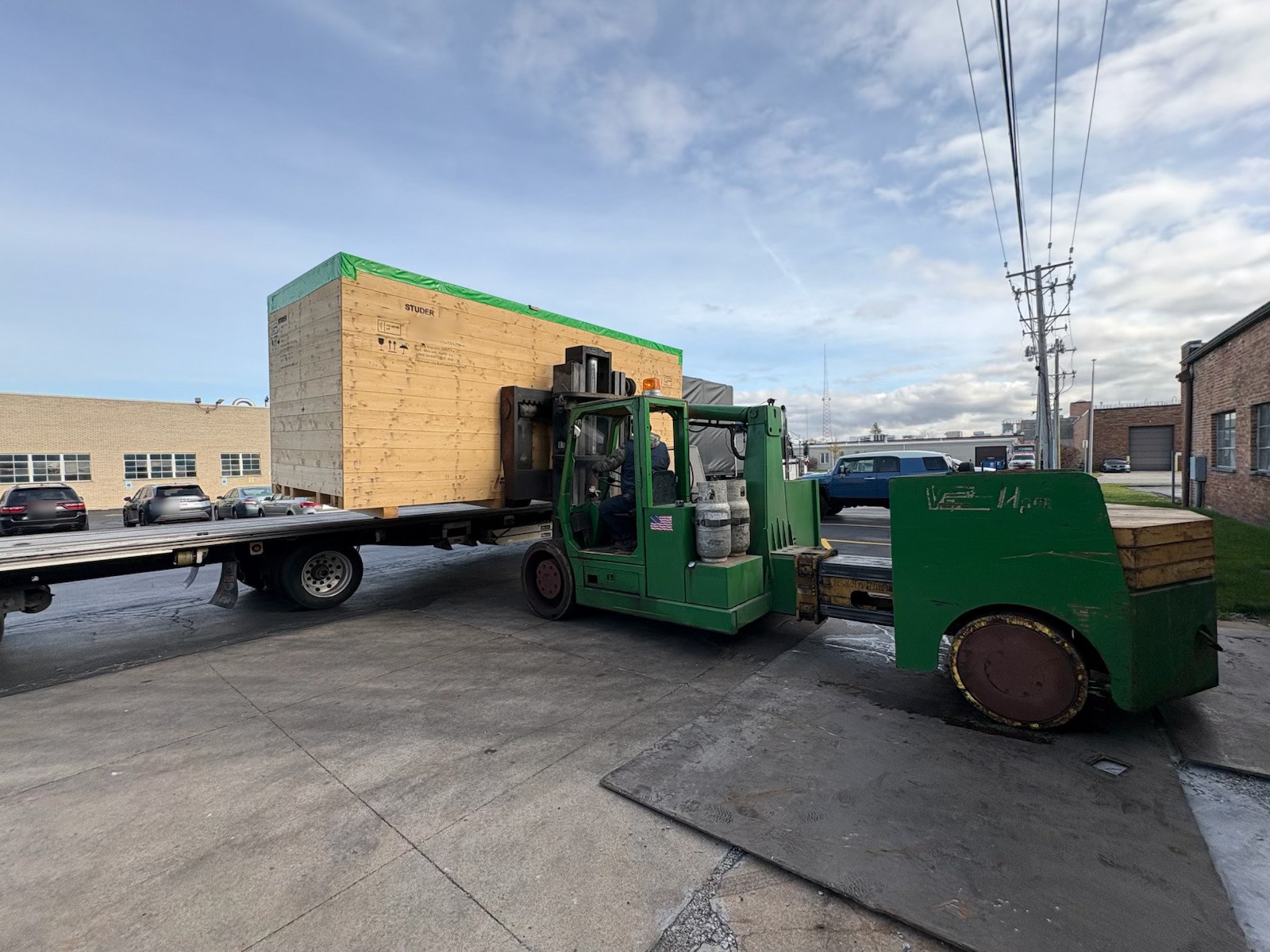
Our Versa-Lift at the side of the trailer, with its frame extended to the rear.
Through the plant door, end first
The crate is 18 feet long, and it went through the plant door end first. Skates went under the far end of the crate. The Versa-Lift held the near end on the forks and pushed.
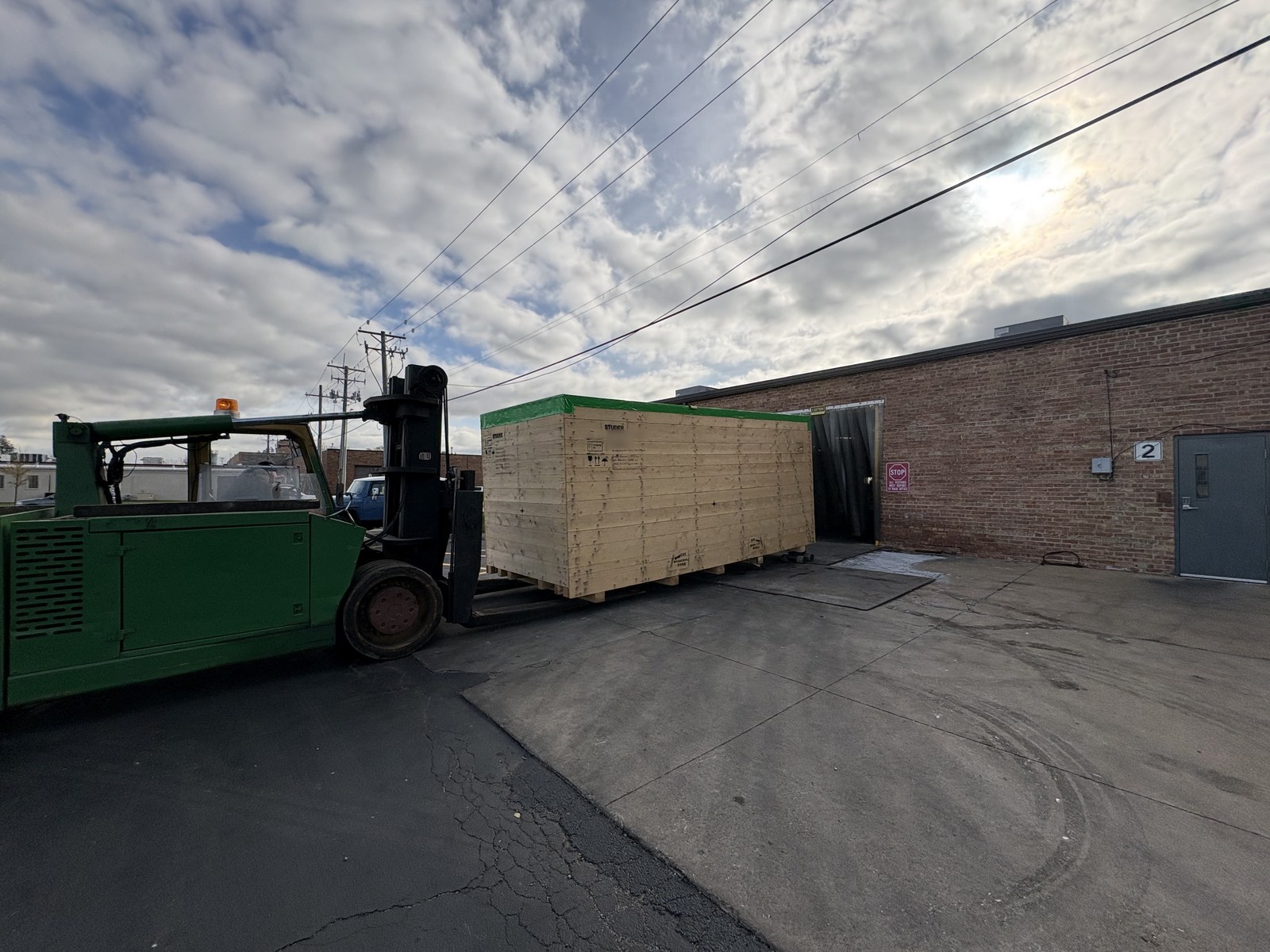
The crate at the door, with skates under its far end and the forks under the near end.
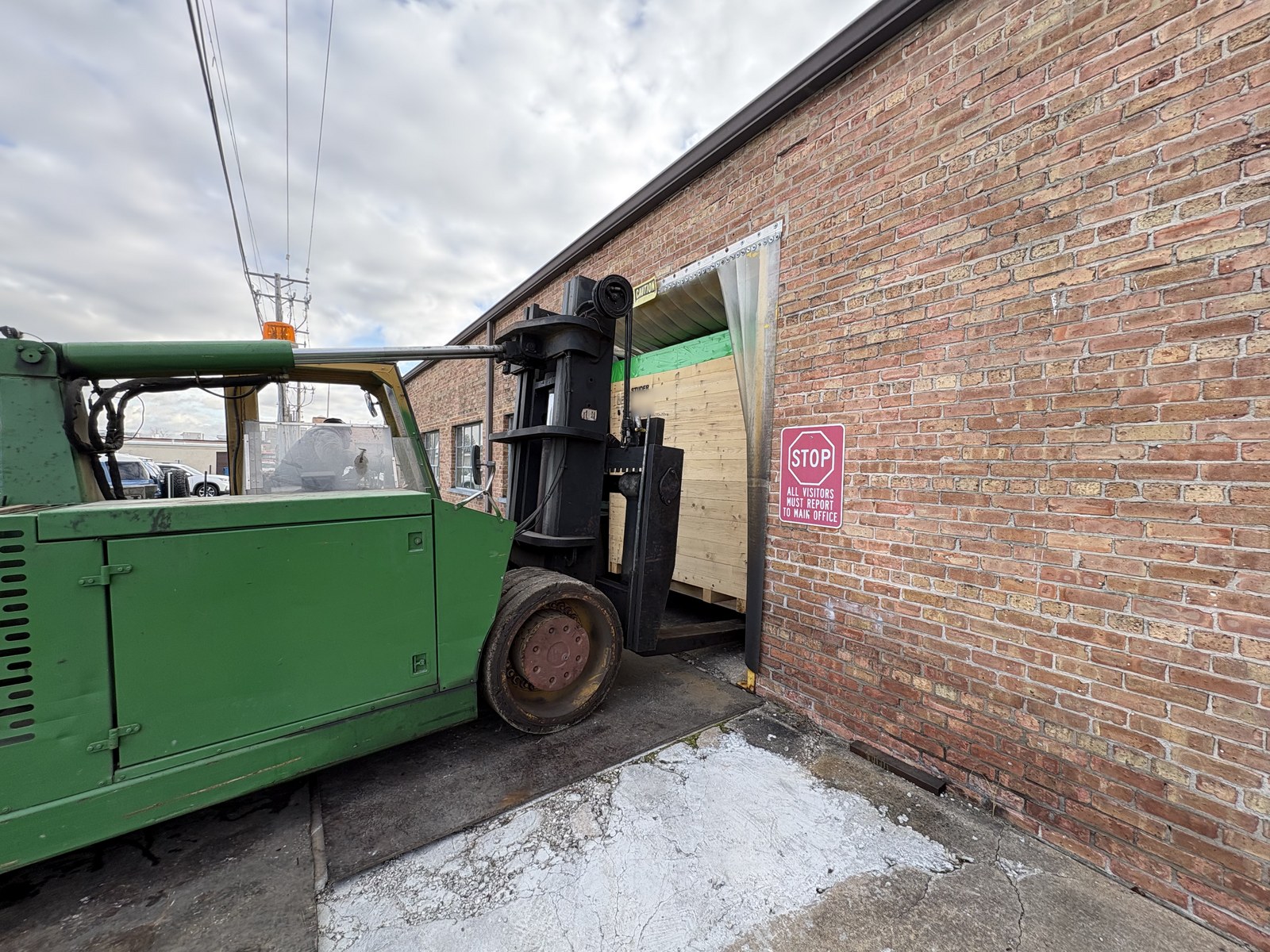
Going through the door.
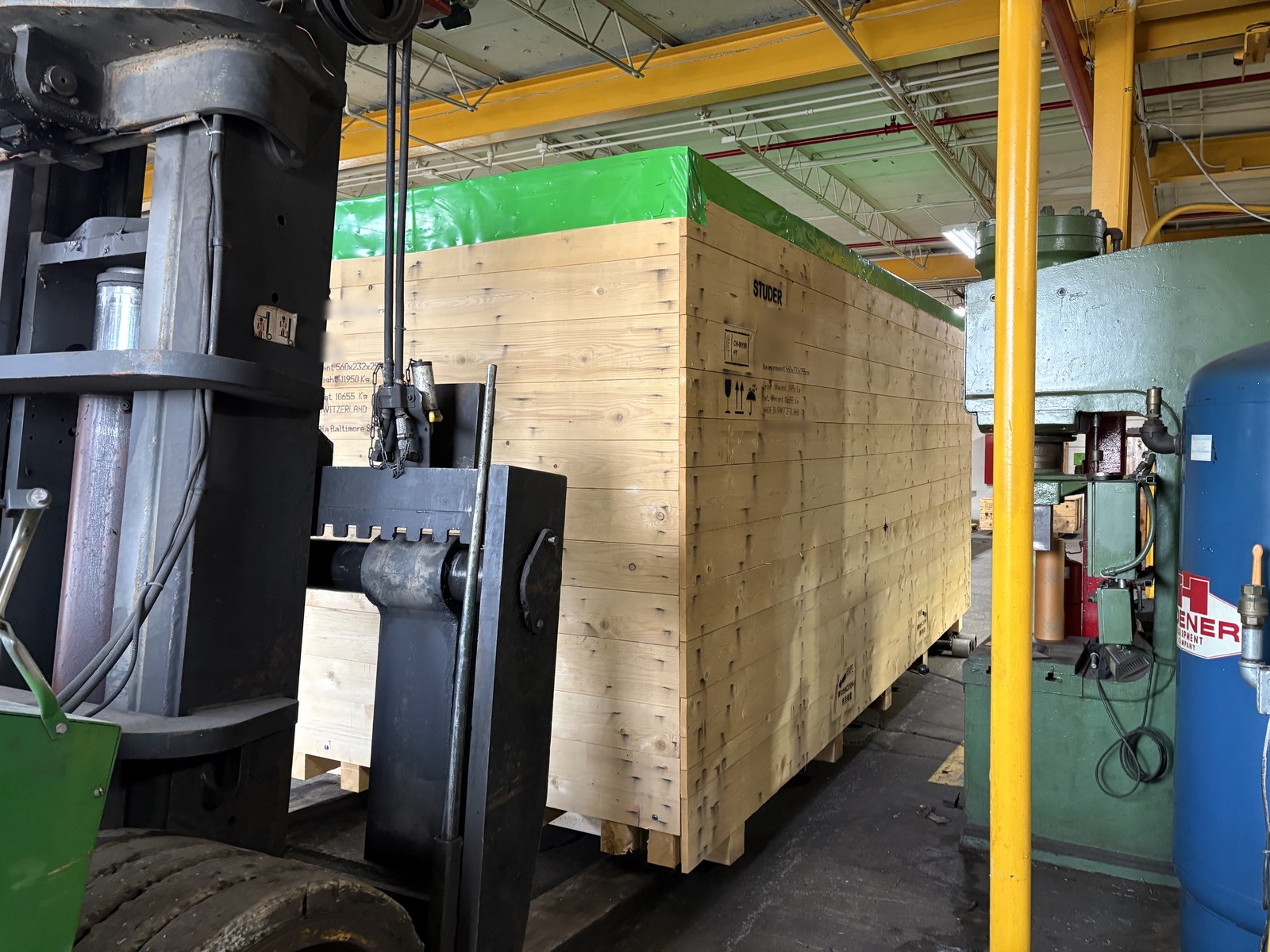
The crate inside the plant.
Out of the crate
Inside, the crate was taken apart around the machine. The machine stood on its wooden base. The manual says it is screwed to the base for shipping.
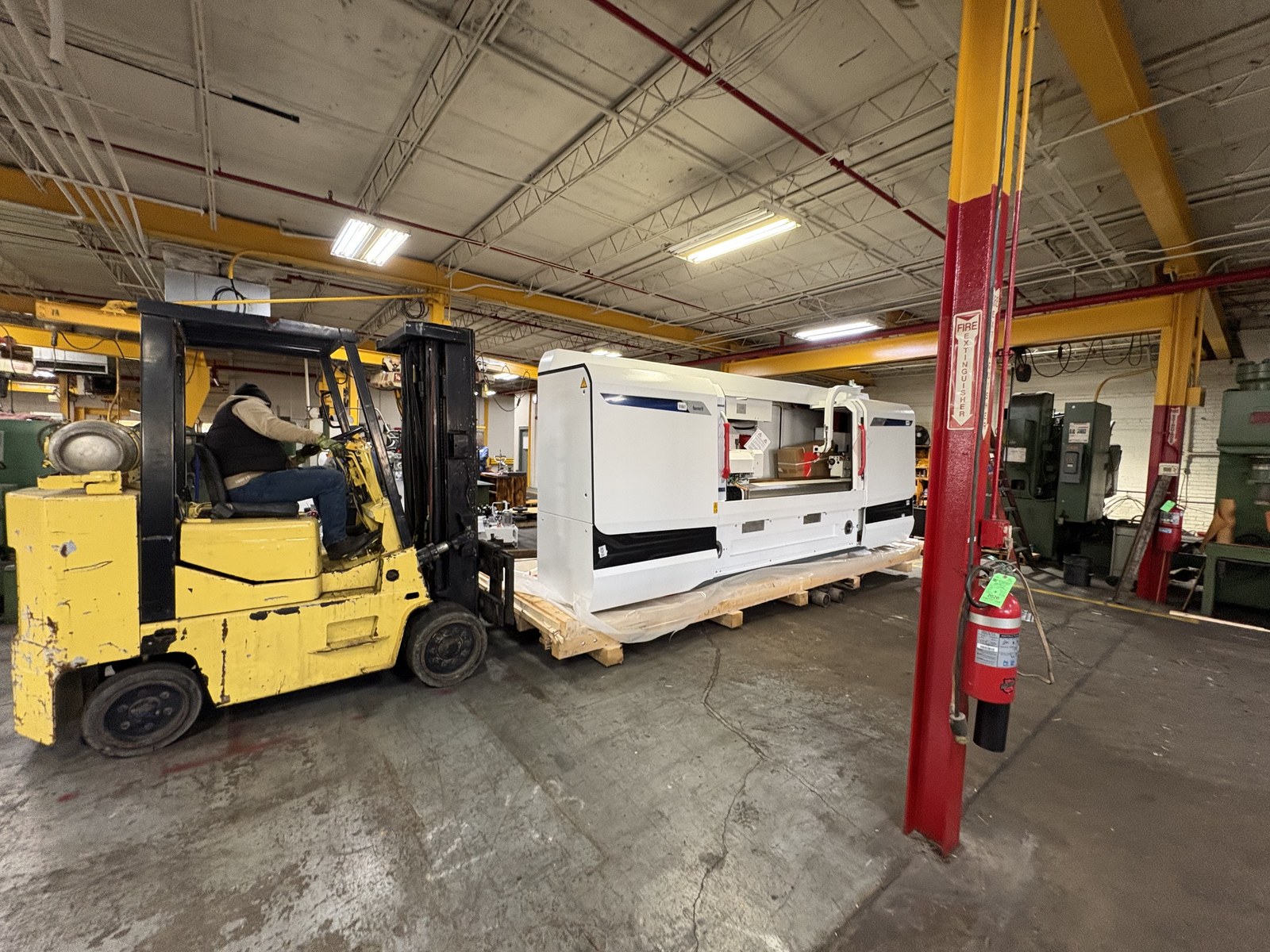
The grinder on its wooden base. Pipes lie under the base, and the yellow forklift is at its end.
The lift from the top
For the last lift we used the Versa-Lift with its boom instead of forks. Studer's suspension device hung from the boom's hook to spread the load, with the two red legs come down to the pins at the front of the machine. The rear gear is behind the machine and is not in the pictures.
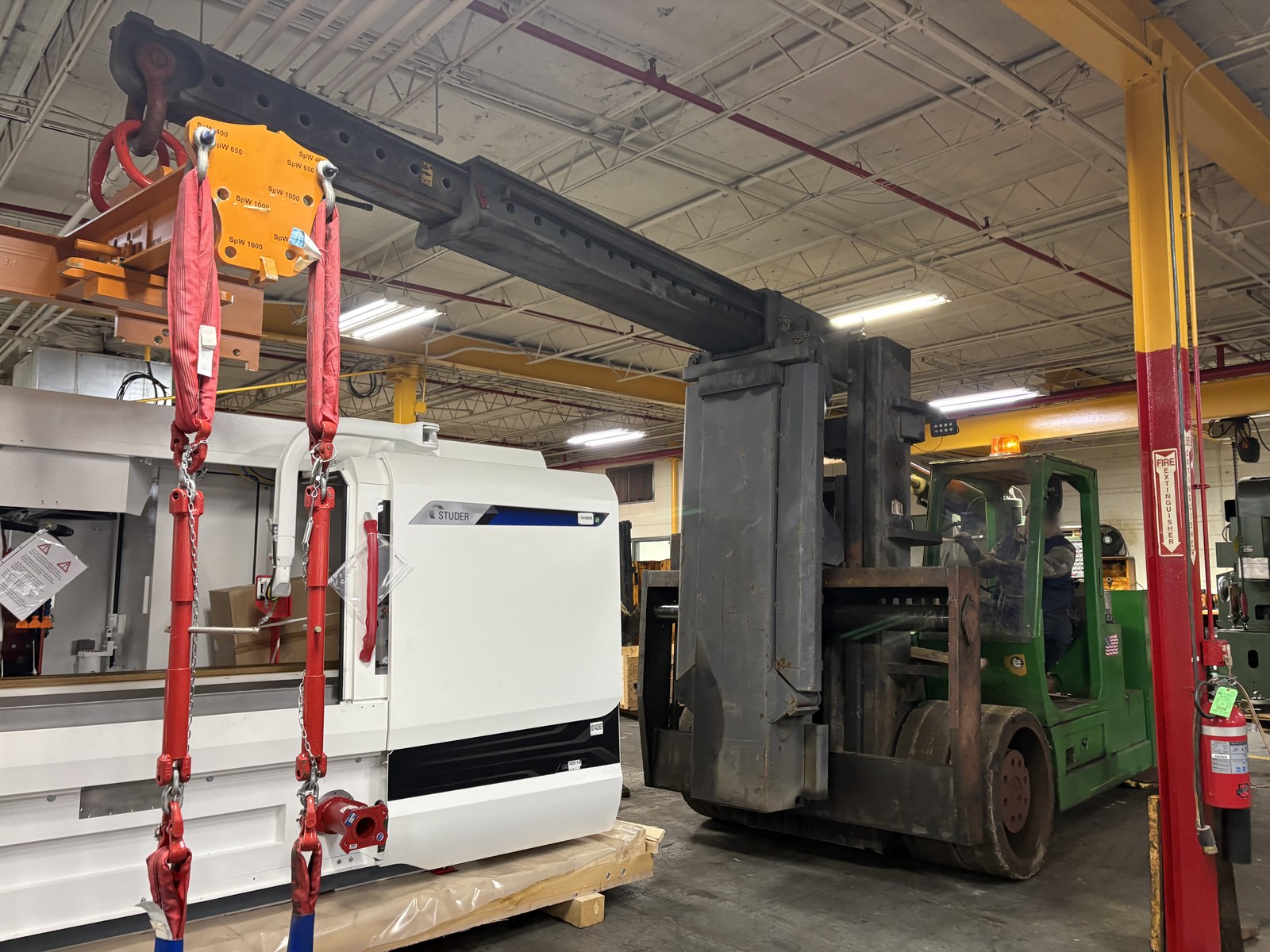
The boom of the Versa-Lift, with Studer's suspension device on its hook.
After uncrating, the machine is in the air, and the wooden base is on the floor at the right.
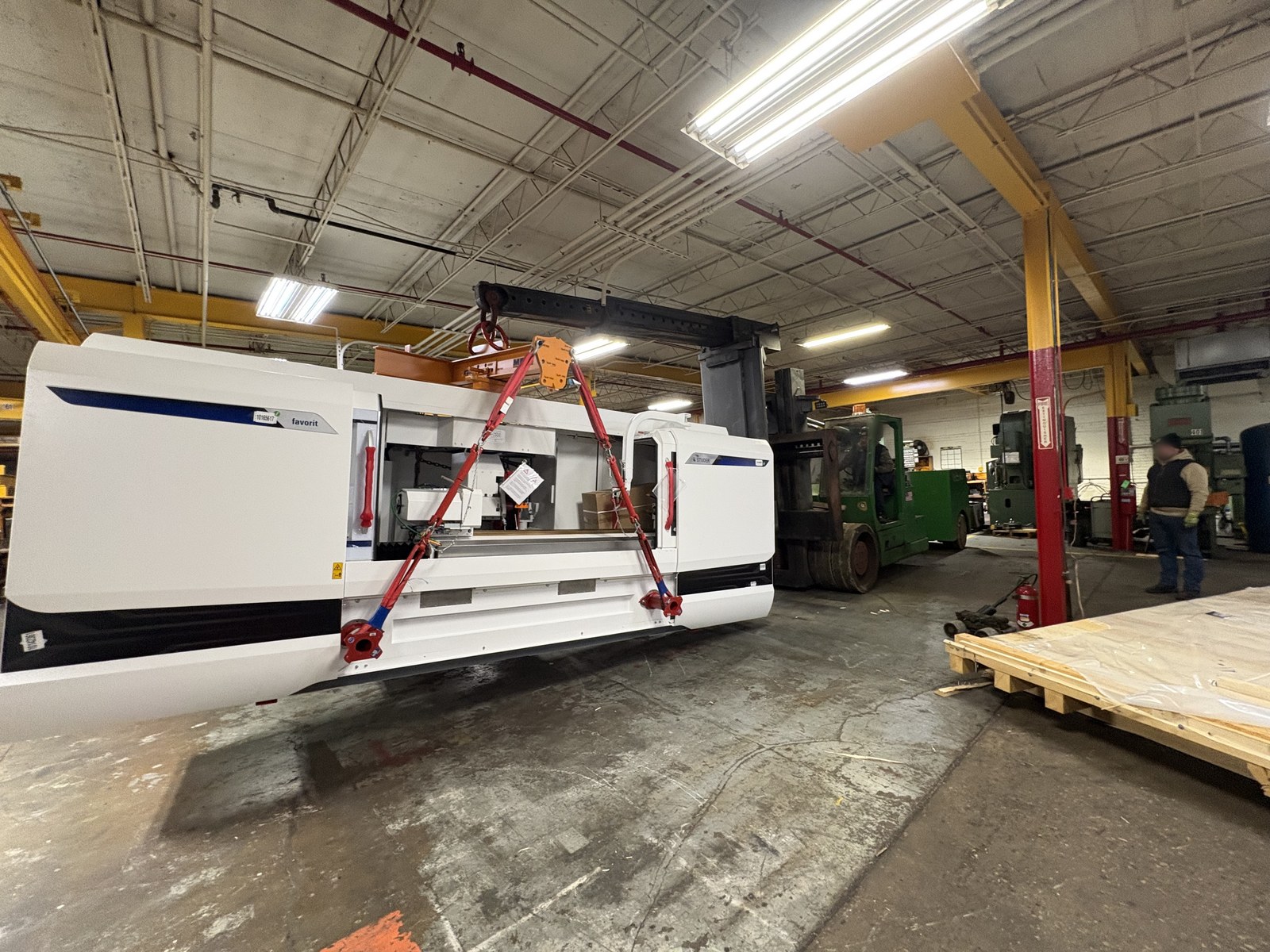
The grinder off its base, hanging from the boom.
We did use the spreader bar to carefully suspend the machine to remove the wooden skid with our small forklift (the easy part), and then lowered it down slowly. All this was extremely time consuming due to tight space and very specific lifting instructions.
The job was finished the same day but took some overtime.