
Helicopter Lifts: The Truck Side of a Rooftop AC Unit Change-Out
By Igor Chudov, owner, Chicago Machinery Movers, Berkeley, Illinois. Moving and removing industrial machinery since 1998. Published September 2026.
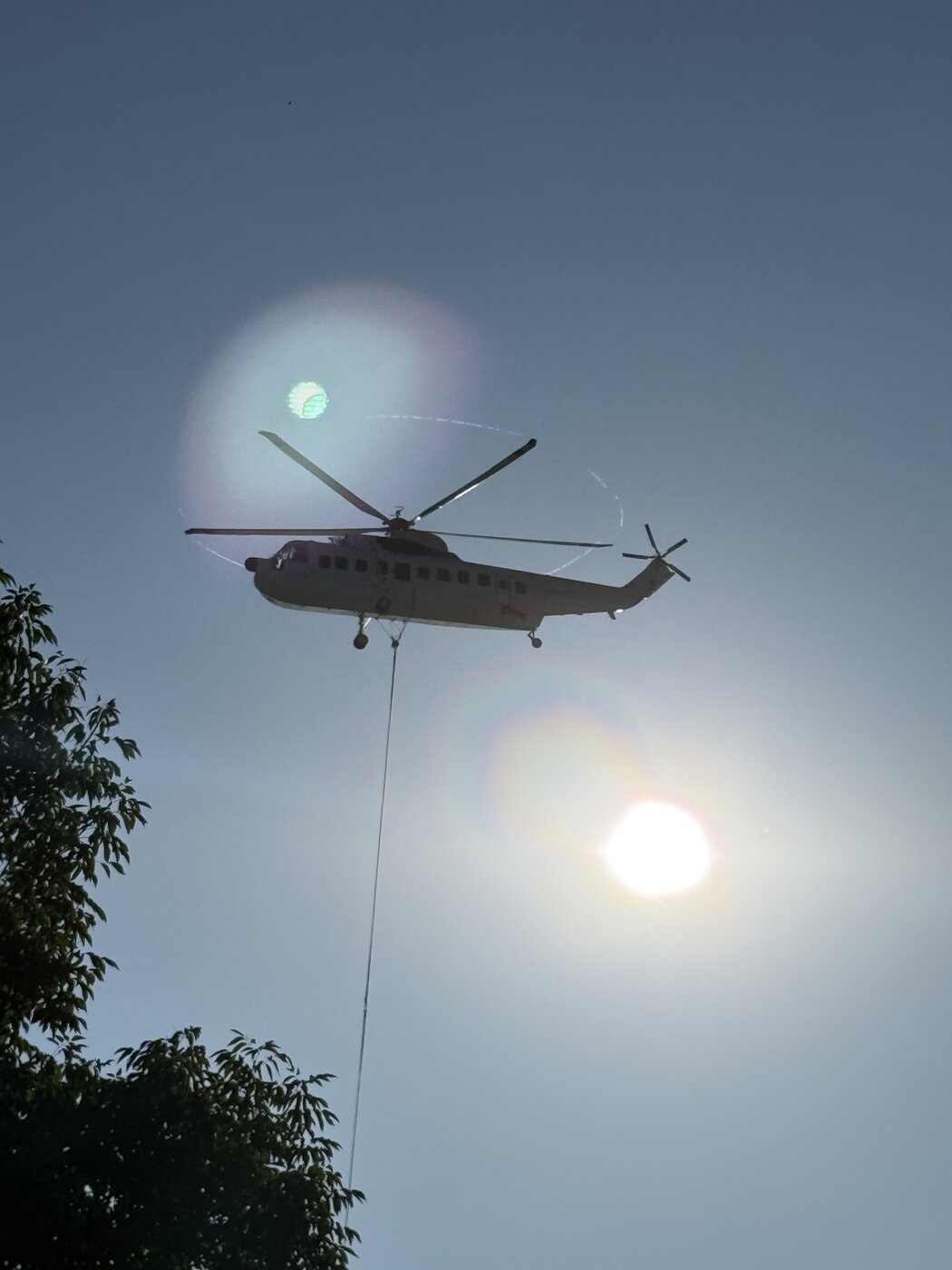
This September we took a semi truck to the headquarters of a large electronics company in Dupage County, IL where a heavy lift helicopter pulled three condensing units off the roof and set them, one at a time, on our lowboy. The three units weighed 16,000 pounds together. The whole lift took 15 minutes. (then they proceeded to haul new condensers on the roof). I have moved a lot of machinery during my career, and this is still one of the more interesting mornings we get, so I want to explain how it works and what our part of it actually is, based on our experience with helicopter lifts.
Why a helicopter and not a crane
On most buildings a rooftop unit comes down with a crane. A helicopter gets the call when a crane cannot get where it needs to be: the building is too tall or too wide for the reach, there is no place to set up outriggers, the roof is surrounded by landscaping and parking that cannot be closed, or there are so many units to swap that a crane would take a week. A heavy lift helicopter can make a pick every few minutes. Change-outs of twenty or thirty rooftop units in a single morning are done this way all over Chicagoland, mostly on the big corporate campuses and distribution buildings in the suburbs.
The aircraft on our job was a Sikorsky heavy lift helicopter. These machines lift somewhere between 4,000 and 10,000 pounds.
The long line, and why the pictures look the way they do
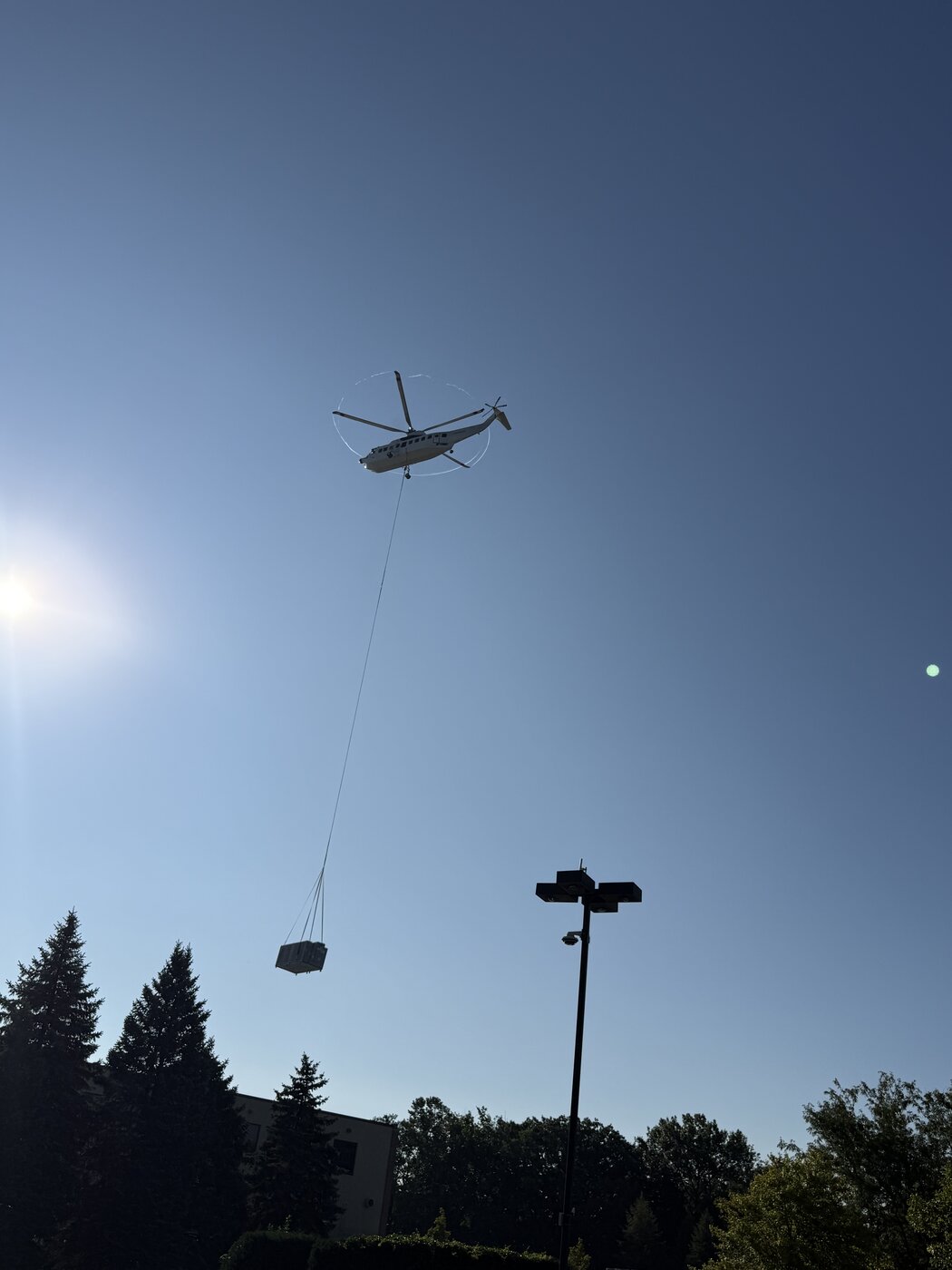
The clip below runs about forty seconds and is not sped up. Watch how slowly the load travels and how little it swings. That steadiness is the pilot flying the load, and it is the reason the crew under the aircraft can stand where they do and work the moment it touches down.
Look at the photo above and you see the unit hanging a long way below the aircraft. That line is on the order of 100 to 200 feet, and the length is not for show. The rotor wash from a helicopter that size is a hurricane pointed at the ground. Keeping the aircraft high keeps that wind off the roof crew, off the ground crew and off anything loose within a hundred feet of the landing spot. It also lets the pilot keep the aircraft clear of the building and the light poles while the load goes exactly where it is wanted.
It also means that any photograph with both the truck and the helicopter in it has a small truck at the bottom and a small helicopter at the top. That is the honest geometry of the job. We have plenty of pictures anyway.
Who does what, and where we fit
There are several outfits on a job like this and it is worth knowing which is which, because people mix them up. The helicopter company brings the aircraft, the pilot and a lift director who runs the radios. On the roof, the mechanical contractor's people disconnect the units and rig them to the hook. Under the aircraft there is a hook crew that takes the load off the line when it comes down. We are the truck: the deck the unit lands on, the chains that hold it, the expert on-the-ground machinery movers, and the ride to the scrap yard.
I would say the truck side is the least glamorous part of the lift and still one of the easiest ways to make the customer's morning expensive. A heavy lift helicopter in this class bills somewhere around four to seven thousand dollars per flight hour, and it is on the clock whether it is lifting or hovering. Every minute the aircraft holds a hover because the trailer is not where it should be, or because the deck is not ready to take the next unit, is a minute the customer pays for. So our whole job is to be ready before the aircraft arrives and to never be the reason it is waiting.
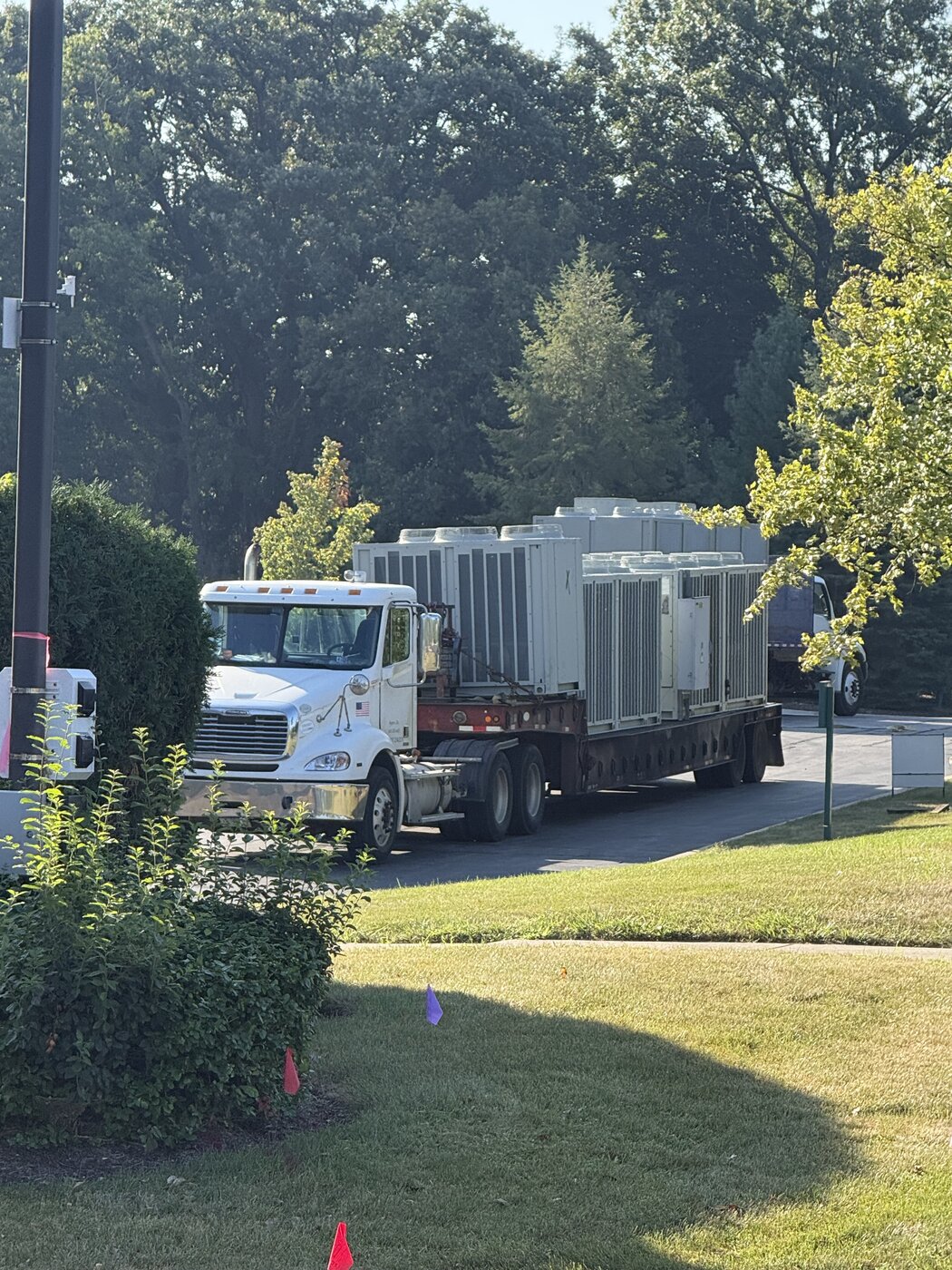
How do those "helicopter mornings" look like?
- The truck is where the lift director wants it, before the aircraft shows up. He picks the landing spot for the pilot's approach and the wind, not for our convenience. We spot the trailer, set the brakes, and do not move it again until the lift is done.
- The deck is clear. Nothing loose on the trailer, nothing loose in the truck bed, nothing loose in the parking lot within the wash zone. A chain binder or a piece of dunnage becomes a projectile under that rotor. Hard hats have chin straps on and eye protection is on.
- We stay out from under the load. Hooking and unhooking the helicopter cable is not our work and we do not do it. A long line builds a static charge in flight, and the people who handle that hook are trained and equipped for it. Our people stand where the lift director puts them, which is never under a suspended unit, and we move in only after the unit is on the deck and the hook is clear.
- The moment the hook is clear, we are working. The air crew releases the load and backs away so the pilot can climb out for the next pick. That is our cue. In our experience this hand-off is where a slow truck crew costs the customer real money, because the next unit is already being rigged on the roof and it is coming down onto the same deck.
- Secure between picks, not after. While the aircraft is back over the roof rigging the next unit, we get chains and straps on the one we just received. When the last unit is down and secured, the truck can leave the landing zone as soon as the aircraft is clear.
Why these lifts happen at seven in the morning
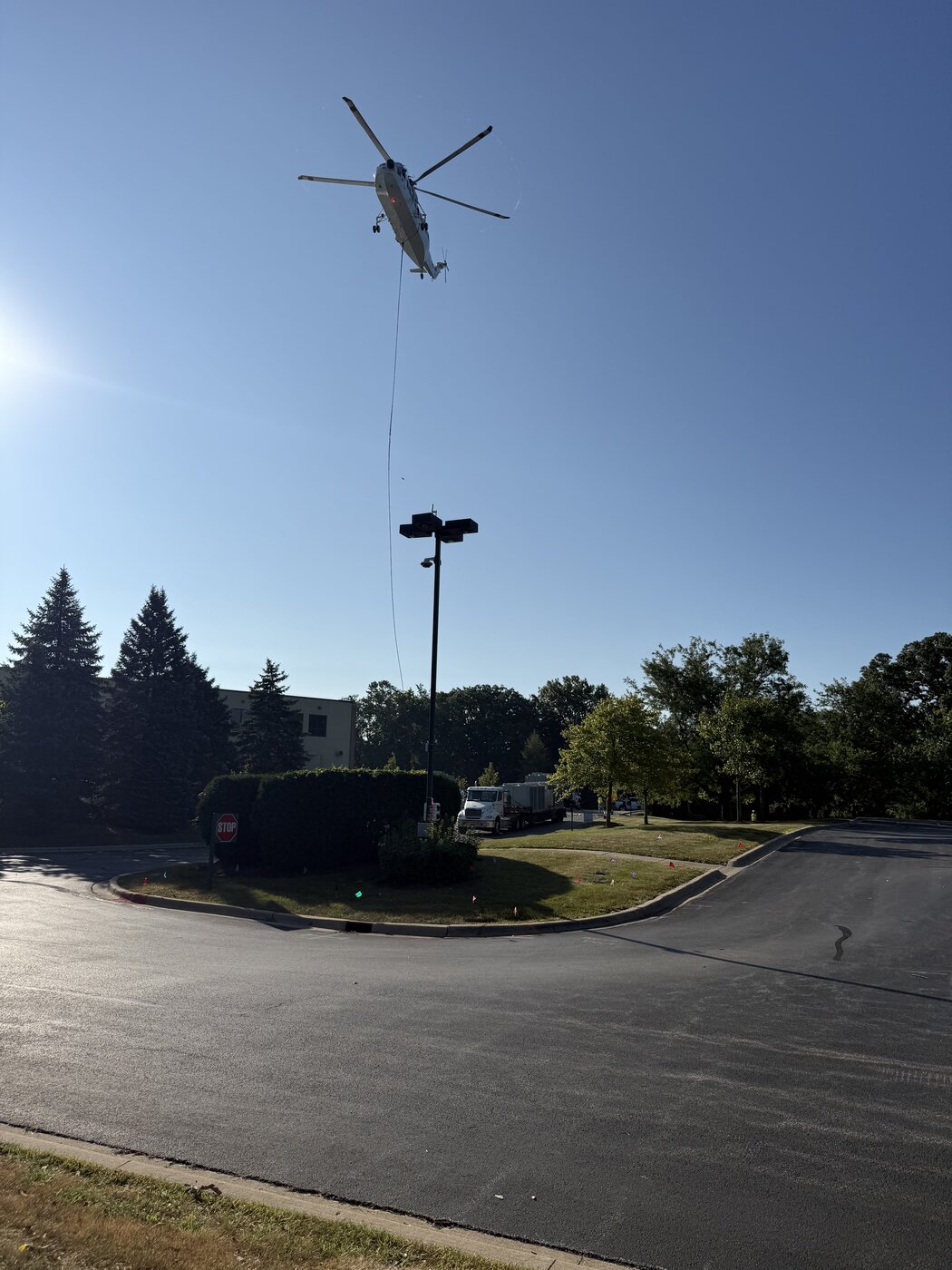
Cool, still air gives a helicopter more lift and gives the pilot a steadier hover, which is why these jobs run at first light. On a corporate campus the lot is also empty before the office fills up, which is the only time you can close the landing zone without upsetting anybody. Wind is the thing that cancels a lift, and it is the pilot's call. What that means for us is that we are on site early, the truck is spotted before the aircraft is even in the air, and if the weather holds we are done before most people have had coffee. That's why I like cool air with no wind when I wake up and walk out my home on a day like this - it means easier time for the helicopter crew and for us - less swinging near my truck cab makes me feel safer.
Seven in the morning is when everybody arrives, though, not when the first unit comes off the roof. There is a safety briefing, the lift director walks the landing zone and decides where the truck sits, paperwork gets signed, cones and flags go out, and the roof crew still has to disconnect and rig the first unit. On this job we were on site at seven and the first pick came down closer to half past eight. I would say that is normal, and it is worth knowing if you are the one paying: the aircraft is the last thing to arrive.
Weights, the trailer, and setting a load from above
Our three unit's were about 6,500 lbs for the two large ones, and about 3000 lbs for the small one. A rooftop unit set down from a helicopter arrives with no forklift under it, so the trailer has to take it exactly where it lands. A low deck trailer helps: the pilot has a bigger, lower target, the rigging is shorter, and the crew is working at waist height instead of climbing. We did not use dunnage to make the airlift crew job easier. Dunnage would make it easier for us to fork off at the other end, but having wood on deck is harder and more hazardous for the ground rigging crew under the helicopter's airflow, as pieces of wood could fly at them. We are professional riggers and know how to forklift them without the wood underneath.
Maybe that is why the air lift crews, and heli customers needing on-ground forklift work, keep calling us?
What happens to the units after the lift
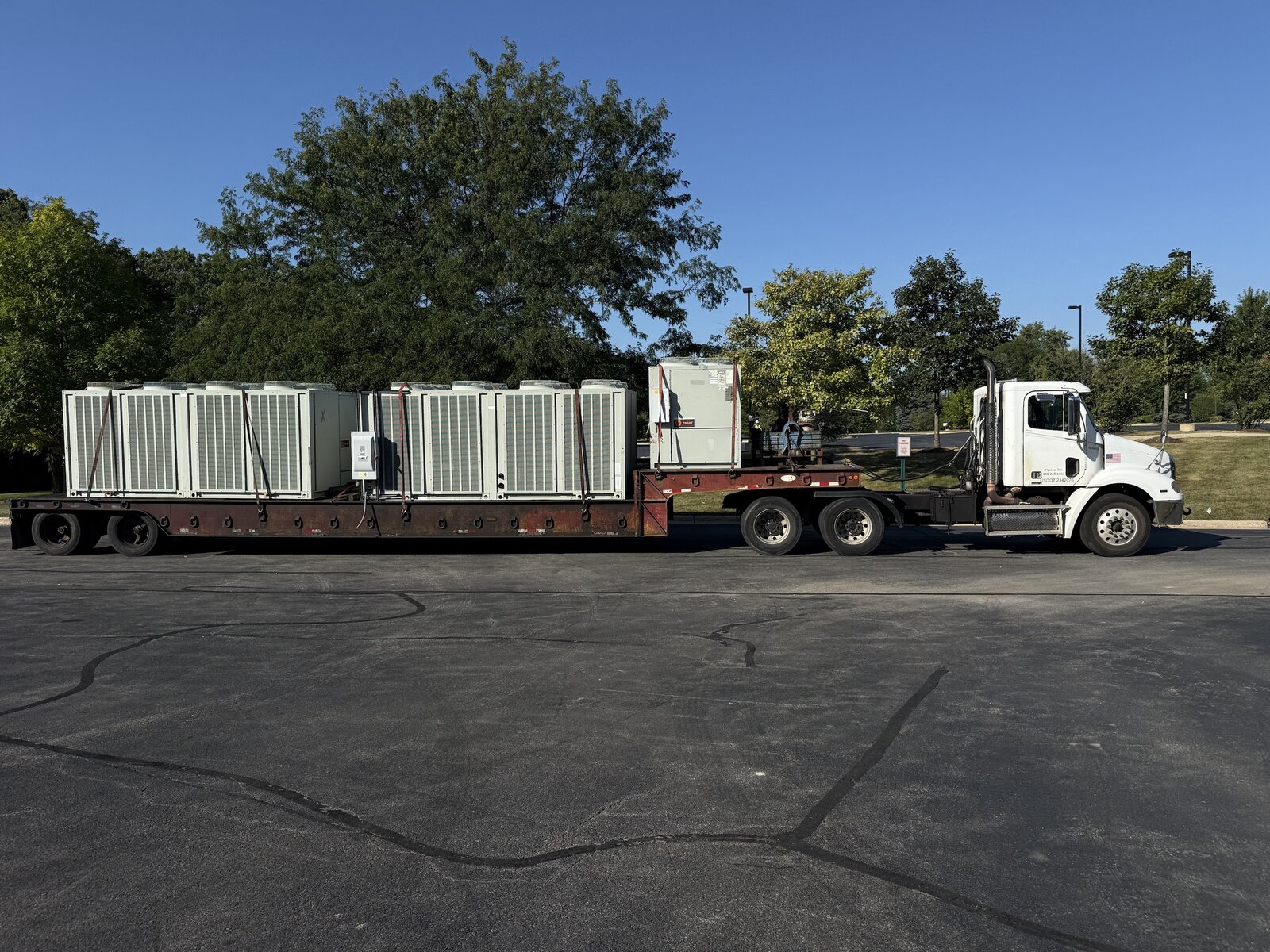
Most units that come off a roof by helicopter are at the end of there life, and what happens next is what we do every day: they go for scrap. A condensing unit is a more value than just the steel in it, so it makes its recovery worthwhile. The units from this job came apart with a screw gun; they are held together with self drilling screws, and the coils, compressors and steel cabinets each go to a different pile at the yard. The refrigerant is long gone before we ever see these units. It has to be: the mechanical contractor recovers it on the roof and cuts the lines, and until those lines are cut the unit cannot leave the building. Recovery before opening a system is the law, and it is the contractor's job, not ours.
When to call us
If you are a mechanical contractor or a building owner planning a helicopter change-out, you need a ground side, and it is a different job from the roof side. We provide the truck, the well trained crew that receives the units, the securing and the hauling, and we take the old units off your hands. We know that time costs big money and a 1-minute delay can cost $100 due to helicopters charges. So we know how to wrap up fast. For an install, the same in reverse: we bring the new units to the landing zone on our trailer, staged in the order the pilot wants them, and the aircraft takes them from our deck.
We have several of these behind us. Call before you book the aircraft, not after, because the truck and the crew have to be there first. And, we have a history of actually showing up.
Call or text Igor: (630) 235-6603.