Moving and Scrapping Die Casting Machines, by Diecaster Experts
By Igor Chudov, owner, Chicago Machinery Movers, Berkeley, Illinois. Moving and removing industrial machinery since 1998. Published November 2026.
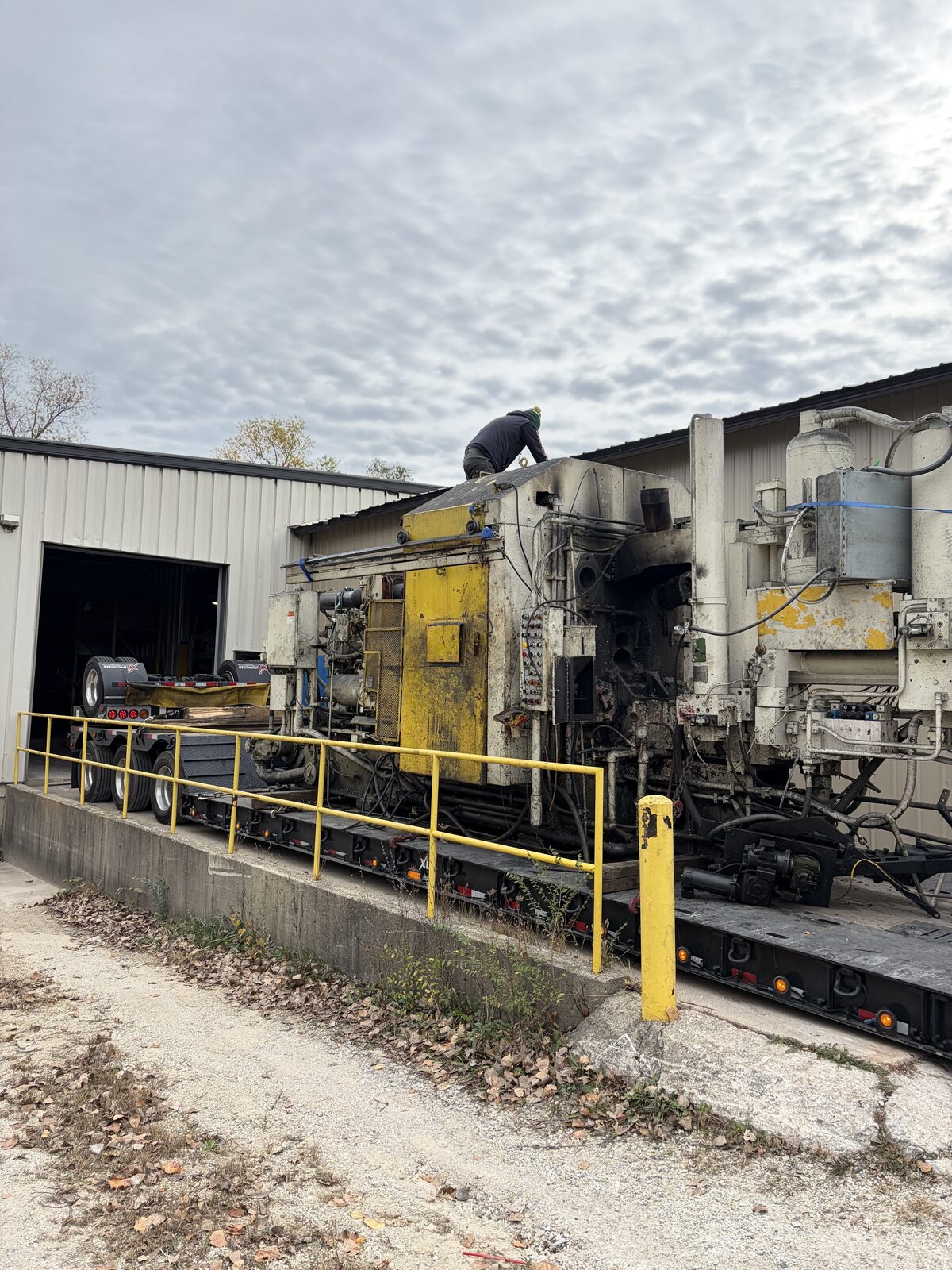
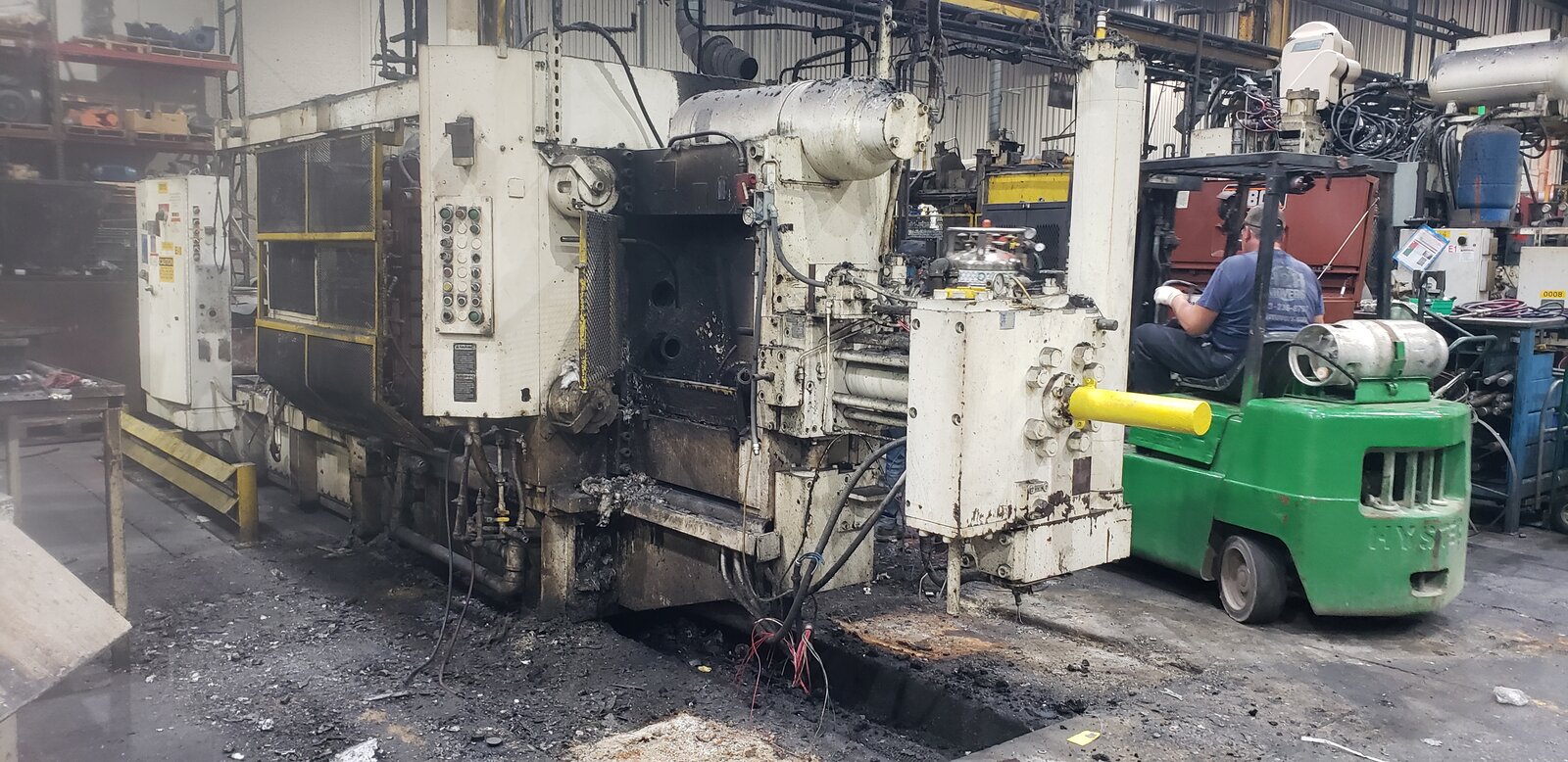
When you visit a die casting shop for the first time, you usually get an unforgettable impression. Hot molten metal everywhere. Big ugly robots handling casting parts. The permeating heat. The open flames everywhere. The generally fast operation of these machines, making one casting after another. The forklifts moving around with tanks of molten aluminum. All of that looks very unusual and unlike most other manufacturing environments. Die casting shops usually do not even use winter heating because of how much heat is being produced by melting and carrying around all this molten aluminum. However, in summer, only the toughest people can survive working on the open floor of a die-cast shop, because the temperature is easily 20 degrees Fahrenheit above ambient. Besides the heat, die casting is a very dirty business. So all the die casters that have been in use usually look extremely ugly. Other operations typically present in a die-cast shop are trimming of the castings, where the so-called flues, which give access to the molten aluminum, are cut off. And then you usually see people polishing all the rough surfaces of the die-cast products.
In recent years, American die-cast manufacturing has been under increasingly high pressure from importers located in low-cost countries such as India. However, the smart shops know how to win on quality and continue in operation, but are forced to upgrade their old die casters to the newer ones that are more productive and more economical with material. This is where we, Chicago Machinery Movers, come in, typically helping them dispose of the old die casters and bring in and assemble the new ones. And that's what the article will talk about.
What is inside a die casting machine
A die casting machine forces molten metal, usually aluminum or zinc, into a steel die that a clamp holds shut. The parts that matter when moving or scrapping one:
- Tie bars: the four steel bars the moving platen slides on. Typically made of 4140 steel, they are exceptionally strong as they hold the machine together during "shots" of molten metal into the form.
- Platens: the plates the two halves of the die bolt to.
- The shot end, which pushes the metal into the die.
- The hydraulic unit: electric motor, pump and oil tank. The hydraulic fluid is water based for fire safety, as it does not burn (and is therefore useless in a waste oil furnace like we have in our warehouse)
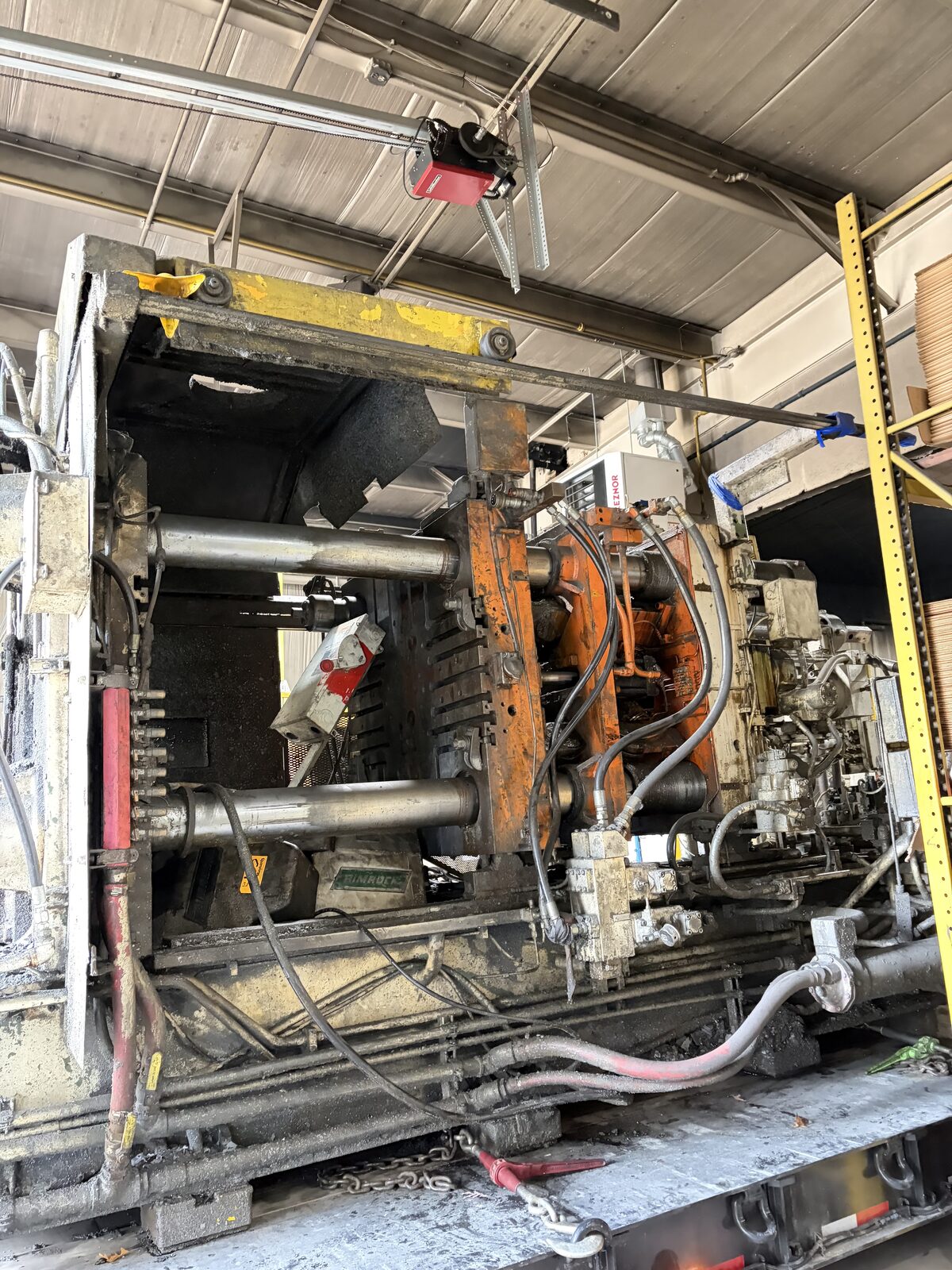
We have worked on (meaning rigged/moved or scrapped) most brands of die casters, like Idra, Prince, HPM and more. As far as we are concerned, they are all the same to us. The heaviest tonnage die caster we scrapped was about 3,000 tons clamping force and had 15" thick tie bars. Just the bronze bushings were several hundred pounds each.
How we move them
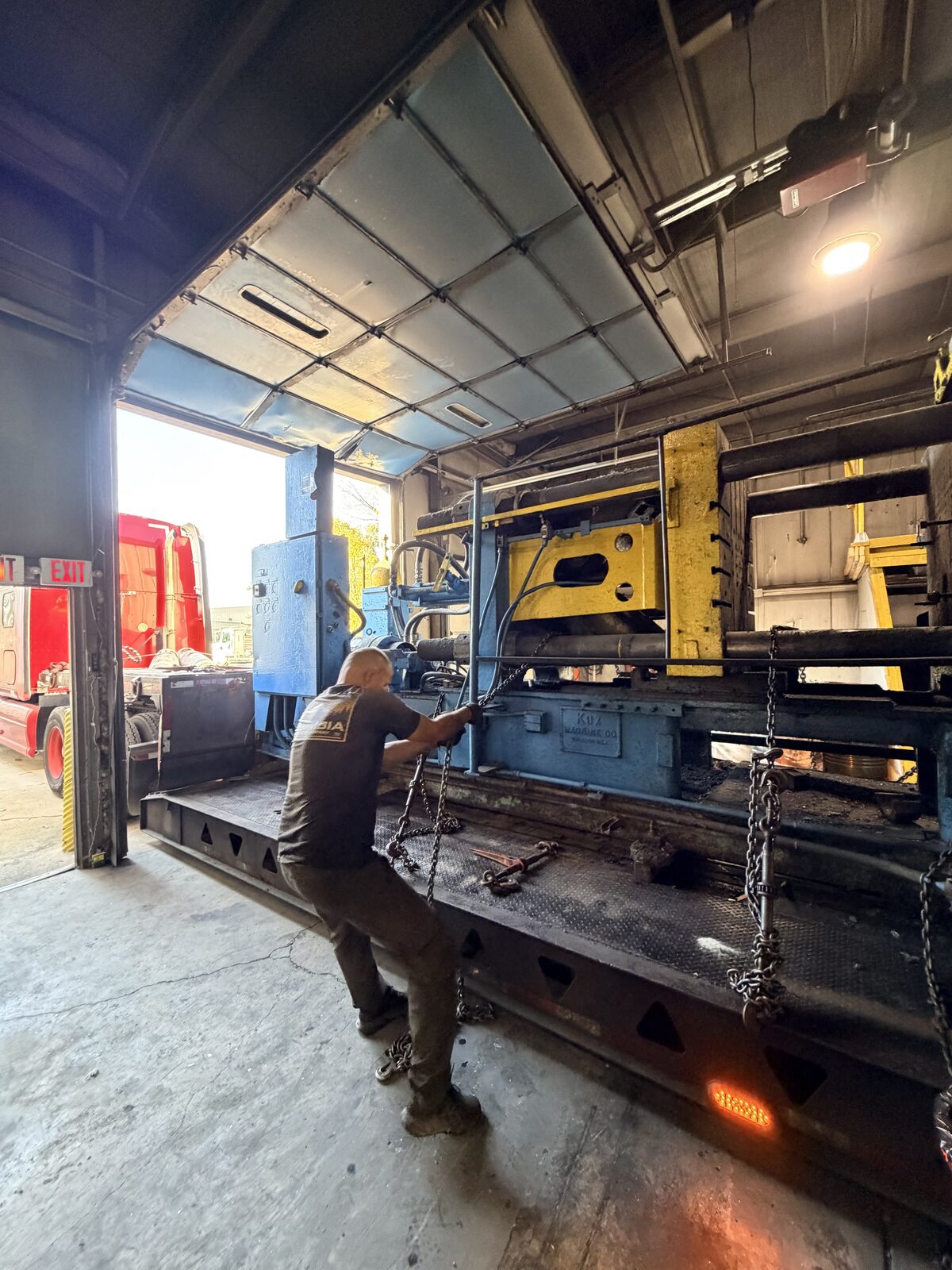
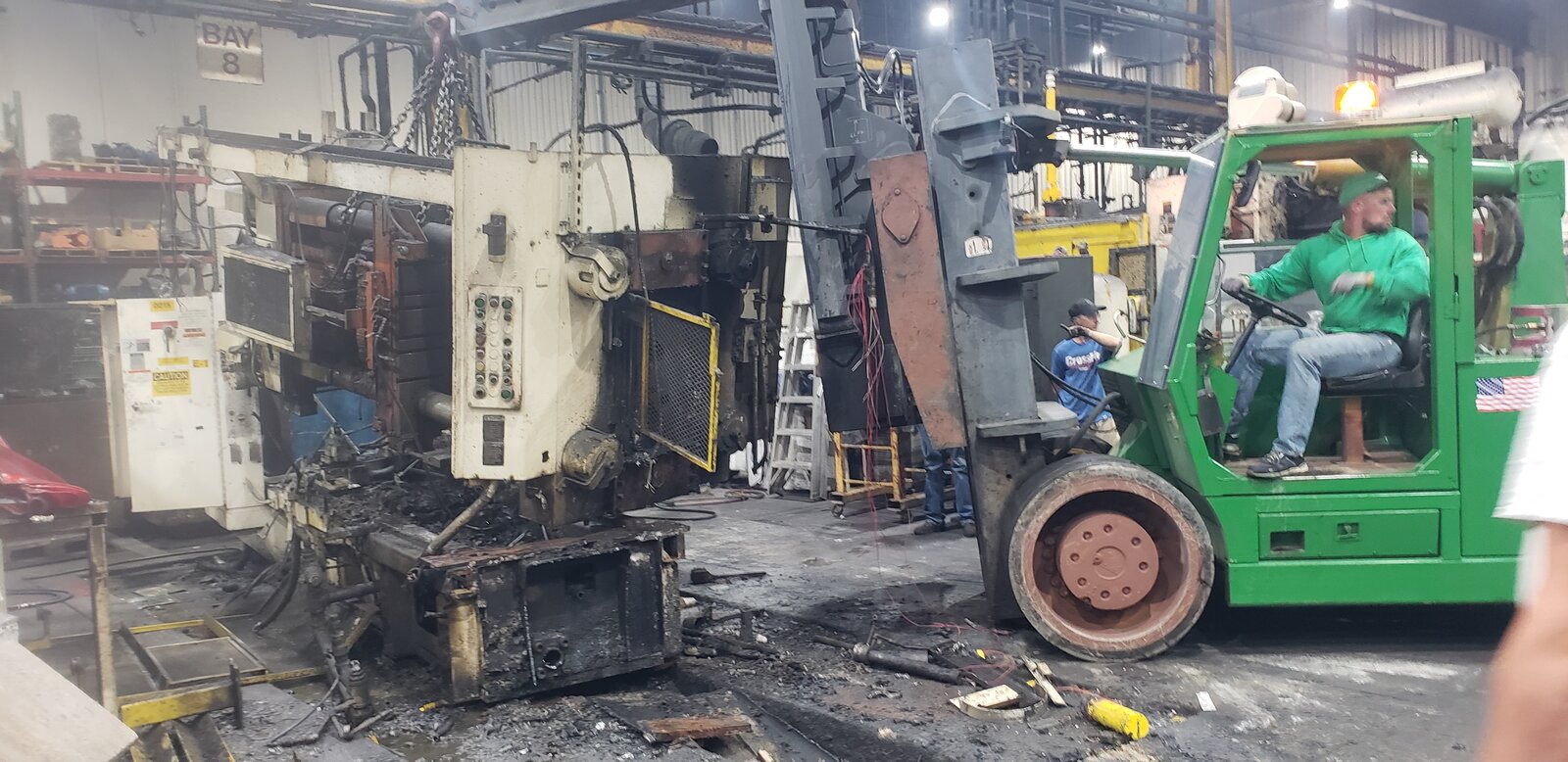
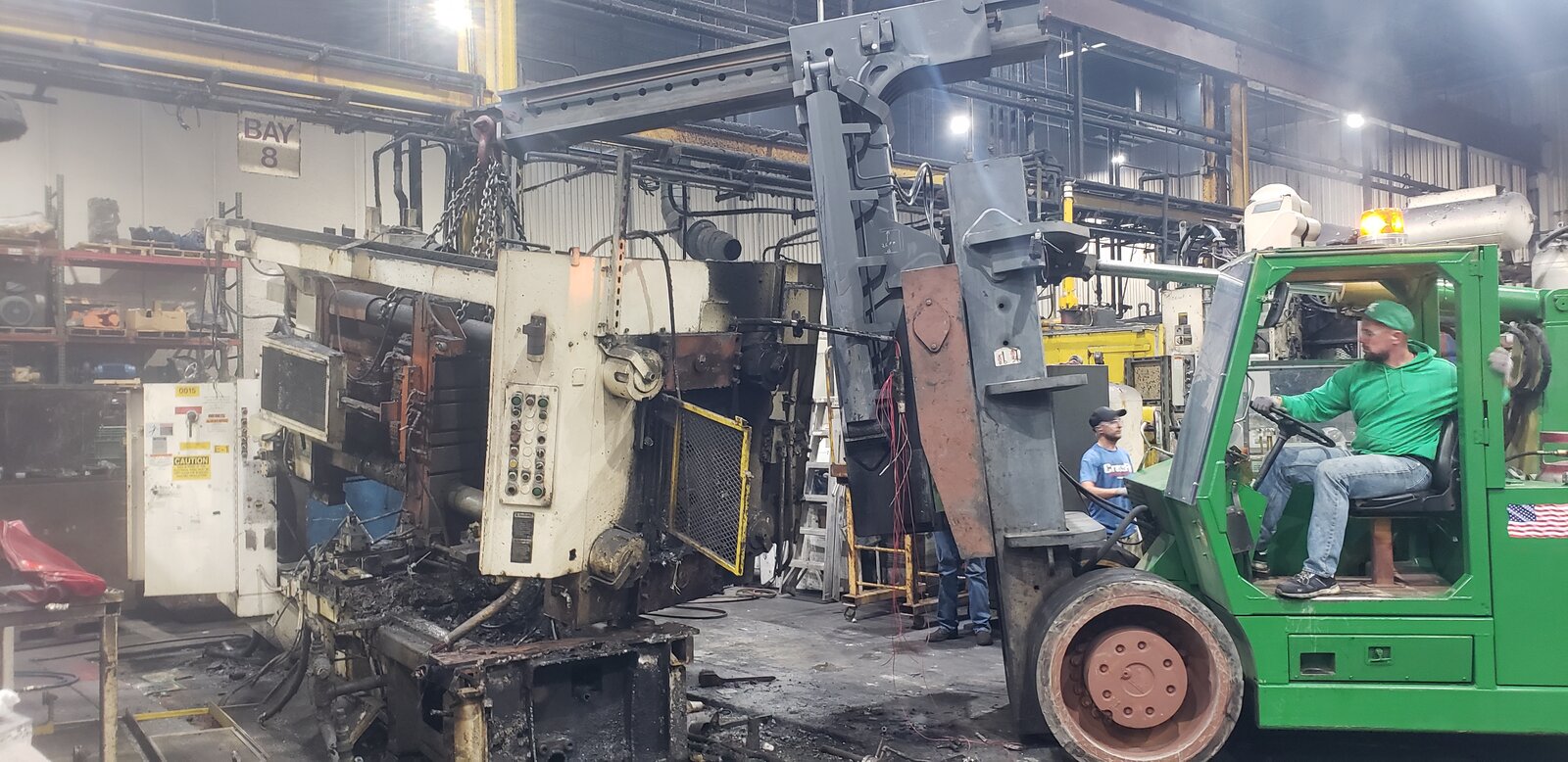
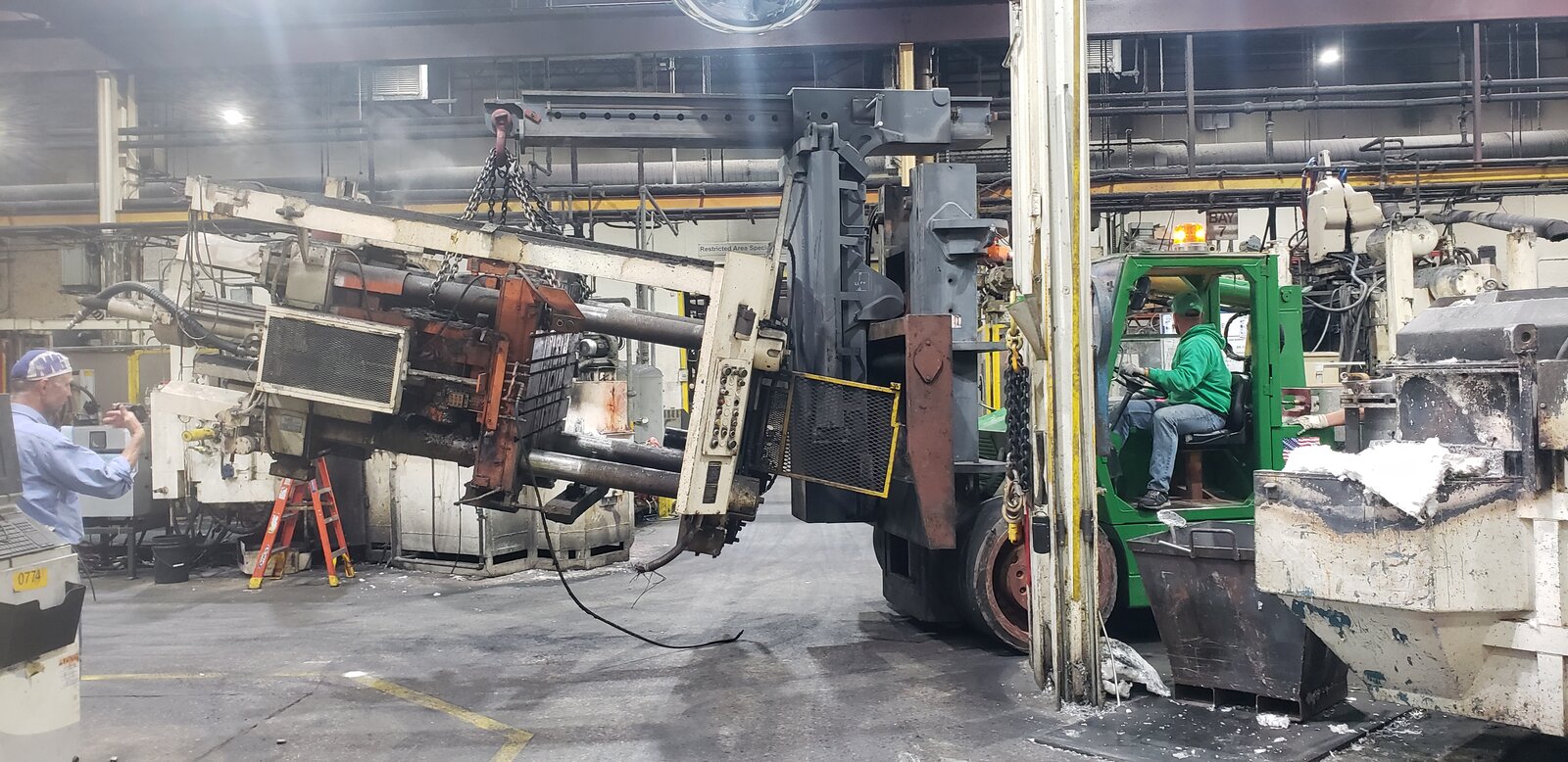
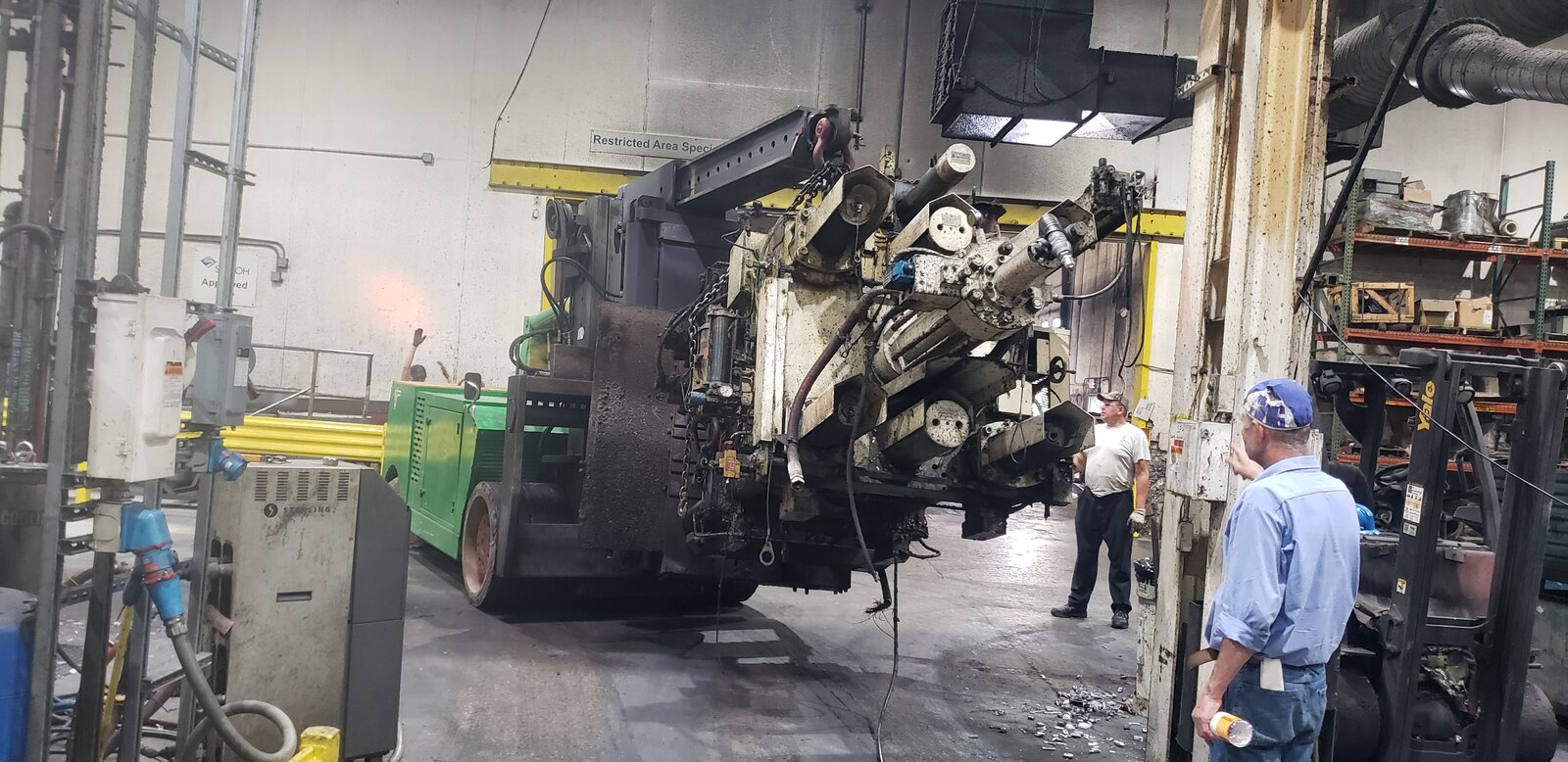
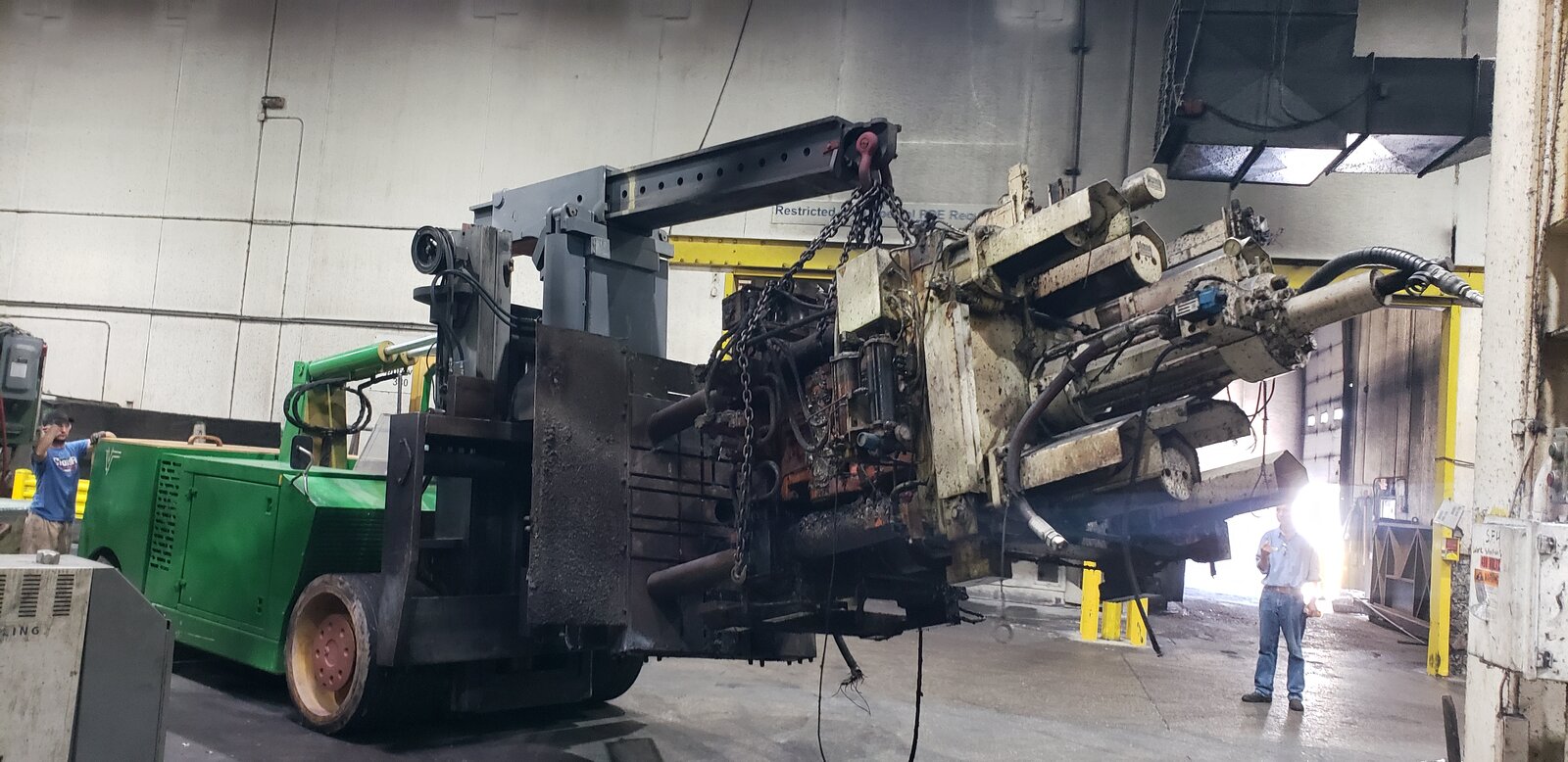
Die casters of larger size (600-1,000 tons and up) usually have shot units removed prior to moving. For the larger ones, it is practical to also separate the clamp end from the frame, which is usually very easy if technicians help disconnect the electrical connections. Die casters are always unbalanced and the riggers need to find the center of gravity to lift them safely from the side, and this is where experience helps. Also, the center platen is not fixed and can move, upsetting the balance or, in worst case, shifting and letting the load fall off the forms. So, if in doubt, always chain down the middle platen just in case. It is also essential to let out the high pressure from the pressure accumulators, especially if the machine goes to a scrap yard, for safety of scrap yard workers who could cut a cylinder that contains enormous pressure, up to 200 bar.
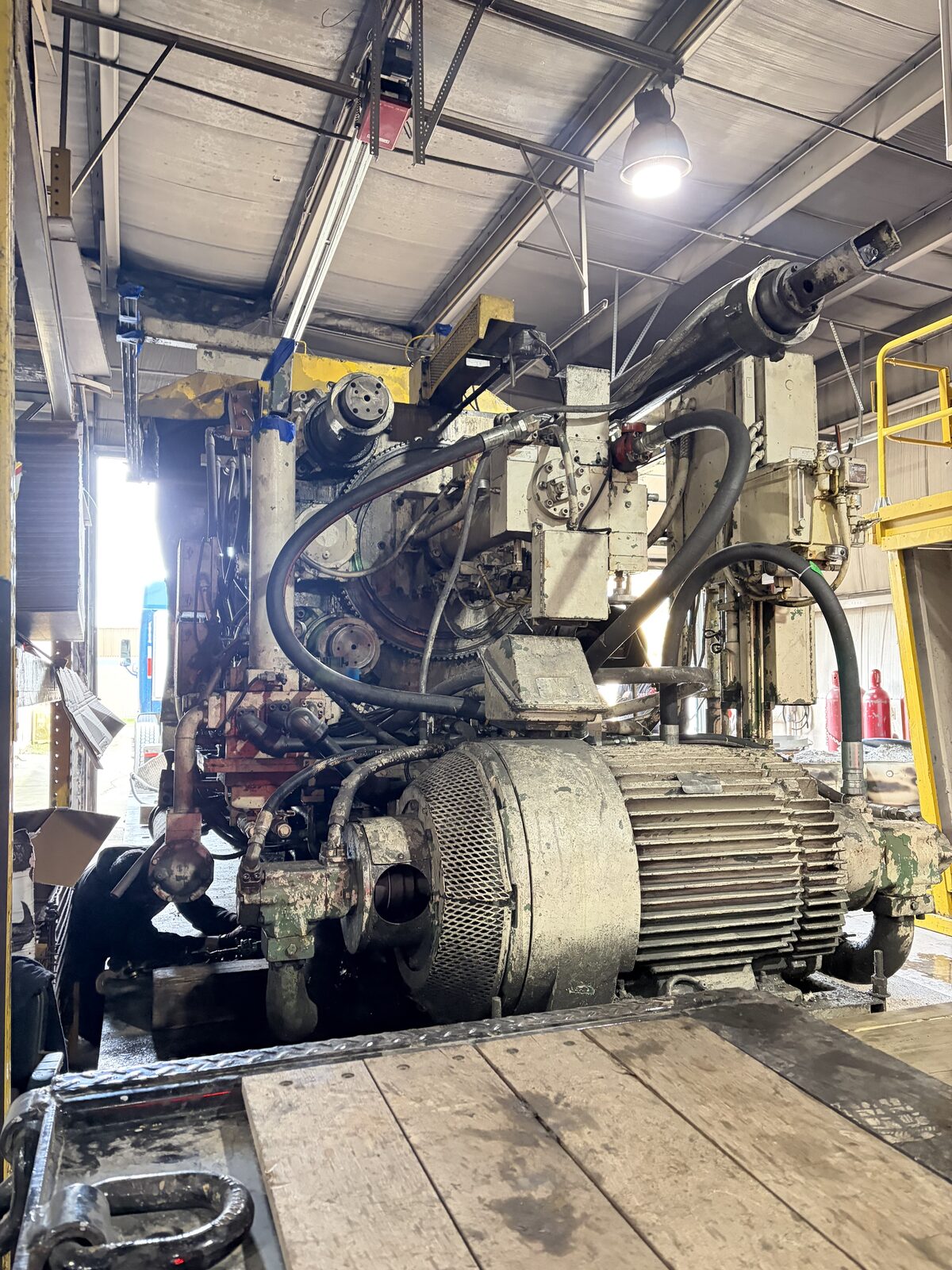
New Die Caster Assembly by Chicago Machinery Movers
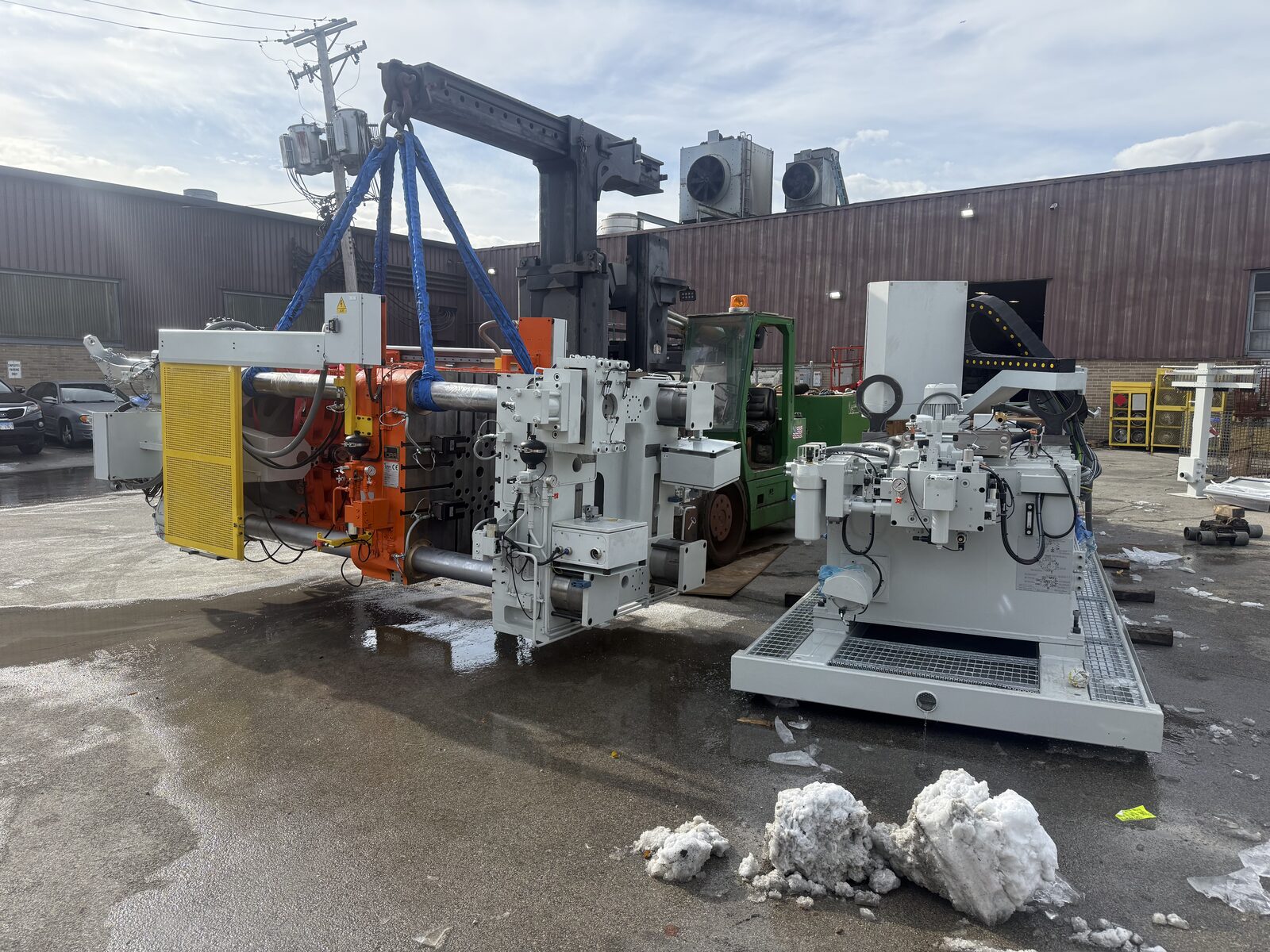
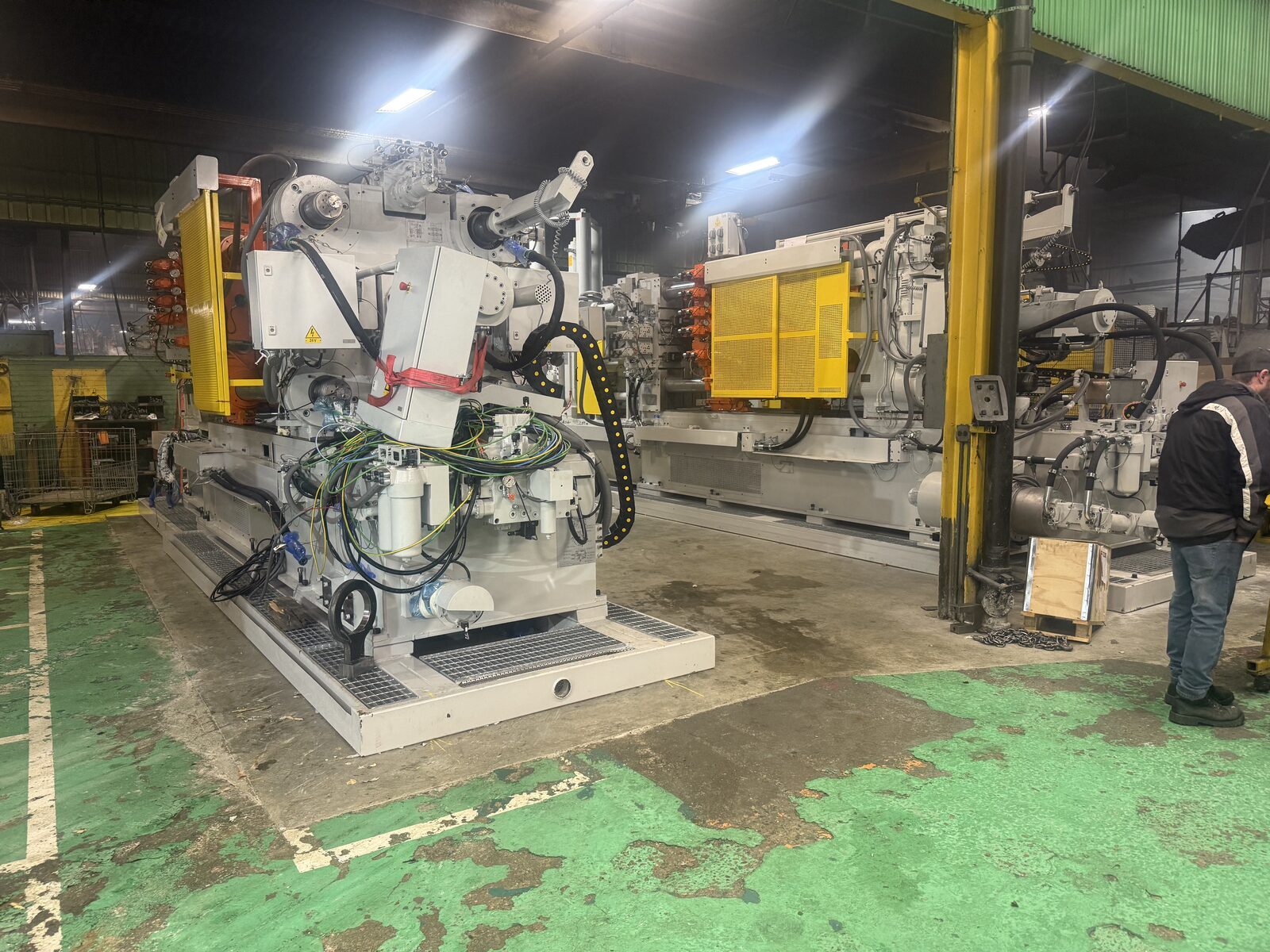
A new die caster is delivered from the factory in pieces, usually in ocean containers. In November 2025 a die casting plant in Northbrook, Illinois received two new IDRA machines from Italy, an OL 900 CS and an OL 700 CS. Each came in four 40ft shipping containers: the machine base, the closing unit, the injection unit with the doors, and the side tray with the electrical cabinet. The crates weighed 90,893 lb together, and the heaviest was listed at 23 tons. That was not a problem for us, as we have two 60-80,000 lbs forklifts.
By the way, be wary of smaller rigging companies who show up to such jobs with undersized 40-60,000 forklifts, put scrap metal pieces to add weight to counterweights etc. That is not acceptable for a new machine and expensive accidents were known to happen in such cases, which our company stringently avoids.
We lifted the heavy pieces out of open-top containers with our 60-80,000 lb Versa-Lift and its boom, and the truck drove out from under the machine. Then we set the units onto each base. One machine we put together inside the plant. The other we put together in the yard and carried into the plant in one piece. Assembling outside is easier, however the largest machine would be too heavy for the floor, which we deeply cared about. The work took three days, November 5, 6 and 11.
We assemble new die casters only with the manufacturer's technicians on hand. On this job two IDRA technicians were on site from the first day.
How we scrap them
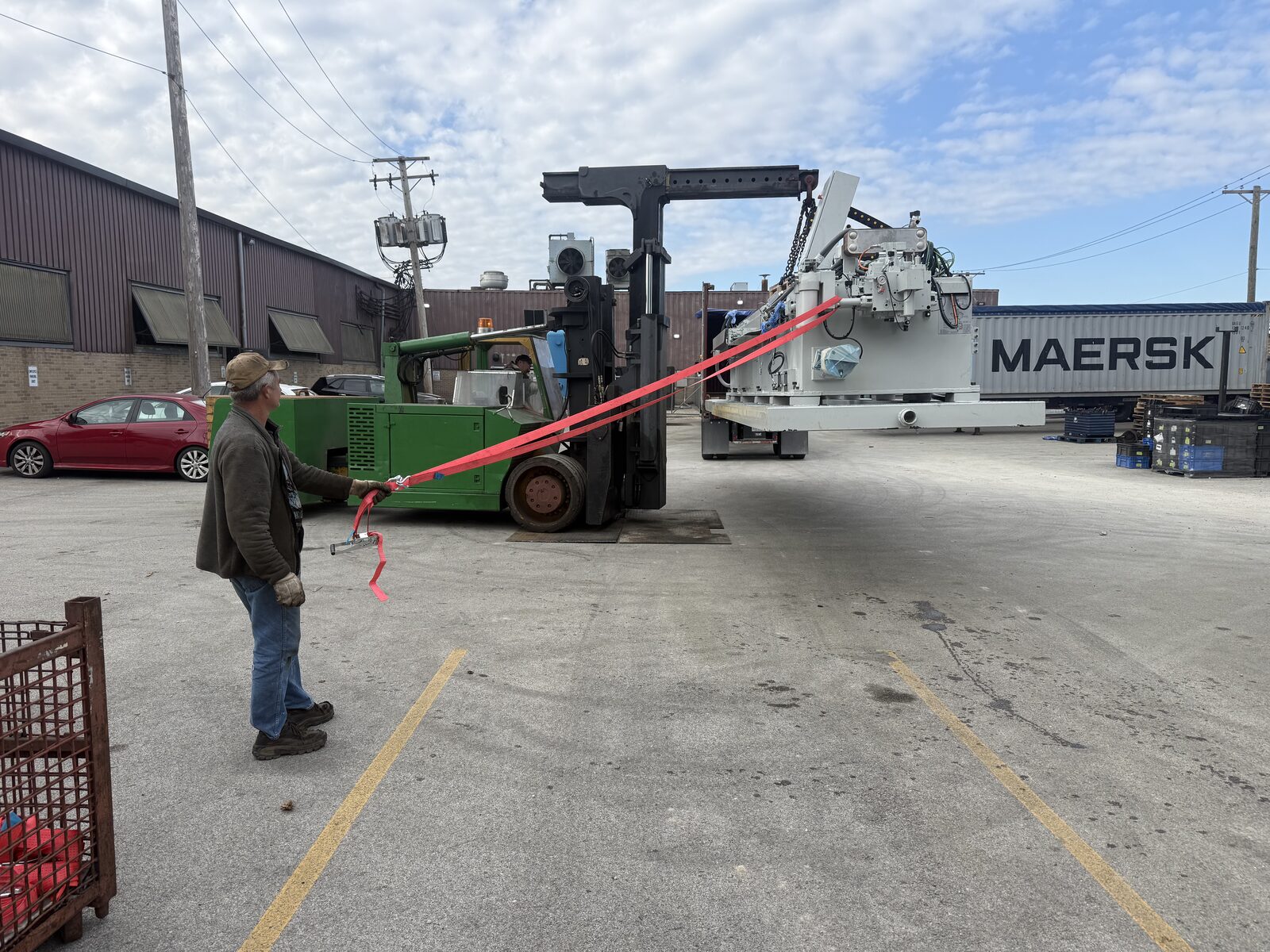
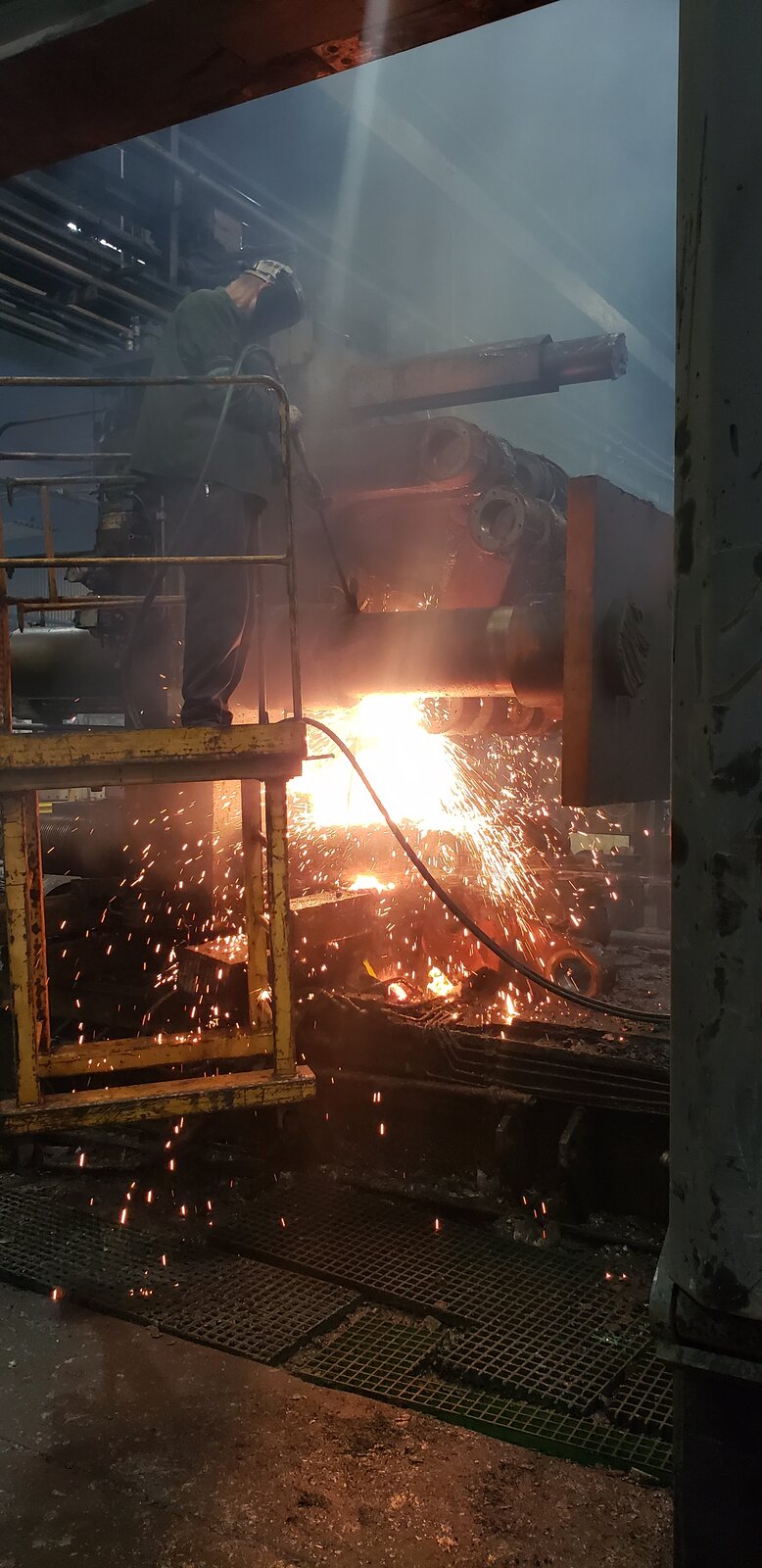
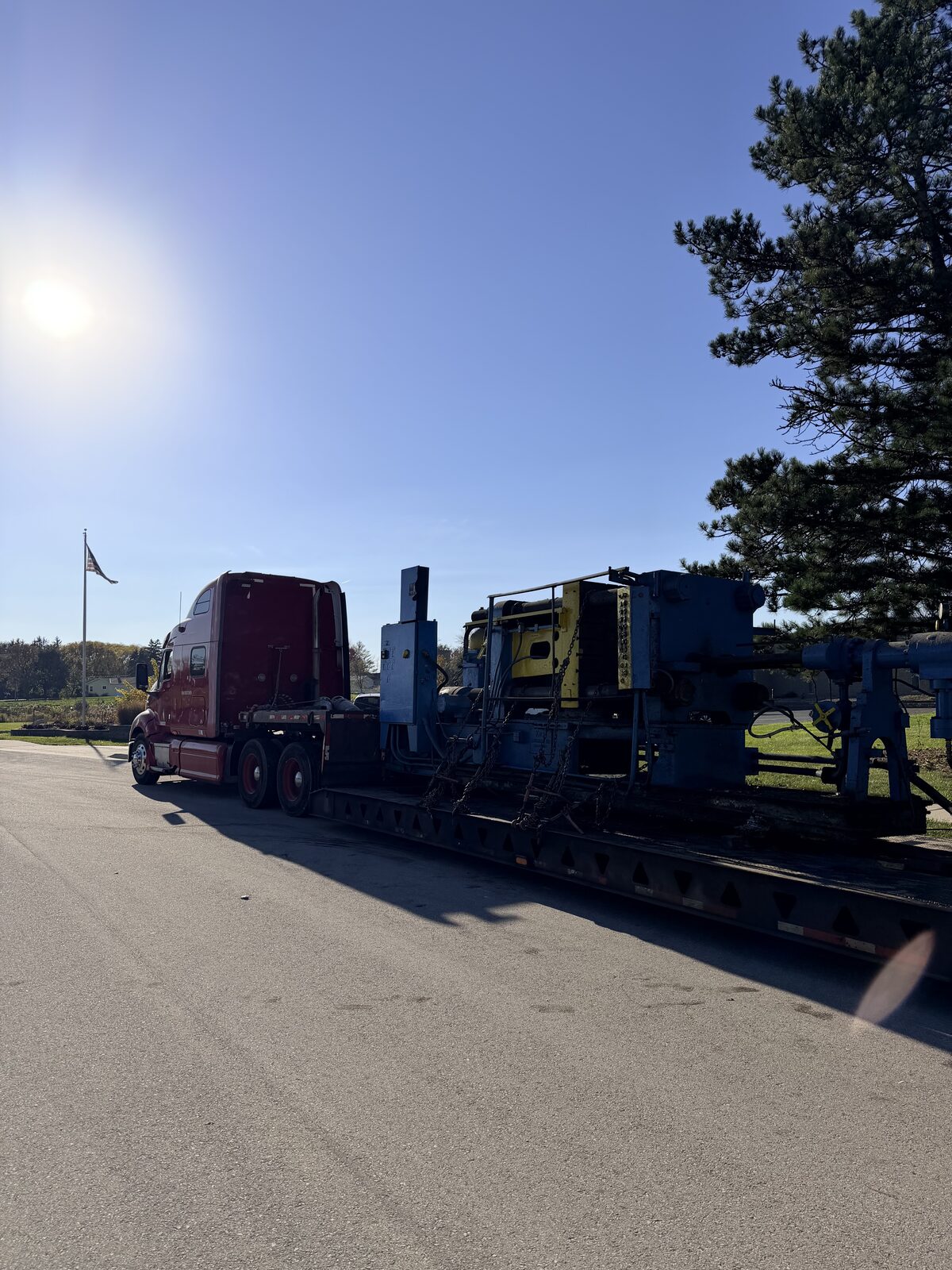
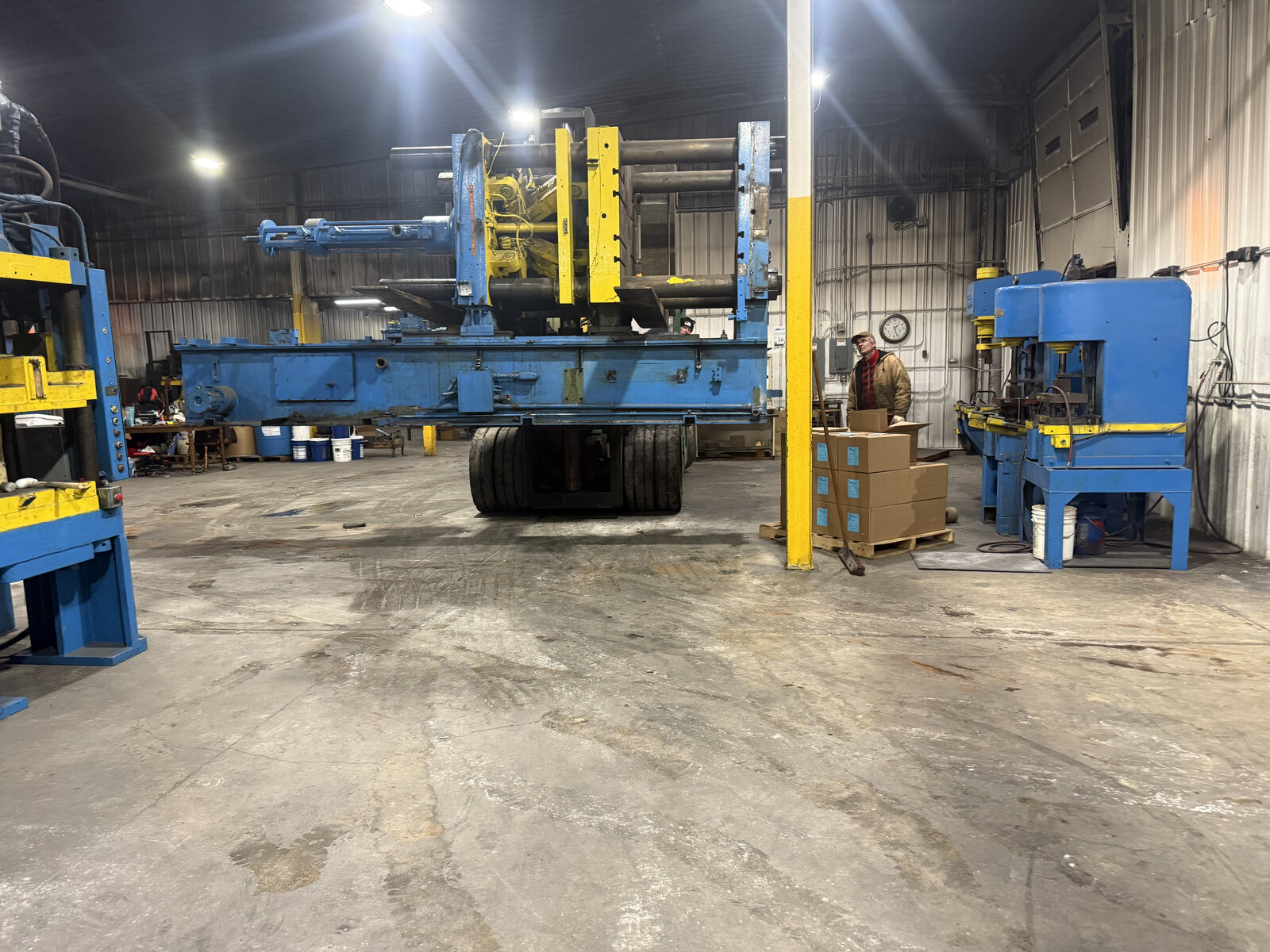
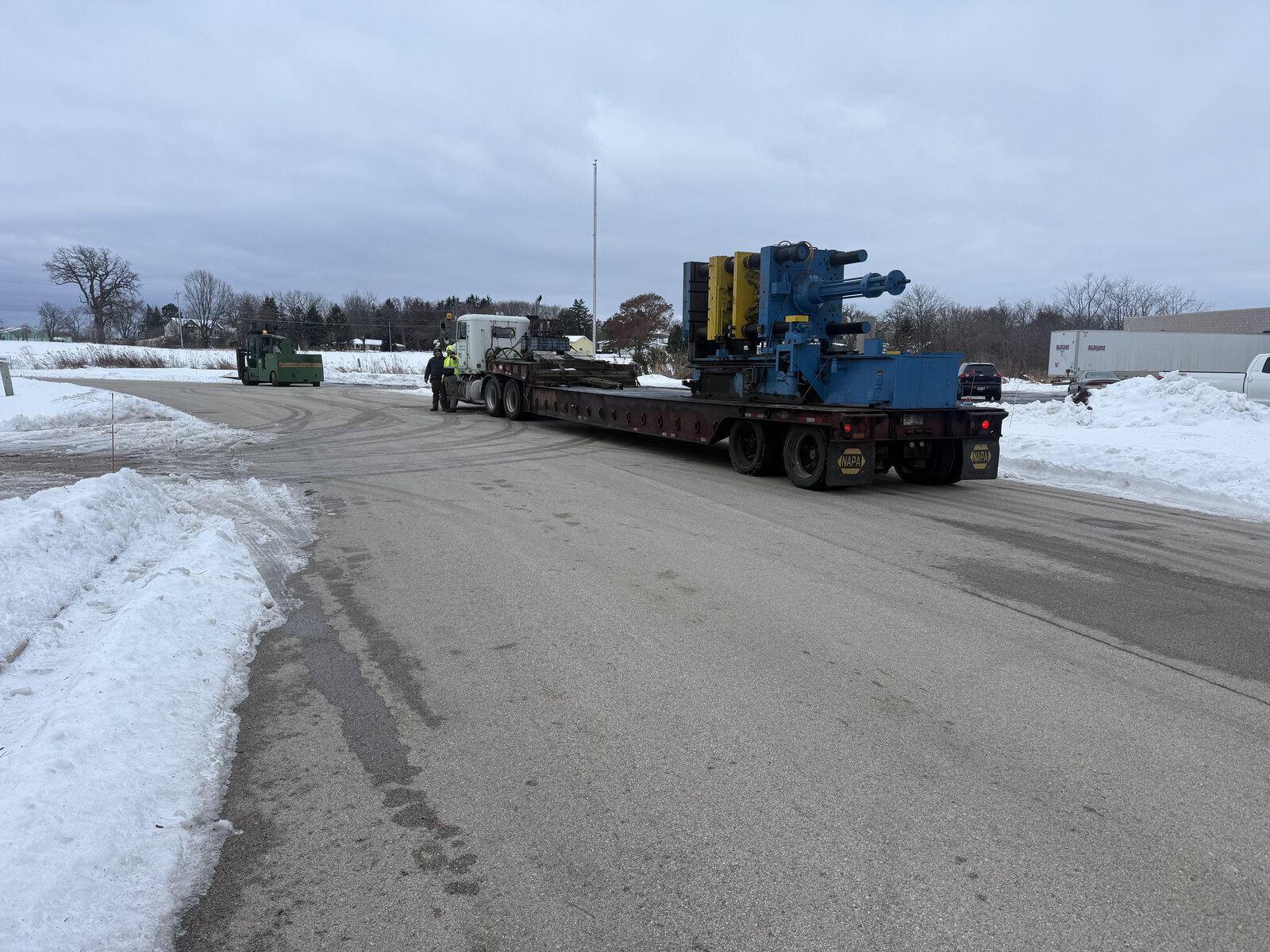
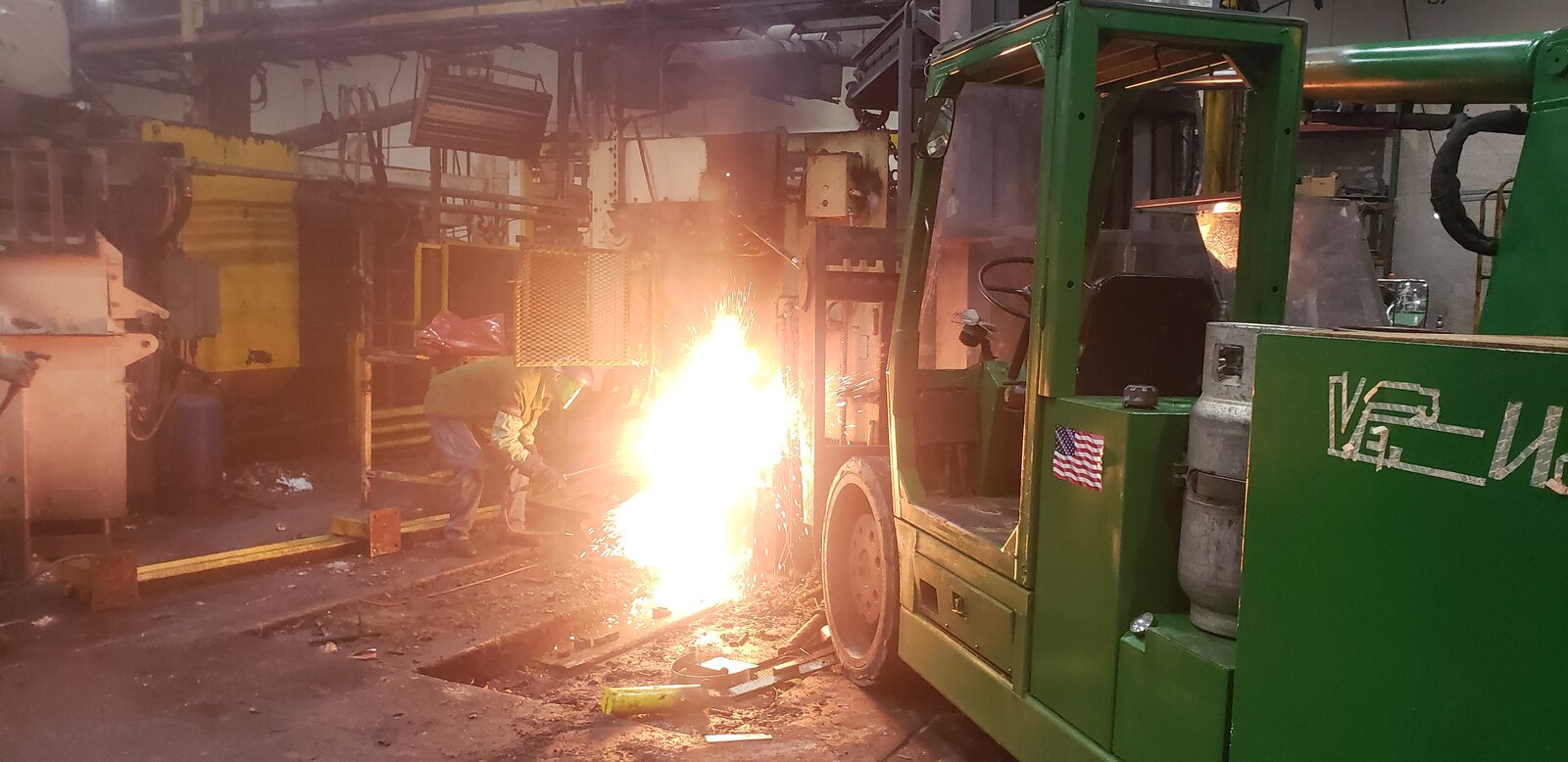
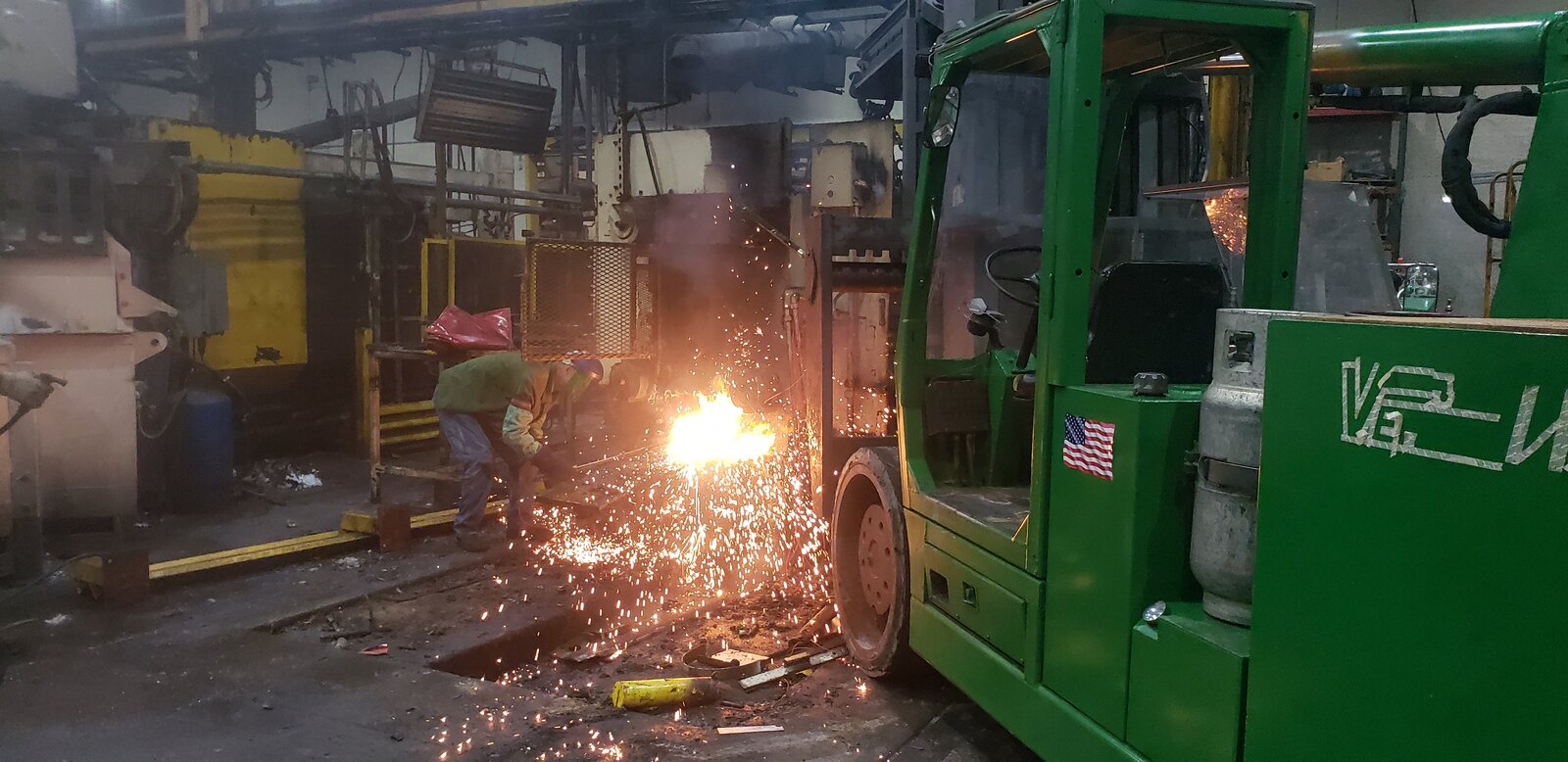
At the risk of repeating myself, the most important thing in die caster scrapping is making it safe for the scrap yard crew: LET THE PRESSURE OUT OF THE PRESSURE ACCUMULATOR TANKS. Ask the customer to drain the hydraulic fluid, that is water based and useless for shop heating. For larger die casters, we typically cut them in pieces (see picture below).
What the weight means for the customer
Scrap die casters usually look so terrible, that a natural human reaction is to assume that nobody wants them. Contrary to that, we at Chicago Machinery Movers love them - the bigger the better - and the uglier the better. The reason for this is weight, and general ease of handling - they are rectangular steel objects, and the biggest ones (weighing 100-200 tons each) can be cut up into straightforward pieces. We can remove most large die casters at no charge, assuming average difficulty of removal and decent prevailing scrap iron prices.
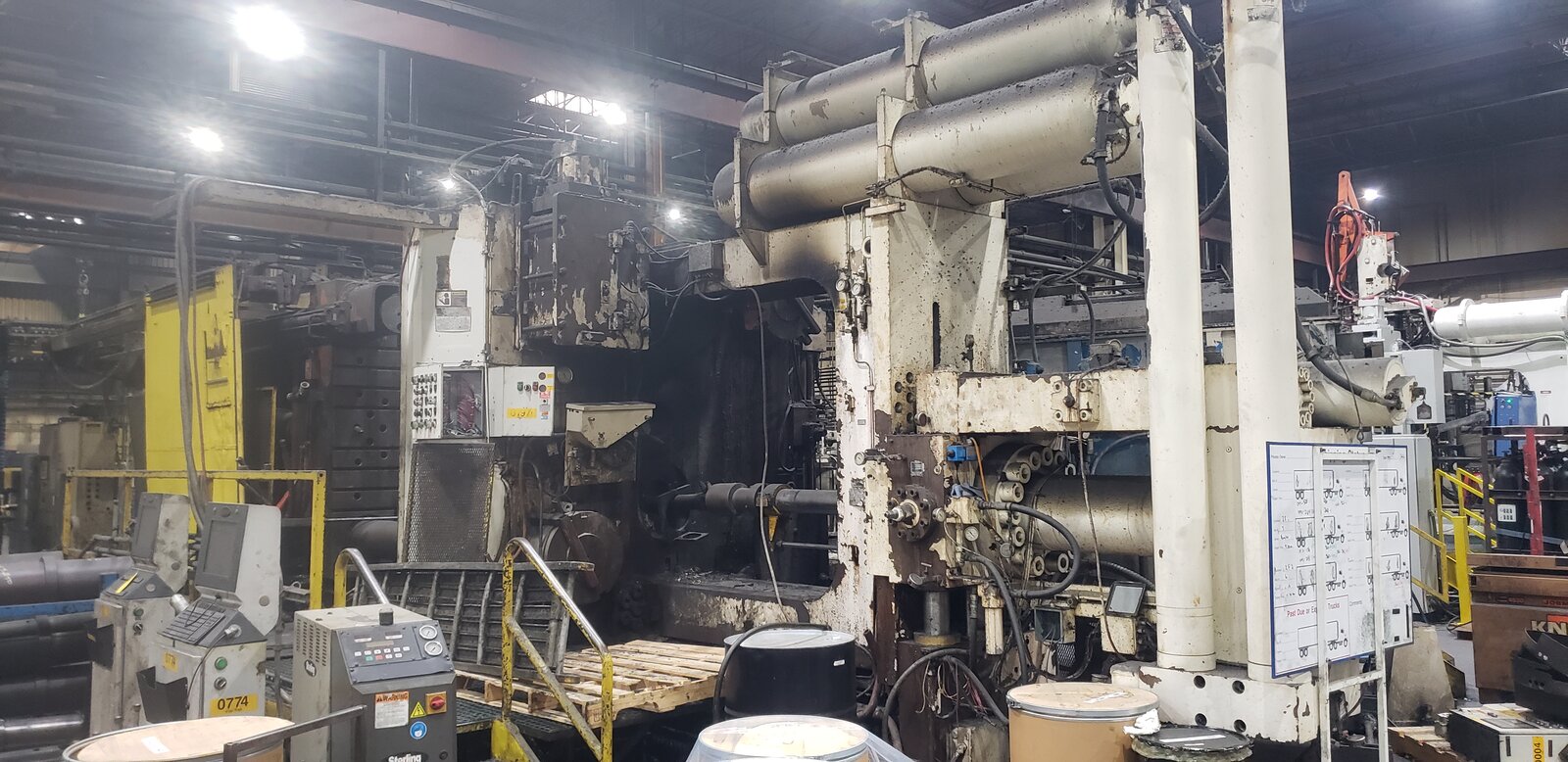
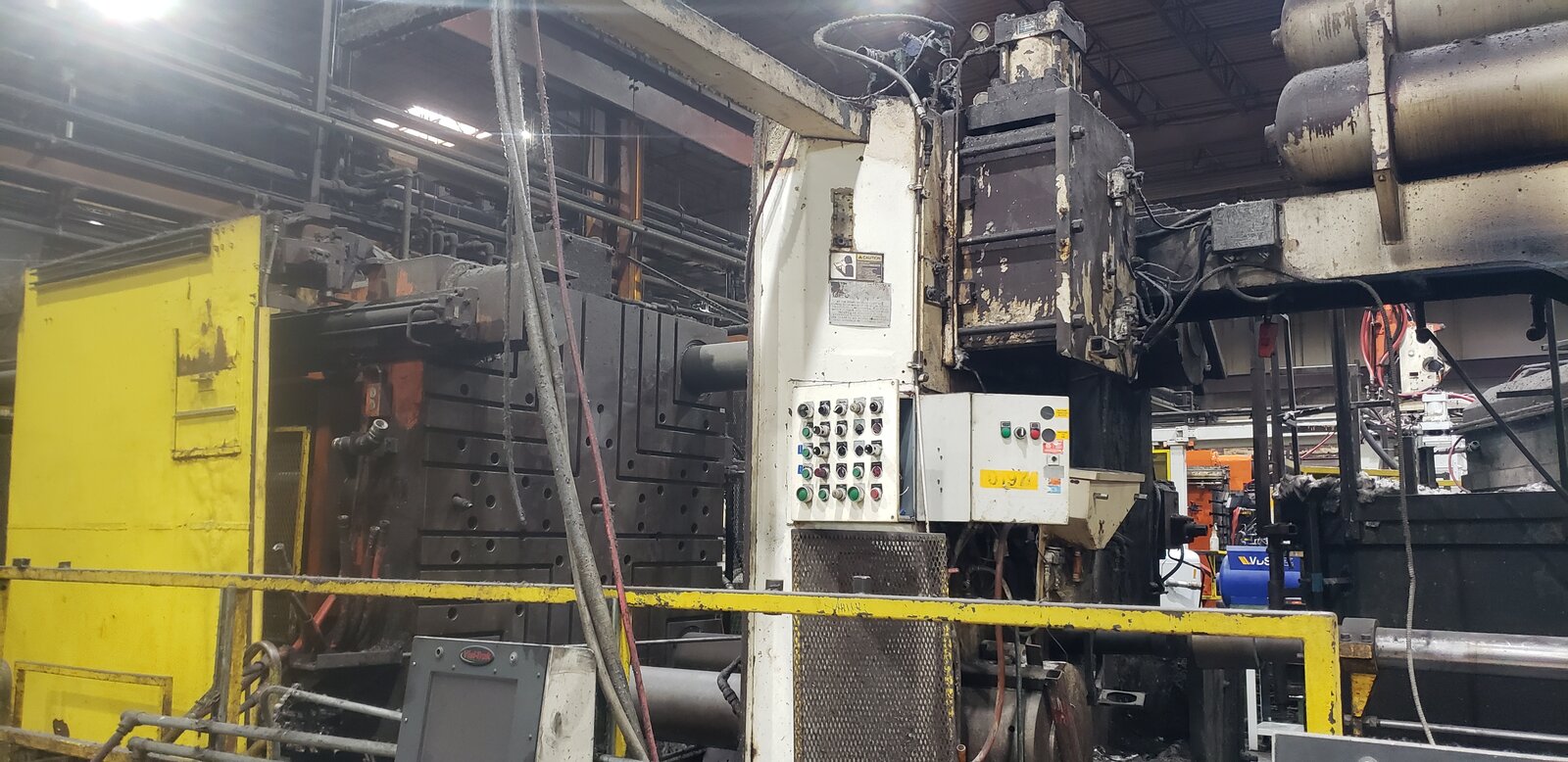
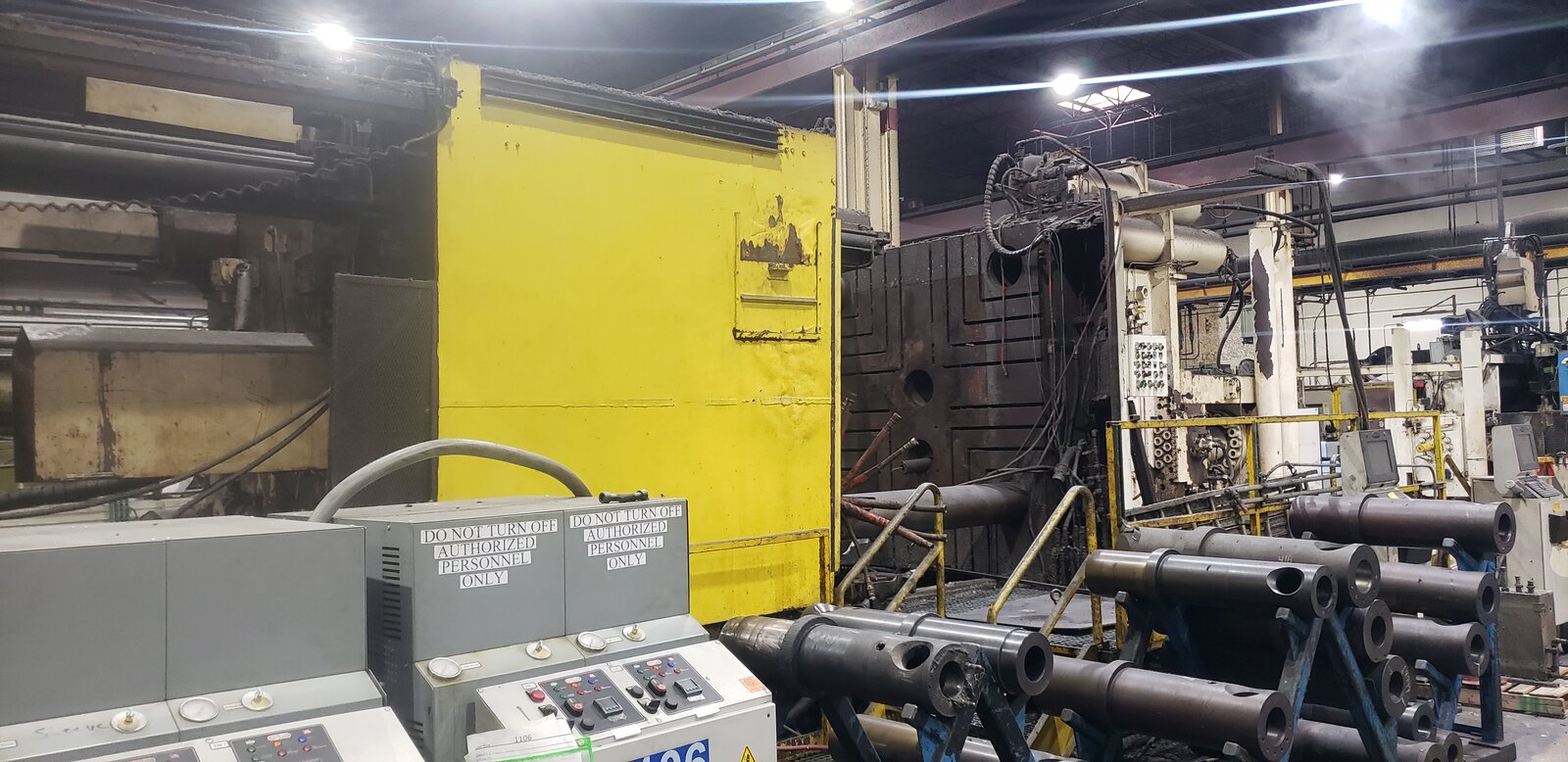
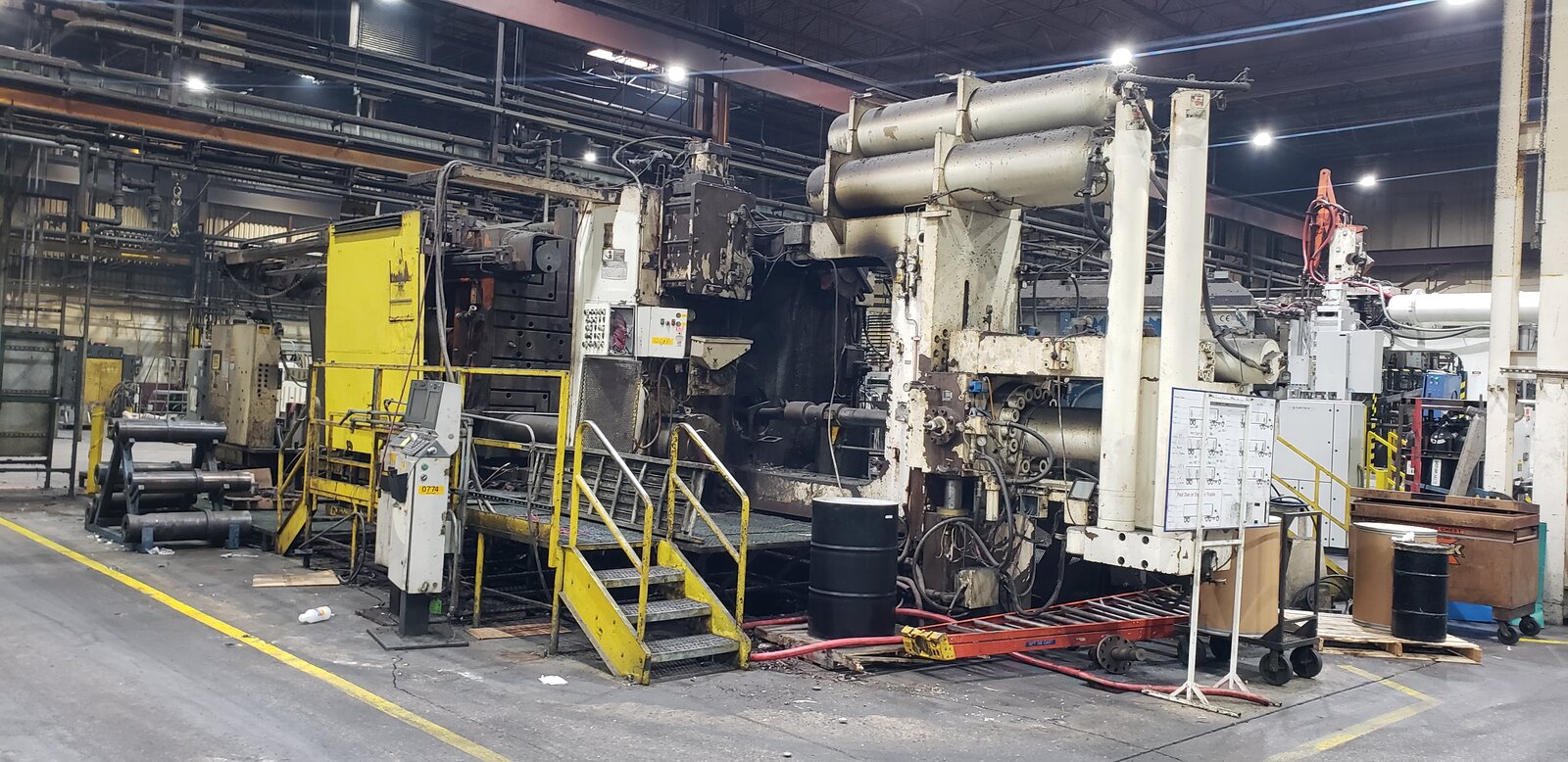
Enjoy the pictures of the largest die caster we scrapped in Wisconsin (also including pictures of smaller die casters we removed from the same place).
How to start if you have a die caster to move or scrap
Send photos of the machine, its make, model and tonnage, and the address. Take some pictures of your yard (die casters are heavy and steel plates may be necessary). Call me (Igor) at 630-235-6603. You will be happy. I will likely stop by in-person to discuss.